
Living walls have become one of the most requested elements in commercial interior design across the Phoenix metro area — and for good reason. A well-designed plant wall transforms a flat surface into something living, dimensional, and genuinely striking. But for most business owners and architects encountering them for the first time, the questions are practical: How long does this take? Where do the plants come from? What happens when something needs watering?
Here’s what you need to know before getting started.
Why Phoenix businesses are adding plant walls
A living wall does much more than fill blank surfaces with beauty. Research consistently shows that exposure to living plants in the workplace reduces stress, improves focus, and elevates how people perceive a space — effects that show up in employee satisfaction, client impressions, and even retention. Our article on biophilia and healing covers this research in depth.
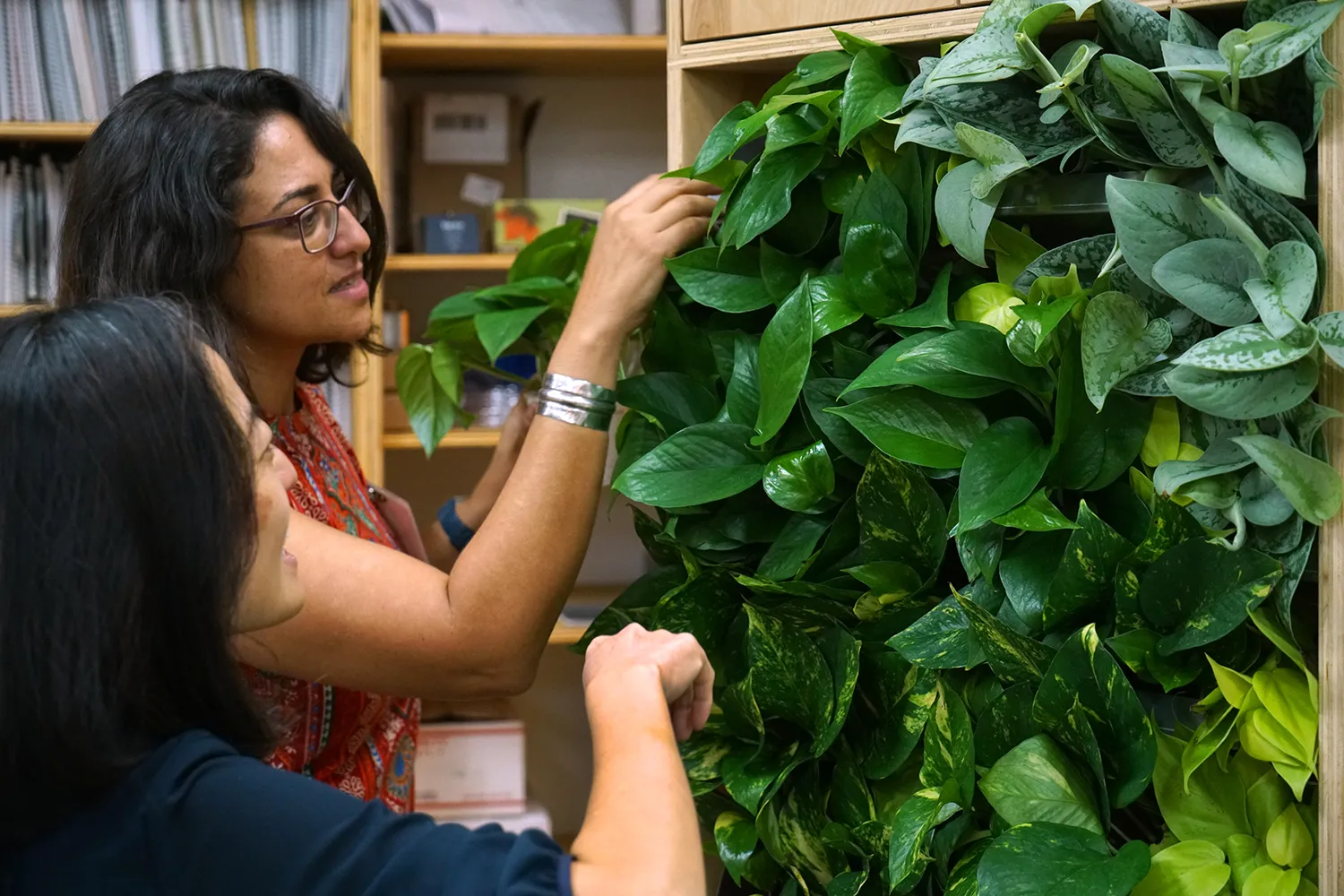
In Phoenix specifically, green walls offer something that’s harder to achieve here than almost anywhere else: a genuine sense of natural connection indoors. When the outdoor environment is a sun-baked parking lot for eight months of the year, bringing a verdant living installation into your office, lobby, or restaurant creates a contrast that people notice and respond to immediately.
From a design standpoint, plant walls also solve problems that other solutions can’t. They add acoustic softening to hard-surfaced commercial interiors, define zones in open-plan spaces without solid partitions, and create visual focal points that anchor large rooms. A well-designed plant wall is one of the few design elements that works simultaneously as art, architecture, and wellness infrastructure.
How long does a plant wall take from concept to installation?
Most clients should expect the full process — from initial consultation to completed installation — to take between four and eight weeks.
The design phase typically takes one to two weeks. During that time, the space is assessed for light levels, airflow, wall structure, and drainage options. A plant design plan is developed and presented for approval, which includes a visual rendering of the finished installation. Once approved, materials are sourced and the installation is scheduled.
Smaller green walls can typically be installed in a single day. Larger or more complex plant installations — multi-story walls, walls requiring integrated irrigation infrastructure, or projects coordinated around an active construction timeline — may require several days or a phased approach. Plant Solutions works closely with general contractors and facilities teams to minimize disruption throughout the process. For a closer look at what large-scale installations involve physically, our article on professional plant installation goes into detail.

Where do the plants come from?
The tropical species used in Phoenix plant walls are primarily sourced from commercial growers in Florida, which produces the vast majority of the nation’s interior tropical foliage. Species like pothos, philodendrons, aglaonemas, and dracaenas are grown specifically for commercial interior use — acclimated to indoor light levels and the consistent irrigation that living wall systems rely on.
Sourcing happens after the plant design is finalized, which allows species selection to be matched precisely to the conditions of your space. A green wall in a bright, south-facing lobby will use different species than one in a windowless corridor — and the plants are sourced accordingly. In some cases, specialty specimens are ordered directly for a project when a specific scale, color, or growth pattern is needed.
What plants work best in a Phoenix plant wall?
Phoenix’s indoor commercial environment — air-conditioned, humidity-controlled, with indirect or artificial light — supports a wide range of tropical species that thrive in these stable conditions. The most commonly used plants in Phoenix plant walls include pothos, philodendrons, aglaonemas, and select dracaena varieties.
These species perform reliably in the vertical growing conditions that many living wall systems provide — narrow root zones, consistent moisture, and limited soil volume. Our article on the best plant species for plant walls in Arizona covers each species in depth, including which ones work for modular walls versus container-based walls, and which to avoid entirely in Arizona’s climate.
One notable exception: live succulents. Despite their popularity in Arizona outdoor landscapes, they are generally not suitable for indoor green walls — they require far more light and warmer temperatures than most commercial interiors provide.

How are plant walls watered and irrigated?
Irrigation is one of the most important decisions in any plant installation, and the right approach depends on the size of the wall.
Smaller plant walls — generally five feet by five feet or less — are typically maintained through hand watering by a professional horticulturalist during scheduled service visits. This approach keeps infrastructure simple and works well where access is straightforward.
Larger living walls are custom-designed with an integrated irrigation system built into the wall structure. Plant Solutions installs a cascading system in which water feeds the upper trays first, then flows downward through concealed channels, supplying each level evenly. Excess water collects at the base and drains into a concealed basin connected to a floor drain. From the front, none of this infrastructure is visible — it sits behind what appear to be trim pieces or custom framing elements.
Both approaches keep your team completely out of the loop on plant care. Whether hand-watered or automatically irrigated, all maintenance is handled by Plant Solutions’ horticultural service team.
Is a plant wall right for your space?
Green walls are highly adaptable, but they aren’t right for every situation without some planning. The most important factor is wall structure — it must be capable of supporting the weight of the system, the plants, and the growing medium. Most standard commercial constructions are suitable, but this is confirmed during the design phase before any commitment is made.
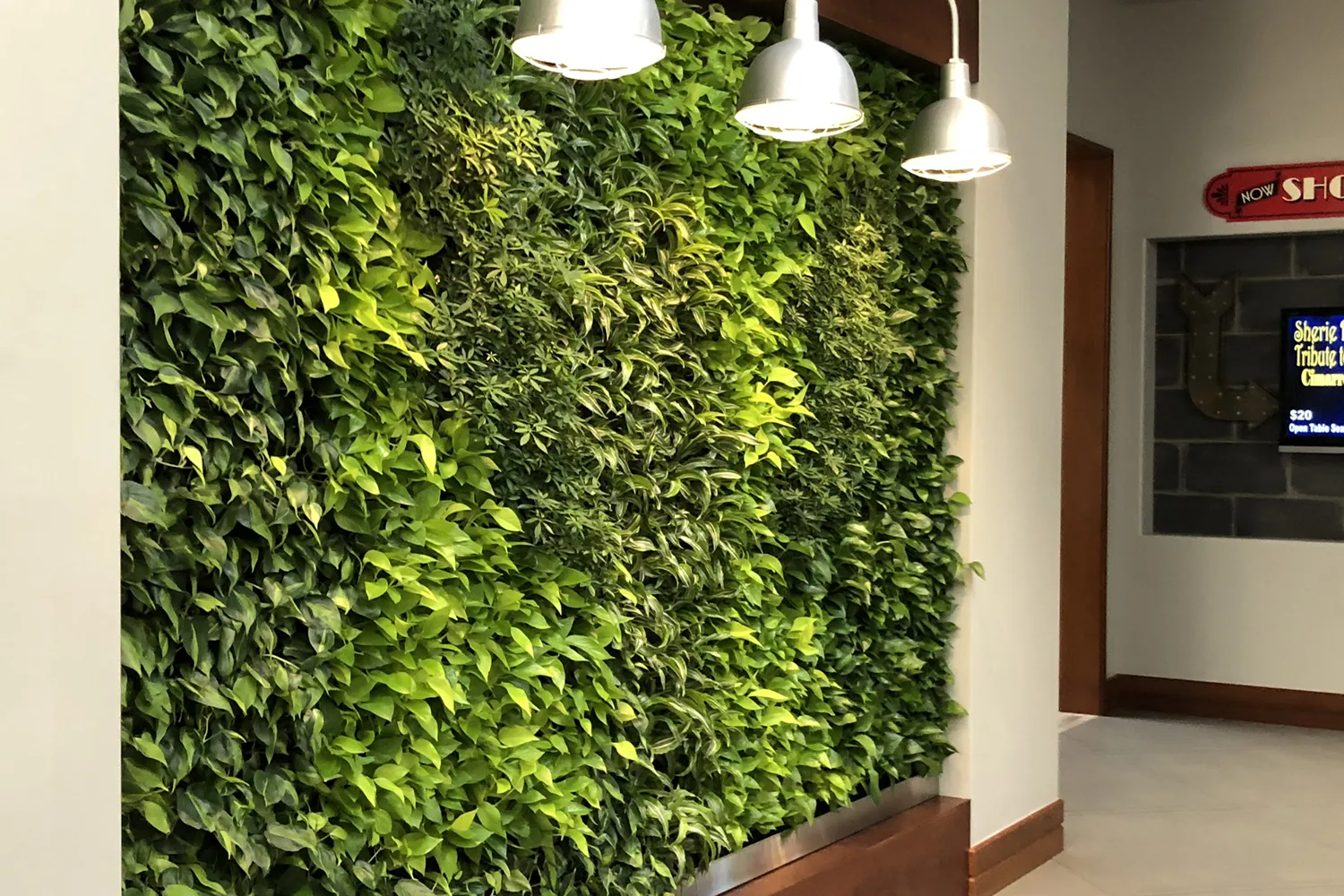
Light is the second key variable. The tropical species used in Phoenix plant walls tolerate indoor conditions well, but a wall in too much darkness will require supplemental LED grow lighting integrated into the plant design. This is a solvable challenge worth knowing upfront.
Plant walls also scale remarkably well. A small feature green wall in a conference room and a two-story living wall in a corporate atrium follow the same design process regardless of scale — a consultation, a space assessment, a design plan, an installation. The only thing that differs is the size and scope of the project. Plant Solutions delivers plant installations of all sizes across Phoenix, Tempe, Mesa, Chandler, and Scottsdale. Explore some of our work in our project portfolio.
Plant wall maintenance after installation
A living wall is a living system, and it requires ongoing professional care to stay healthy and visually consistent. Plant Solutions provides recurring horticultural service for all plant wall clients — inspecting plant health, managing irrigation, pruning overgrowth, and replacing any plants that decline.
For clients who want the simplest possible arrangement, plant rental programs bundle plant wall design, installation, and all ongoing maintenance into a single monthly agreement. If a plant declines, it’s replaced at no additional cost — making it the most hands-off path to a professionally maintained green wall, and the most popular choice among Phoenix businesses adding greenery for the first time.
Ready to find out what a plant wall could look like for your space? Contact Plant Solutions to get started.
Ready to find out what a plant wall could look like for your space?