
The benefits of living walls are endless, which has caused a boom in popularity over the last decade. This article provides a list of dependable plant species that our Plant Solutions team uses to create plant walls for our Arizona clients.
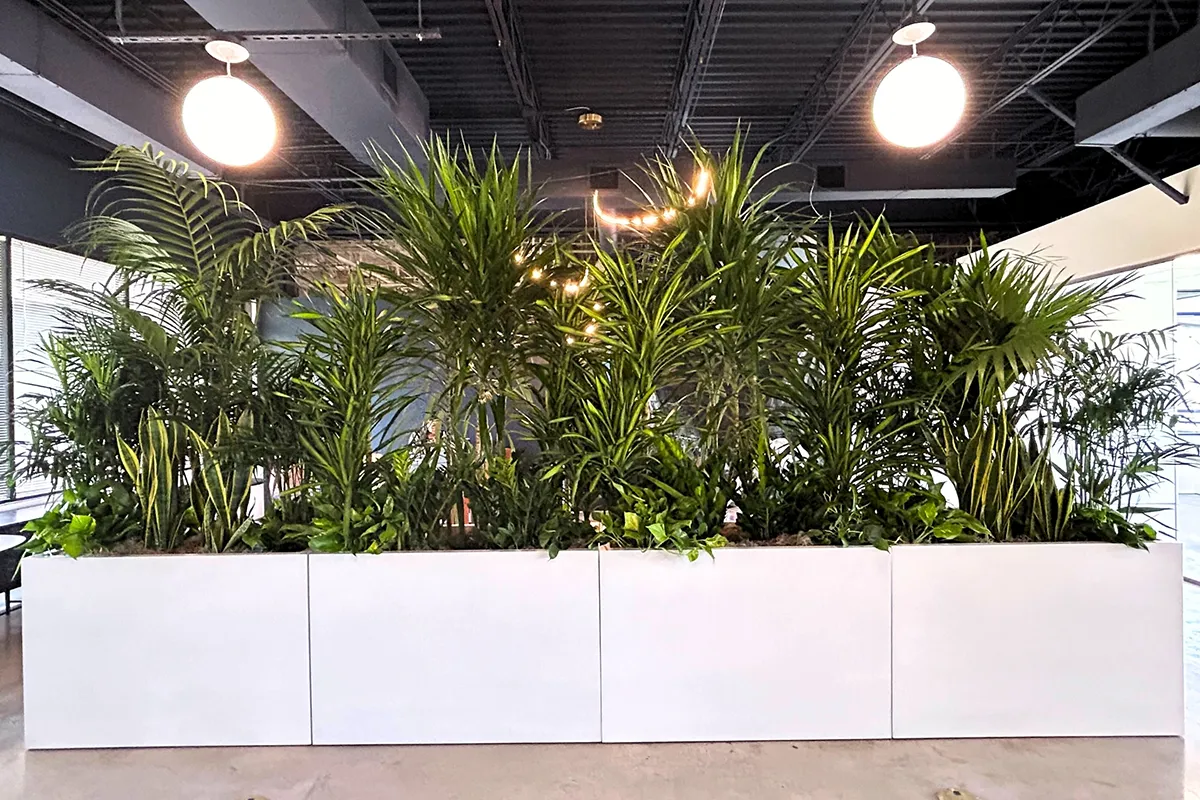
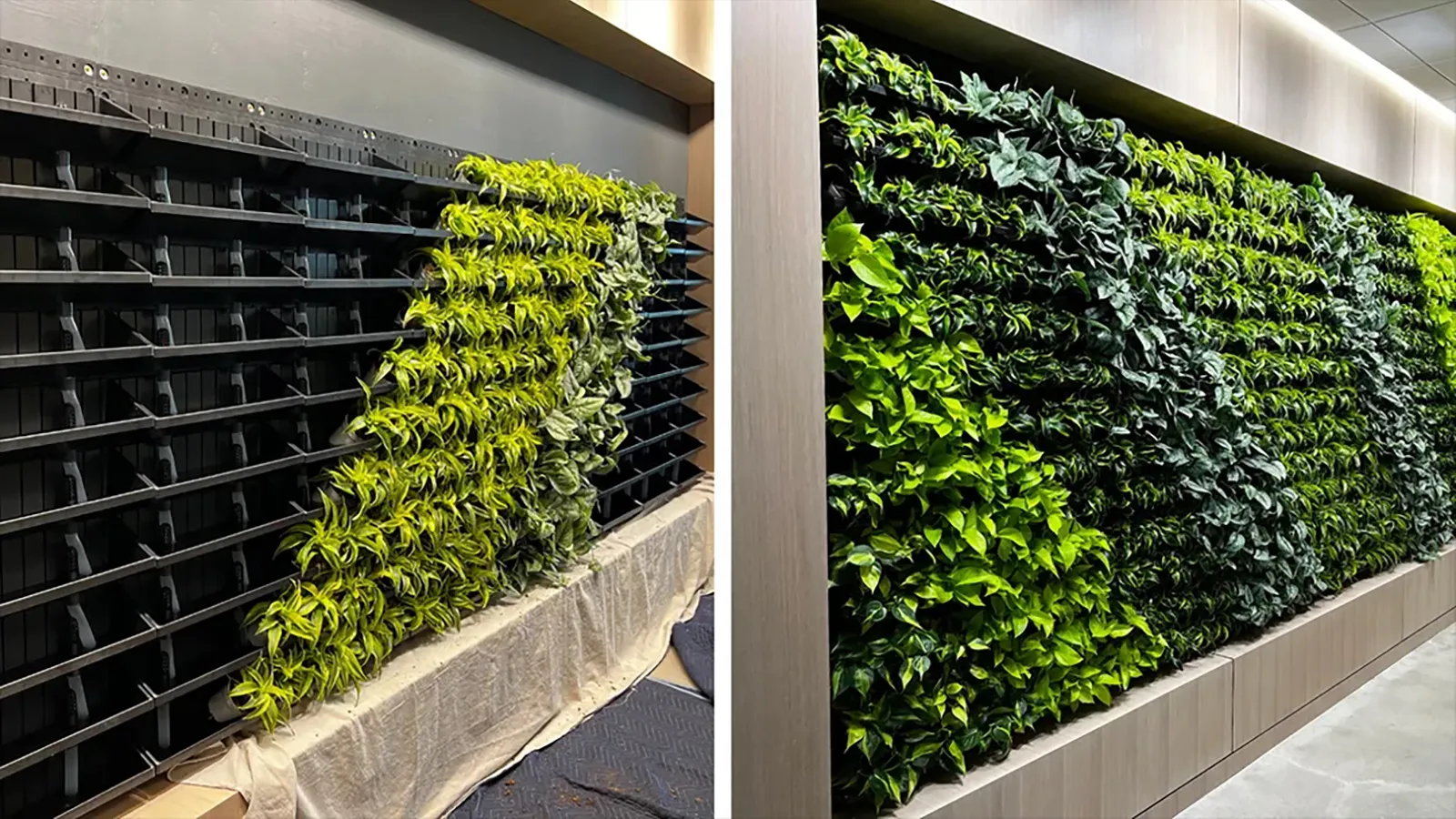
Although there are many, we’ll discuss only two types: container-based plant walls and modular plant walls. Container-based plant walls are freestanding planters filled with tall greenery, whereas modular plant walls are designed to make it appear as though plants are growing directly out of the wall.

Why do so few plants succeed in modular plant walls?
Because modular plant walls provide plants with an unusual growing environment, plants that prove successful must do well in the following conditions:
- Vertical root orientation, where moisture moves across a narrow root zone instead of a deep pot.
- Consistent irrigation, where the soil remains slightly damp.
- Limited soil (or substrate) volume, which requires predictable growth rates and strong root stability.
Tropical species meet these demands because they evolved in forest understories with filtered light, high humidity, and organic soil layers similar to modern living-wall substrates. This makes them especially suitable for Arizona interiors where light control and consistent irrigation create stable microclimates.
Why tropical plants succeed indoors in Arizona
Although Arizona’s outdoor climate is hot and arid, indoor commercial buildings resemble tropical environments more than desert landscapes. Indoor spaces typically provide:
- Indirect or diffused light
- Steady irrigation through automated systems
- Stable temperatures
- Controlled airflow
These conditions favor species that evolved in environments with filtered light and protected soil layers. Tropical plants maintain healthy foliage and predictable growth when placed in plant walls where water and light remain consistent.
Let our team help you navigate lighting and humidity challenges to select the perfect tropical species for your interior.
Our recommended list of plant species for plant walls
Aglaonema
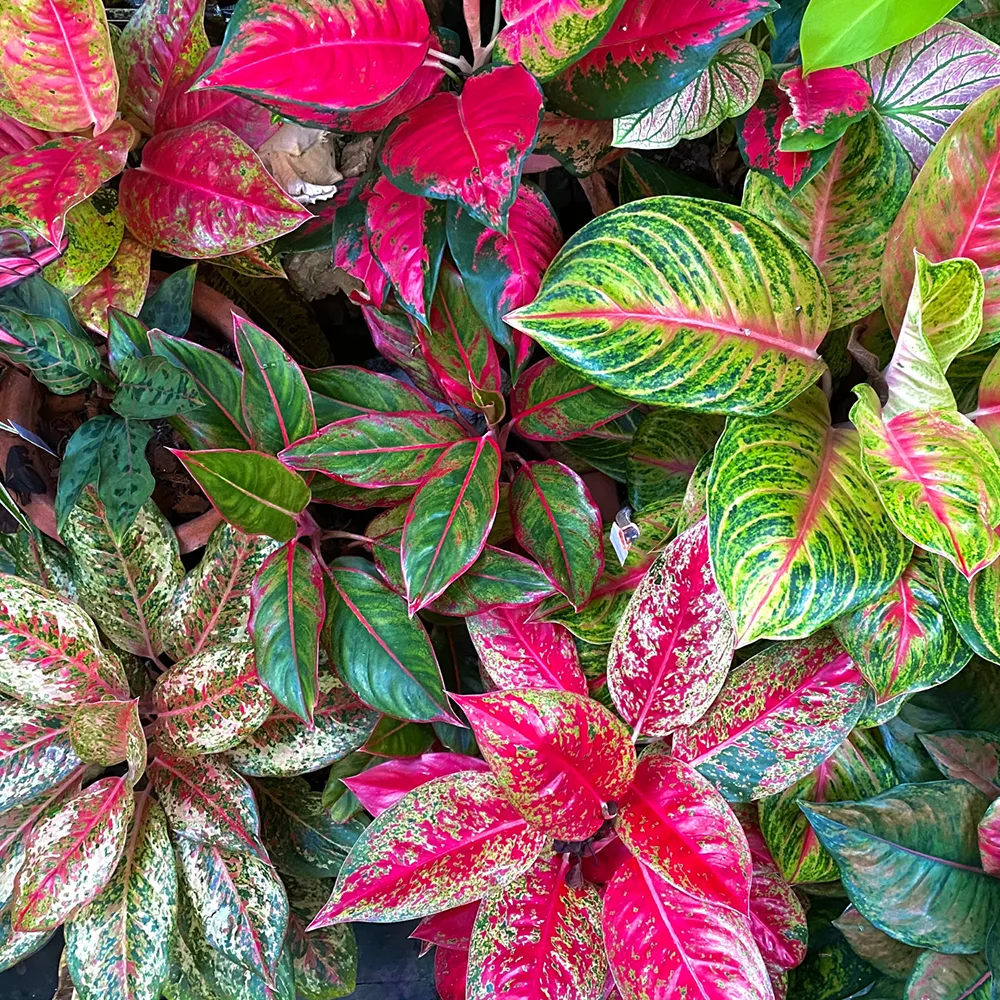
Aglaonema varieties include the following: Calypso, Cutlass, Emerald Bay, Golden Madonna, Jubilee, Silver Bay, Silverado, Siam, Tigress, and White Diamond.
Aglaonemas are one of our favorite plants to use in interior landscaping. When it comes to modular living walls, Siam is often used to add a splash of color. All varieties tolerate lower light levels and root reliably in narrow soil profiles. Their moderate growth rate supports predictable long-term maintenance in plant walls.
Pothos
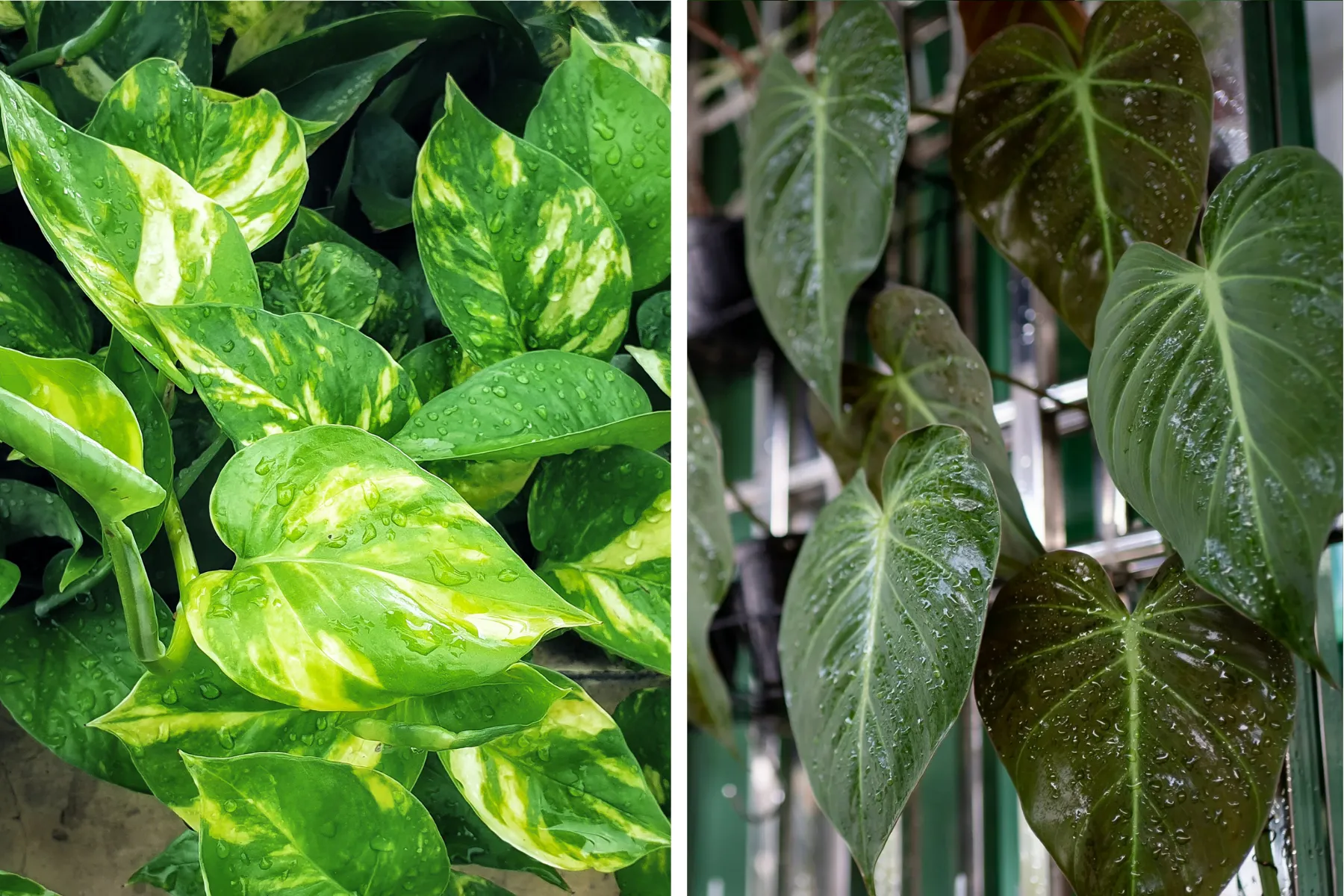
Pothos varieties include Golden, Green Queen, Marble Queen, N’Joy and Scindapsus.
Pothos adapt easily to vertical growth because of their naturally trailing growth pattern. They tolerate a wide range of light. In modular plant walls, Pothos provides layered texture, fills empty pockets quickly, and maintains color without intensive care.
Philodendrons
Philodendron varieties include Birkin, Brasil, Cordatum Green, Congo Rojo, Green Congo, and Micans.
We love Philodendrons. The reason Philodendrons perform well in plant walls is their flexible moisture tolerance and semi-upright growth. Heart-leaf varieties support dense coverage, while Congo types provide larger foliage for focal points.
Dracaenas
Dracaena varieties include Carmen, Gold Star, Janet Craig, Lemon-Lime, Lisa, Marginata, Massangeana, and Warneckii.
Dracaena compacta can be used in modular plant wall systems, while all other types are perfect for container-based plant walls, often used to divide larger spaces into smaller sections and line hallways. They require moderate light but adapt well to LED supplementation. Their ability to thrive indoors makes them a favorite among our plant rental clients, as well.
Palms
Palm varieties include Kentia, Bamboo, and Raphis.
Just like many Dracanas, Palms should not be used for modular plant walls, but are a great choice for creating a wall of plants in rectangular planters. Although they are more sensitive to light quality, they grow well in bright, indirect interior conditions.
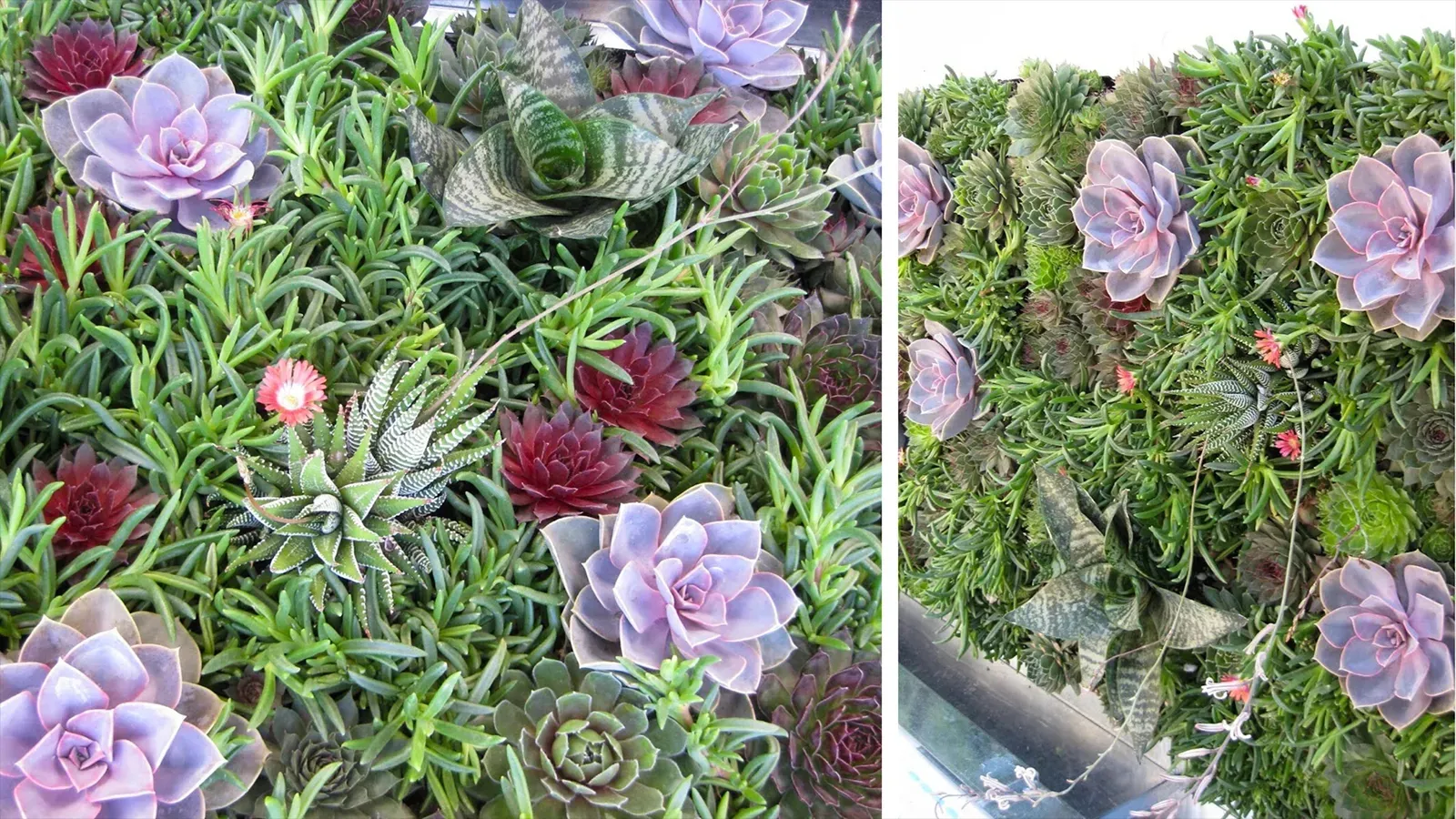
Avoid live succulents for Arizona plant walls
Although beautiful, live succulent plant walls are generally avoided in Arizona. They require extremely high light levels that most commercial interiors cannot provide, and they prefer warmer indoor temperatures than occupants typically find comfortable (mid-80s). When outdoors, Arizona’s summer heat places too much stress on their shallow root systems. If succulents are a must-have, consider our UV-protected artificial succulents that last for years.
How do you water small vs. large plant walls?
Tropical species consistently meet the growing requirements for plant walls of all sizes in Arizona interiors. However, plant wall design shifts depending on the overall size of the installation.
Smaller plant walls, generally five feet by five feet or less, are usually maintained through hand watering by our horticulture maintenance team. Small plant walls use tray-based planting, with multiple plants in each tray. For this scale, Philodendron species are the perfect plant; they tolerate shallow substrates and consistent moisture while maintaining stable growth.
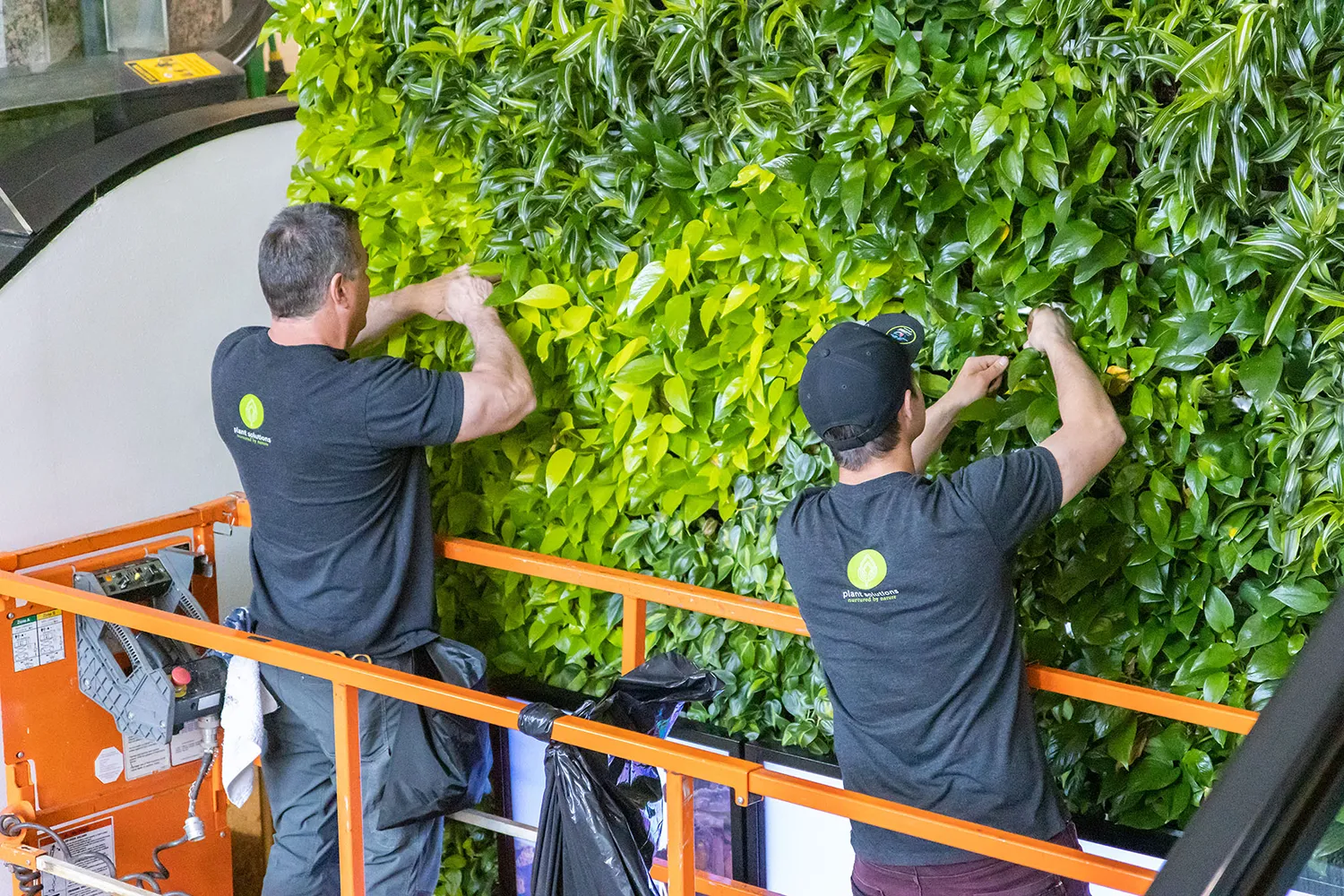
Larger plant walls are custom-designed, and usually include an integrated irrigation plan to maintain consistency across the entire wall. We install a cascading irrigation system in which water fills the upper trays first, and then flows downward behind the trays, supplying each level evenly. Excess water is captured at the base of the wall and directed into a concealed drainage basin connected to a floor drain. Of course, all of this is out of sight, hidden behind what appear to be trim pieces or custom-built plant wall framing.
If you’re curious about the plant wall design and installation process, we’d love to hear from you. Reach out to book a consultation with our team so we can get started!
Whether you need a simple container arrangement or a complex modular wall, we have the experience to bring your vision to life.