
Pothos (Epipremnum aureum) is one of the most widely used foliage plants in commercial interiorscaping — and one of the most requested species in plant rental programs. It tolerates the conditions that trip up other plants: low light, HVAC-dried air, irregular watering schedules, and fluorescent overhead lighting. According to the University of Florida IFAS Extension, pothos has been grown commercially in the United States for nearly 100 years, consistently ranking among the top wholesale foliage plants in the country. That kind of track record is not a coincidence.
For businesses considering plant rental, pothos is often among the first species recommended — it delivers strong visual impact with minimal care requirements, which keeps maintenance costs low and the space looking good month after month. This guide covers everything relevant to keeping pothos healthy and looking its best in a commercial interior, including the details most care guides skip.

What are the different types of pothos?
Most people are familiar with Golden Pothos — the classic green-and-yellow variegated variety — but pothos comes in a range of cultivars, each with distinct visual qualities. Clemson Cooperative Extension identifies several of the most common:
- Golden Pothos: deep green leaves with yellow variegation; the most widely recognized variety
- Marble Queen: green and white variegation; more striking contrast, slower growth
- Neon Pothos: solid chartreuse; vivid and eye-catching in modern interiors
- Jade Pothos: solid deep green; the most low-light tolerant of the group
- Pearls and Jade / N’Joy: cream and gray-green speckled leaves; compact growth habit
One important note on variegated varieties: the more white or yellow in the leaf, the more light the plant needs to maintain that coloring. In dim offices, solid green and lightly variegated varieties hold up better over time. Heavily variegated plants like Marble Queen will slowly revert toward solid green if light levels are insufficient. In a plant rental program, species and variety selection accounts for the actual conditions of your space — so the pothos chosen for a windowless conference room will differ from the one chosen for a sunlit lobby.
How often should you water pothos?
The most common cause of pothos decline in commercial settings is not underwatering — it’s overwatering. Pothos stores moisture in its leaves and stems and handles periods of drought without lasting damage. What it does not handle well is sitting in consistently wet soil, which leads to root rot.
The standard guidance: water thoroughly, then allow the top two to three inches of soil to dry out completely before watering again. In practice, this typically means watering every one to two weeks indoors, though the actual frequency depends on pot size, soil composition, and ambient conditions.
In Phoenix metro offices, HVAC systems run aggressively — particularly through the summer cooling season — which keeps indoor air unusually dry. That dry air accelerates soil moisture evaporation, meaning pothos here may need more frequent watering than comparable plants in more humid climates. Brown leaf tips are a common complaint in Arizona offices; those tips are a humidity issue, not a watering issue, and the fix is either a small humidifier nearby or simply accepting it as a cosmetic limitation of the environment.
Black spots on leaves are a reliable sign of overwatering. Drooping or slightly wrinkled leaves usually indicate the plant needs water. Visit our simple plant-watering article for more watering tips.
How much light does pothos need?
Pothos is often described as a low-light plant, which is accurate but can be misleading. It tolerates low light well. It thrives in bright, indirect light. Pothos placed near a window or under strong ambient lighting will grow faster, maintain richer color, and require less intervention than pothos placed in a windowless interior room.
For commercial spaces with limited natural light — interior corridors, north-facing suites, windowless conference rooms — pothos is a reliable choice. Growth will slow and variegated leaves may shift toward solid green, but the plant stays healthy and full. Direct sun should be avoided: it scorches leaves and causes browning, which is a particular concern given Arizona’s intense afternoon light.
What type of soil and containers are best for pothos?
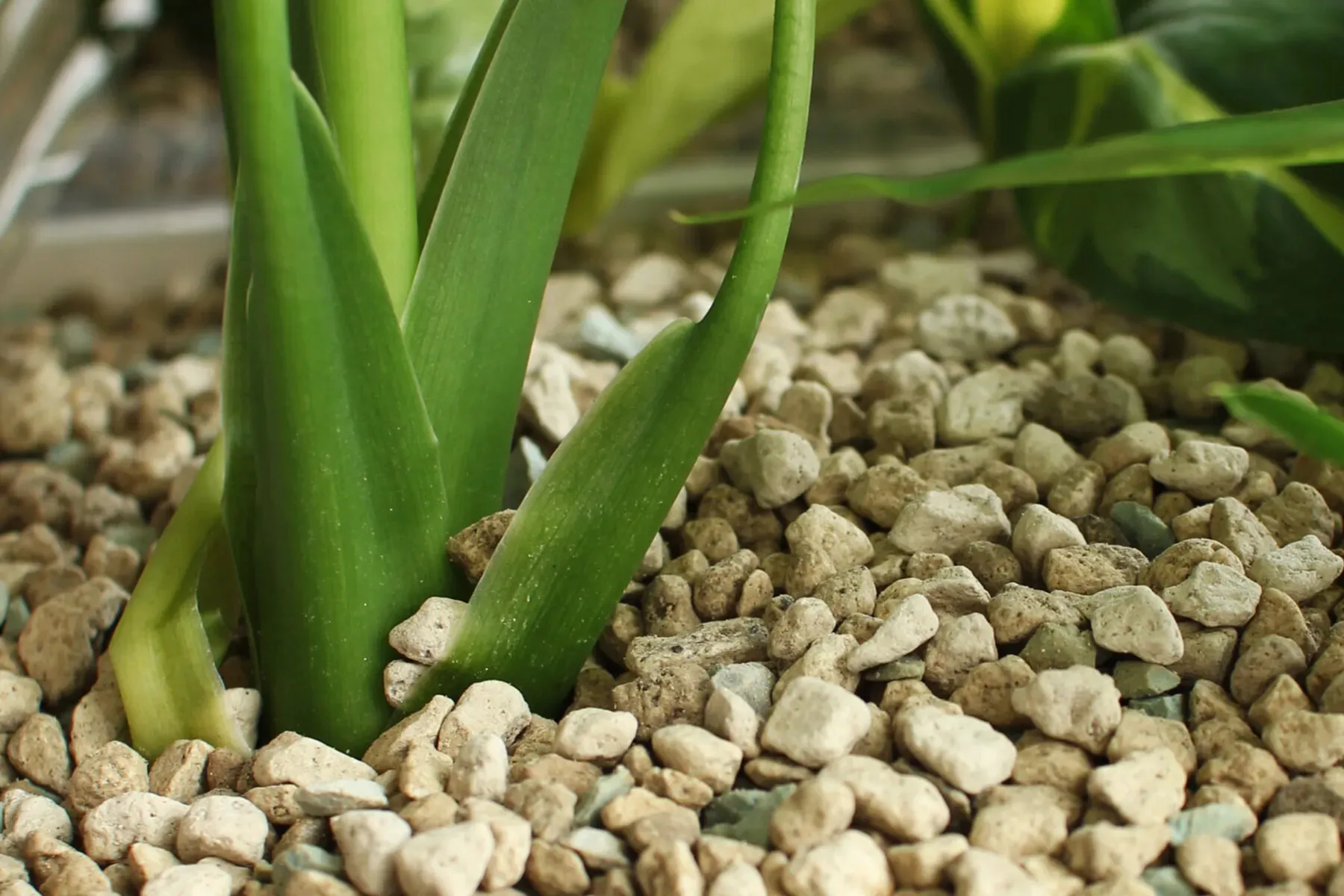
Pothos does best in a well-draining potting mix or hydroculture systems like vulkaponic — an increasingly common choice in commercial interiorscaping. Dense or compacted soil holds too much moisture and creates conditions for root rot. Containers must have drainage holes. Matching the right container to the plant and the space is part of how a pothos installation stays healthy long-term rather than declining after a few months.
Pothos grows quickly and will eventually become root-bound, at which point growth slows and the plant may require more frequent watering. Repotting into a container one size larger resolves this. In busy commercial environments, this is one of the maintenance tasks that tends to get skipped — and one of the clearest advantages of our plant rental arrangements, where ongoing care is handled professionally.

How do you prune and propagate pothos?
Left unmanaged, pothos vines grow long and leggy over time, with leaves spaced further apart and less density at the base. Regular pruning — trimming back vines to a node — encourages branching and keeps the plant full and compact. Cuttings taken during pruning root easily in water or directly in soil. Each cutting needs at least one node (the small brown bump on the stem where roots develop). A cutting without a node will not root.
In our plant rental programs, pruning is handled as part of regular maintenance visits. Pothos that receives consistent attention stays visually intentional rather than gradually becoming overgrown and unkempt.
What temperature and humidity does pothos need?
Pothos performs well at the temperatures maintained in most Arizona interiors — between 65°F and 80°F. It prefers humidity in the 50–70% range but tolerates standard indoor levels without serious problems. Below 50°F, growth stalls. Pothos should not be placed near HVAC vents where it will be blasted with ongoing cold, dry air.

Is pothos a preferred office plant?
Pothos is one of the most versatile plants in commercial interior plant design. It works well in hanging baskets, tall floor planters, on shelves, trained up a moss pole, or trailing from an elevated ledge. Its vining growth adds texture and movement that more rigid, upright plants do not, which makes it particularly useful in spaces that need visual softness without high maintenance overhead.
Pothos plant rental is a practical solution for businesses that want the visual impact of well-maintained greenery without managing the care themselves. Plant rental bundles design, installation, and ongoing indoor maintenance into a single monthly arrangement — pothos and other species are selected for the specific conditions of your space, and a professional handles all care throughout the lease.
For businesses that already own pothos and need help keeping them in good condition, Plant Solutions offers recurring horticultural service for commercial and high-end residential clients throughout the Phoenix metro area. Visits are tailored to the specific conditions of the space, including the HVAC and lighting factors that affect pothos health differently here than in other climates.
Pothos rewards consistent attention. Contact us to find out how pothos plant rental or professional plant care can work for your space.