
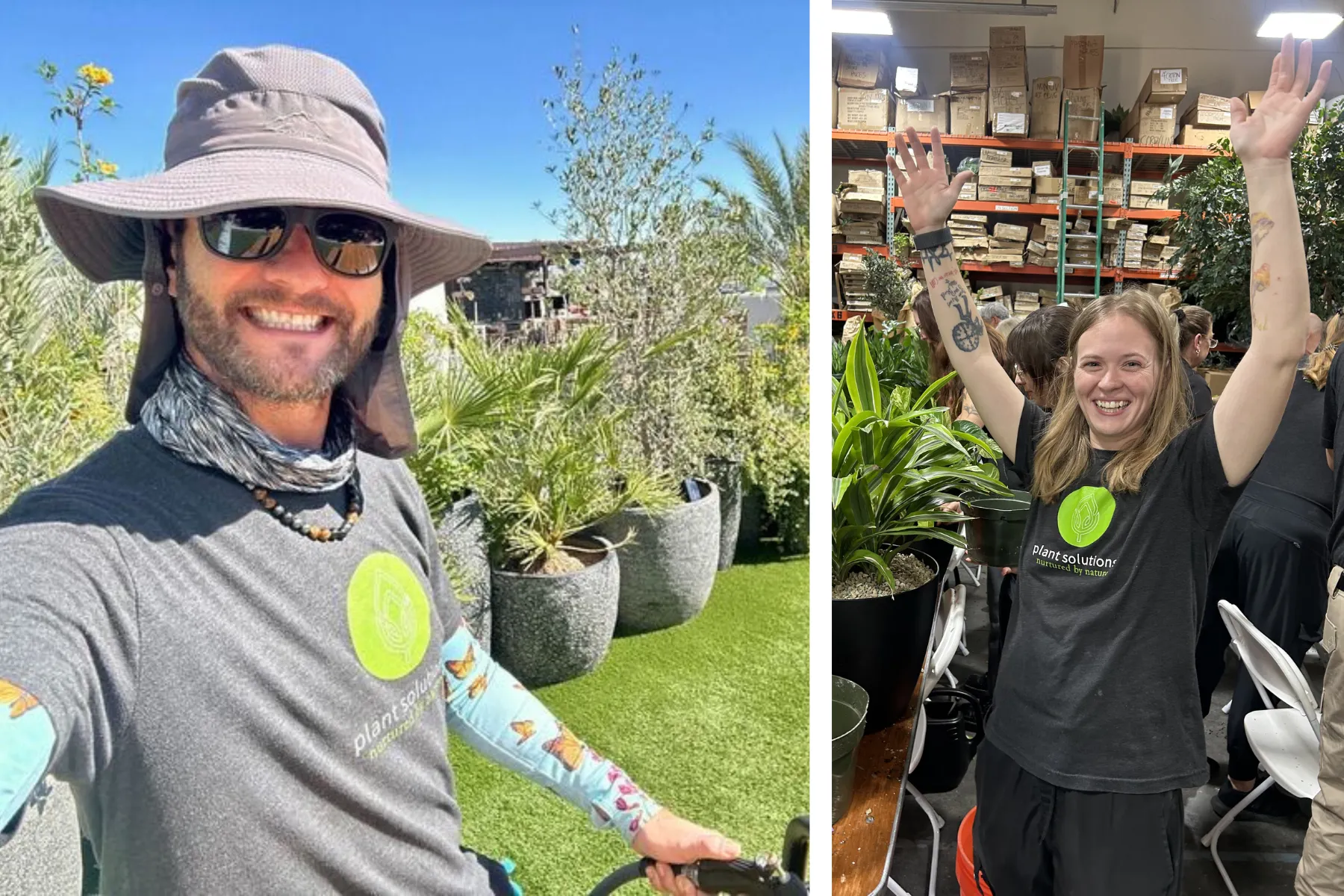
When a Plant Solutions horticulturist walks into your office, it might look like a routine visit. They check the plants, adjust the soil, trim what needs trimming, and move on. But what’s actually happening is the result of years of accumulated knowledge — plant science, pest management, environmental assessment, and a finely tuned ability to read what living things need before they show visible signs of stress.
A well-tended interior landscape holds its color, its form, and its vitality through seasonal shifts, HVAC fluctuations, and the demands of a busy commercial environment. That consistency is the result of professional horticultural care, not good fortune.
The professional definition
A horticulturist is a trained plant science professional focused on the cultivation, health, and management of plants in applied settings. Unlike a botanist, who approaches plants from a research perspective, a horticulturist asks a more practical question: how do we grow and maintain plants effectively in the real world?
Many horticulturists come to the work through a lifelong relationship with plants. Matthew J., a horticulturist at Plant Solutions, is one of them. “My mom had over 200 house plants when I was a little boy,” he recalls. “It would take her two days just to water the indoor ones. She always taught me about them. I always found them so interesting and beautiful.”
According to the American Society for Horticultural Science, professional horticulturists are recognized for excellence across educational, scientific, and service activities. Credentials typically require education in plant science or agriculture, combined with documented hands-on experience.
In an interiorscape context, horticulturists bring that science directly into commercial spaces — keeping living installations healthy, diagnosing problems before they become visible. The connection between that expertise and human well-being runs deeper than most people realize. Research consistently shows that well-maintained greenery reduces stress and supports cognitive function.

What it’s like to be a Plant Solutions horticulturist
Matthew J. captures it well. When asked what someone considering this career should know, he says: “It’s a lot of work — but get ready to have a lot of fun, too.”
A day in the field is more physically and intellectually demanding than most people expect. At Plant Solutions, horticulturists manage between 30 and 40 client accounts, monitoring hundreds of individual plants across environments with varying light conditions, HVAC exposure, foot-traffic patterns, and seasonal variables.
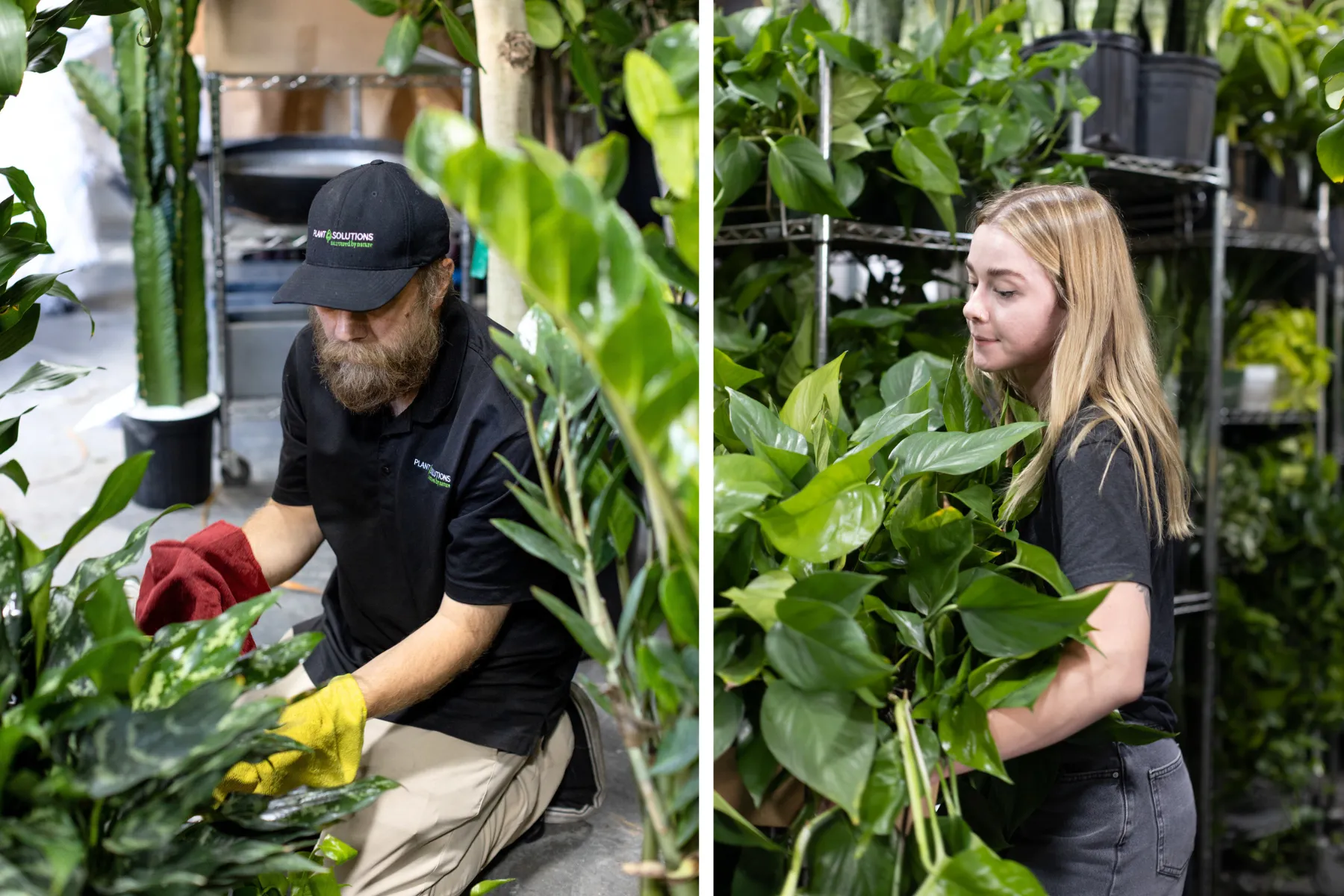
Every visit involves calibrated watering, pruning, cleaning foliage, rotating plants for even light exposure, inspecting for pests and disease, and adjusting care routines as seasons change. A horticulturist who notices a plant responding poorly to a recent HVAC change will address it before clients ever see it. For more on what that day-to-day work involves, our article on 5 things you didn’t know about your plant maintenance technician goes into detail.
Matthew J. puts it this way: “It took me over 15 years to really know about plants. They speak to you — all we have to do is listen.” He came to Plant Solutions after years in nurseries, where he built the knowledge that now informs every account he manages. “I love getting compliments on how great the plants look. And I get to teach people about plants when they’re curious. I love talking to people — the individuals I’ve met throughout all my accounts make the work so enjoyable.”

The role of horticultural knowledge in design and installation
When a new client comes to Plant Solutions, the installation process begins with a thorough assessment of their space: light levels, airflow, traffic patterns, container options, and the client’s aesthetic goals. A horticulturist’s input is critical at this stage — plants that look perfect in a showroom may fail within months in the wrong micro-environment. Getting the selection right from the start is a horticultural decision, not just a design one. Once the plan is set, horticulturists are on the ground for the physical installation itself, carrying and positioning plants that can weigh hundreds of pounds and ensuring each one is properly placed from day one.
A career with real depth and direction
Being a horticulturist has serious growth potential. At Plant Solutions, it’s often the starting point for a serious career in the interiorscape industry — one that’s driven by a person’s natural strengths and passions.
Keeli McKae began on the horticultural side of the industry and is now an Account Manager at Plant Solutions — and one of the first individuals in the interiorscape industry to earn a Biophilic Design Certified Practitioner (BDCP) designation. She even works in sales and design on occasion. Others develop deep expertise in plant wall construction and large-scale installations. Each horticulturist’s role can grow with the person and their expressed interests.
Why well-trained horticulturists matter to clients
For businesses investing in interior greenery, the quality of office plant maintenance determines whether that investment holds its value. Plants that aren’t professionally managed decline — and a lobby full of struggling plants sends a poor message to clients and employees. Research consistently links well-maintained indoor greenery to improvements in employee wellness, focus, stress levels, and workplace wellness.
When Plant Solutions introduces a horticulturist to your space, you’re partnering with a trained professional with plant science education, hands-on expertise, and genuine care for the living things. As Matthew J. says: “Being able to take care of an art piece — it’s something that brings peace to people who look at and interact with it.”
Explore what our horticultural services can do for your space.