
Not every office is flooded with natural light. Windowless conference rooms, interior corridors, north-facing suites — these are real conditions that most plant guides ignore entirely. The good news is that some of the most striking and resilient low light plants actually thrive in the environments where greenery is needed most.
Research from the University of Exeter found that introducing plants into lean office environments increased employee productivity by 15 percent and improved workers’ perceptions of air quality and overall workplace satisfaction. That benefit doesn’t require a sun-drenched atrium. It requires the right low light plants in the right spots — including the dim ones.
Here are five of the best low light plants for commercial spaces, chosen for their durability, visual impact, and suitability for professional interiors. For a deeper look at how these species perform in specific workspace configurations, our guide to low light indoor plants for workspaces covers placement by category in more detail.
1. Pothos (Epipremnum aureum)
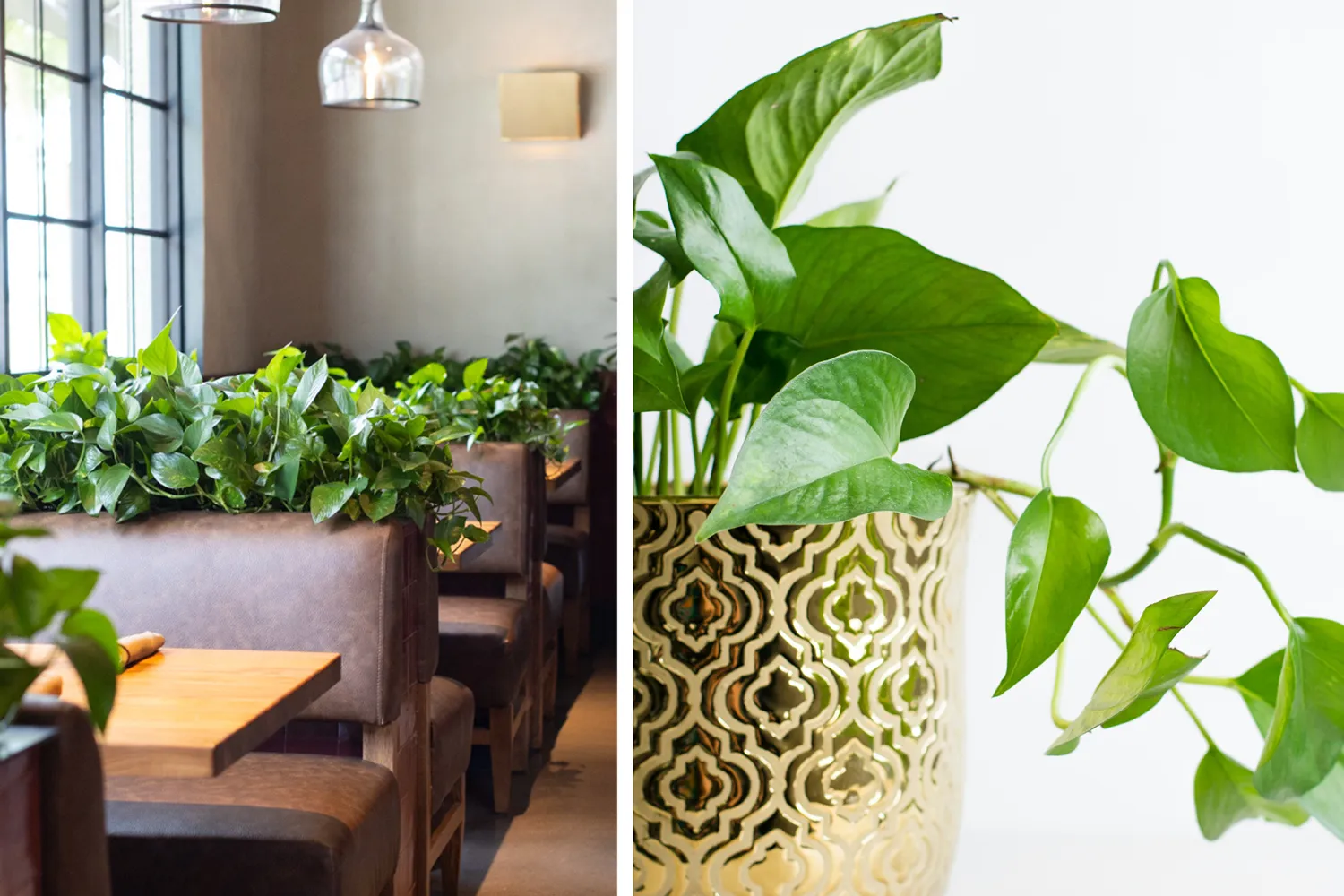
Pothos is one of the most forgiving low light plants available, and it looks good doing it. Its trailing vines and heart-shaped leaves work beautifully draped from a shelf, spilling out of a tall planter, or suspended in a hanging basket. In a commercial setting, pothos adds movement and texture without demanding anything in return.
As a low light plant, pothos tolerates irregular watering, dim overhead lighting, and the kind of benign neglect that’s inevitable in a busy workplace. Leaf color patterns may soften in very dim conditions, but the plant remains healthy and full. For offices with inconsistent natural light, pothos is one of the most reliable low light plants available.
2. ZZ Plant (Zamioculcas zamiifolia)

The ZZ plant is the closest thing to a maintenance-free low light plant that exists. Its thick, glossy dark green leaves look polished and architectural — at home in a modern lobby, a reception area, or a room with small or no windows. It stores water in its rhizomes, which means it handles drought and irregular watering with ease.
As confirmed by the University of Florida IFAS Extension, the ZZ plant tolerates extremely low light levels that would challenge most other plants. For spaces where low light plants need to hold up for months without significant care, the ZZ plant is a top-tier choice.
3. Snake Plant (Sansevieria / Dracaena trifasciata)
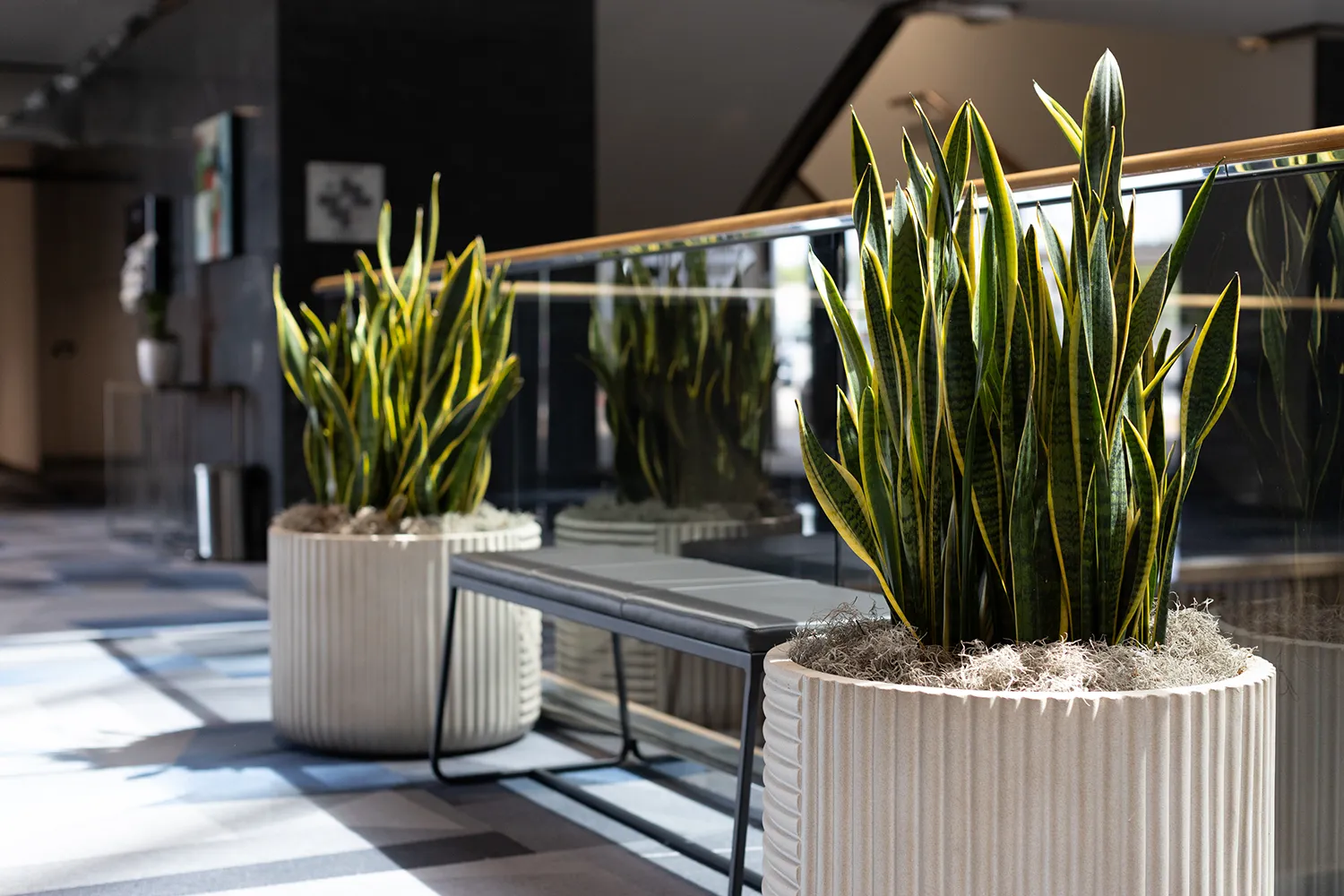
Few low light plants are as adaptable or as visually commanding as the snake plant. Its upright, sword-like leaves — often edged in gold or cream — create strong vertical lines that work well in tight spaces, corners, and narrow hallways. It thrives on neglect and, according to NC State University’s botanical research, can survive on as little as two to six hours of indirect light per day.
For spaces with limited natural light and limited time for plant care, the snake plant is one of the most consistently reliable low light plants on the market. It’s also one of the most popular choices in commercial interior plant design for exactly that reason.
4. Dracaena (Dracaena fragrans)
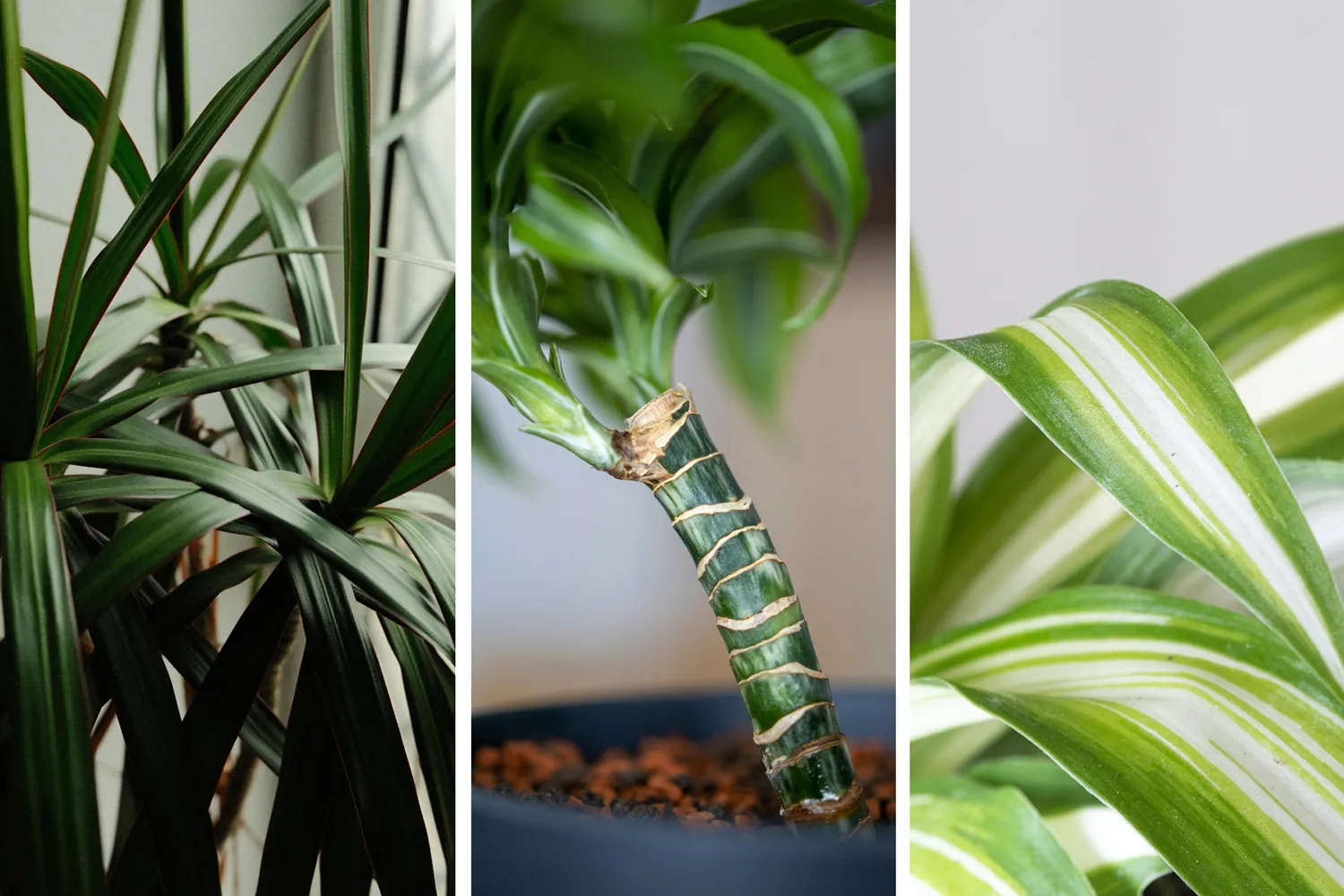
The Dracaena fragrans brings a sculptural, almost tropical quality to a commercial interior. Its long, arching leaves — often red- or cream-edged on the marginata variety — make it one of the more visually striking low light plants for professional spaces. It grows tall over time, which makes it an effective statement piece in lobbies, reception areas, and open-plan floors.
Dracaena handles low light well and requires infrequent watering, which makes it a strong candidate for plant rental programs in commercial spaces. Its slow growth also means it maintains its intended scale and proportion without constant pruning — a practical advantage in busy environments.
5. Chinese Evergreen (Aglaonema)
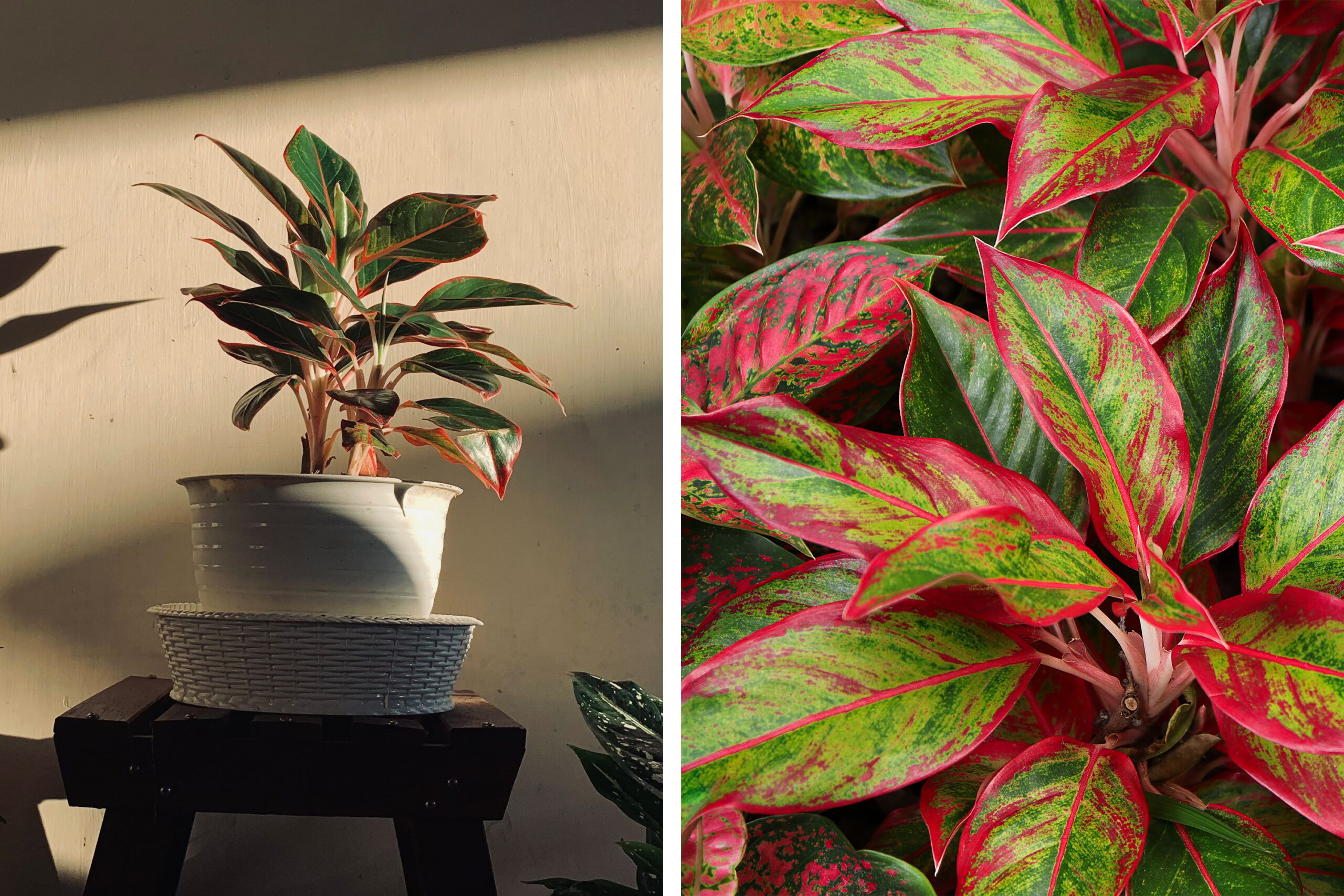
The Chinese Evergreen is one of the most forgiving low light plants in commercial use, and one of the most visually diverse. It comes in a wide range of leaf colors — deep green, silver-patterned, and even pink-tinged varieties — which gives designers flexibility when matching plants to a space’s existing palette. That visual range makes it a frequent choice in custom plant design work where aesthetic cohesion matters.
As noted by Penn State Extension, Aglaonema tolerates low light well and requires only occasional watering. It holds its color reliably even in suboptimal lighting — a quality that sets it apart from many other low light plants with comparable visual variety.
Putting low light plants to work in your office
Choosing the right low light plants is only part of the equation. Placement, container selection, and ongoing care all affect how these plants perform over time. A pothos that trails beautifully in month one can become overgrown and leggy by month six without occasional attention. A ZZ plant in a pot without drainage can develop root rot despite its drought tolerance.
For businesses that want the benefit of greenery without the guesswork, plant rental offers a practical solution — design, installation, and ongoing indoor plant maintenance bundled into a single monthly arrangement. Low light plants are selected for the specific conditions of your space, and a professional handles all care throughout the lease.
For businesses that already own low light plants and want to keep them thriving, Plant Solutions offers recurring horticultural service for commercial and high-end residential clients throughout the Phoenix metro area. Visits are scheduled around the needs of the plants, not a fixed calendar.
Whether you’re outfitting a new office or refreshing an existing space, low light plants are one of the most practical and cost-effective investments a business can make. Contact Plant Solutions to find the right fit for your space.
Don’t let dim lighting keep your workspace from thriving.
Reach out to Plant Solutions to find the perfect plant arrangement for your office.