
Something significant has shifted in what employees expect from the places they work. It isn’t just about salary anymore, or even flexibility. A growing body of research shows that younger workers — Millennials and Gen Z, who together will make up roughly 74 percent of the global workforce by 2030 according to Deloitte’s 2025 Gen Z and Millennial Survey — are redefining workplace wellness from the ground up. And the physical environment, including the presence of nature and greenery, is a bigger part of that definition than most employers realize.
For business owners and facility managers, this isn’t just an interesting cultural observation. It’s a hiring and retention reality that’s already reshaping how commercial spaces are designed.
The wellness gap is a generational story
Deloitte’s 2025 Gen Z and Millennial Survey, which polled over 23,000 respondents across 44 countries, found that 40 percent of Gen Z and 34 percent of Millennials report feeling stressed or anxious most or all of the time. Among those who said their job contributed significantly to their stress, toxic workplace culture ranked among the top three causes alongside long hours and inadequate recognition.
A separate study published in early 2026 found that six in ten Millennials and Gen Z workers would consider leaving their job if their wellbeing needs were not supported by their employer. That’s not a fringe preference — it’s a majority position among the generations that now dominate the workforce.
What makes this generationally significant is the contrast with older cohorts. Gen X workers, by comparison, are less likely to demand visible wellness support from employers and more likely to quietly adapt. Millennials and Gen Z are not quiet about it. They expect their work environment to reflect a genuine investment in their health, and they’re willing to walk if it doesn’t.

Why nature specifically? The biophilia connection
Workplace wellness covers a broad range of factors — mental health support, flexibility, meaningful work, fair pay. But the physical environment is one of the most immediate and visible signals an employer sends about whether they take wellness seriously.
Biophilic design — the intentional integration of natural elements into built spaces — has emerged as one of the most research-supported ways to improve how people feel at work. The connection isn’t accidental. Millennials in particular have been called the biophilic generation for good reason. Research consistently shows this cohort places an unusually high value on nature connection, sustainability, and environments that feel human rather than institutional.
A 2021 study from Hiroshima University published in the Journal of Cleaner Production found that younger generations were significantly more likely than older ones to prioritize sustainable, nature-connected living — and to make financial sacrifices to align their work with those values. That orientation doesn’t disappear when they walk into the office. It shapes what they expect to find there.
Gen Z, the cohort behind Millennials, carries this even further. A 2025 study published in BMC Public Health found that 46 percent of Gen Z respondents reported feeling stressed or anxious most or all of the time — a rate significantly higher than older generations. The same study noted that environmental factors, including the physical spaces where people spend their time, play a meaningful role in Gen Z’s well-being outcomes. For a generation navigating high anxiety levels and heightened sensitivity to their surroundings, the difference between a sterile office and a nature-connected one is not cosmetic.
Ready to attract the next generation of workers?
Contact us to start a conversation about your space today!

What this means for employers in practice
The data creates a clear business case for investing in workplace wellness environments that younger employees can actually see and feel. A few practical implications:
Biophilic design is a recruitment signal. Younger candidates evaluate workplaces before accepting offers. An office with living plant walls, natural materials, and genuine greenery communicates something immediately: this is a company that invests in its people. An office without those signals communicates something too.
Workplace wellness isn’t about trust falls — people need a consistent, harmonious environment. Mental health apps and wellness stipends matter, but they’re invisible during a site visit. Interior landscaping is one of the most tangible, visible ways to demonstrate a commitment to employee wellbeing. It’s something candidates and employees experience every day, not just when they remember to open an app.
Gen Alpha is next. By 2034, Millennials, Gen Z, and Gen Alpha will make up 80 percent of the labor market, according to the World Economic Forum. Gen Alpha, currently entering their teen years, has grown up even more immersed in digital environments than Gen Z, which researchers suggest will make their need for physical, nature-based counterbalance even more pronounced. Employers who build nature-connected workplaces now are ahead of a curve that will only steepen.
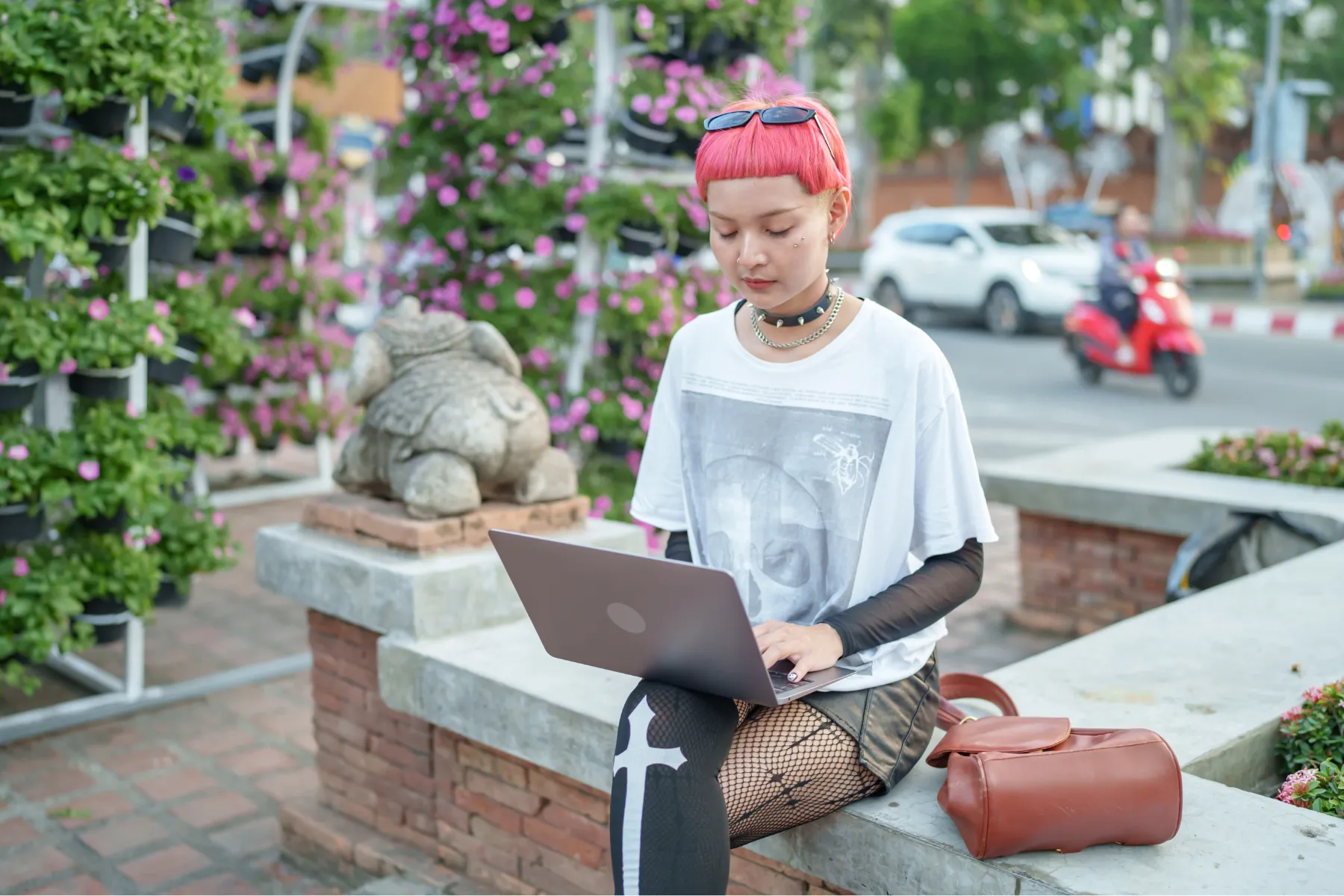
Plants as a practical starting point
For many businesses, the jump to full biophilic design feels large. It doesn’t have to be. The research doesn’t require a complete renovation — it requires intentionality. Even modest introductions of greenery have been shown to shift how people perceive and experience a space.
Plant rental programs offer a low-commitment entry point for businesses that want to test the impact of greenery before committing to permanent installations. For businesses ready to make a stronger statement, living plant walls, MossWallArt™, and custom design installations create the kind of nature-connected environment that younger employees actively seek out.
The generational shift is already underway. Businesses that treat workplace wellness as a physical design priority — not just an HR policy — will be better positioned to attract, retain, and engage the workforce that’s already here and the one that’s coming.
Plant Solutions works with businesses across Phoenix, Tempe, Mesa, and Chandler to design interiors that support the well-being of the people who use them. Contact us to start a conversation about what that could look like for your space.
Boost retention and wellness with biophilic design. Let’s green your office!