
For a long time, artificial plants had a reputation problem. The stiff plastic leaves, the too-perfect symmetry, the slightly wrong shade of green — they were easy to spot and easy to dismiss. That era is over. Today’s realistic artificial plants are a different product entirely, and for many Arizona businesses, they’re becoming a first choice rather than a fallback.
But not all artificial plants are created equal. If you’re considering artificial plants for your commercial space, here’s what actually separates a convincing installation from one that reads as fake from across the room.
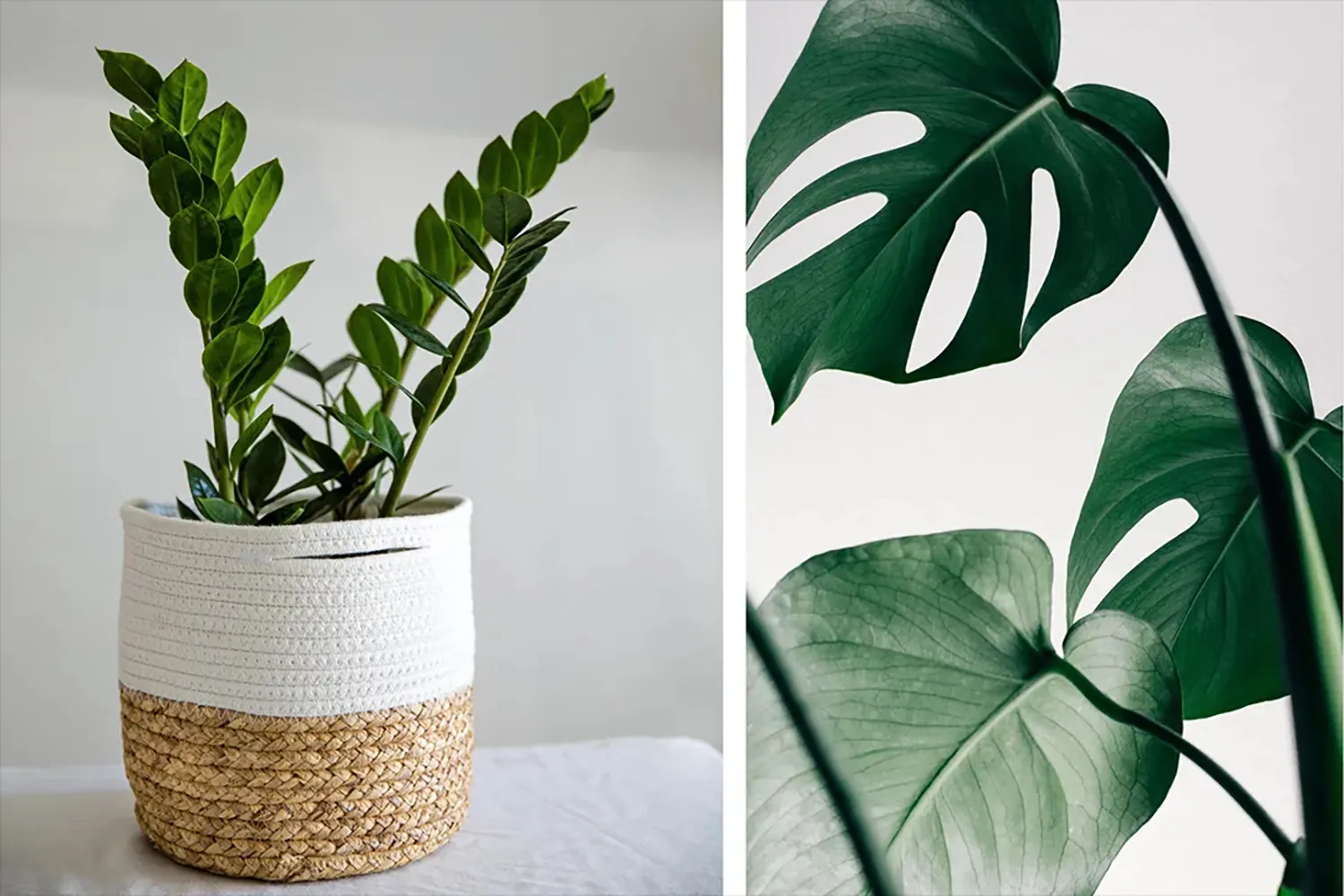
What makes premium artificial plants look real?
The gap between a convincing faux plant and a cheap one comes down to a handful of specific details:
Texture and variation. Real leaves aren’t uniform. They have subtle color gradations, vein patterns, minor imperfections, and variation between individual leaves. High-quality artificial botanical installations replicate this variation deliberately. If every leaf on a plant looks identical, it’s a giveaway.
Soft-touch materials. When someone reaches out and touches a plant — and they will — the material tells the story immediately. Premium realistic artificial plants use soft-touch or “real touch” processing that mimics the feel of actual foliage rather than hard plastic.
Natural stem and branch structure. Realistic artificial plants are built on wire armatures that allow branches and stems to be shaped and repositioned, just as you would with a living plant. This flexibility allows designers to create arrangements that feel organic rather than rigid.
Weight and proportion. A plant that looks too perfect or too symmetrical signals artificiality. Well-crafted faux plants include intentional asymmetry in their structure because nature itself is asymmetrical.
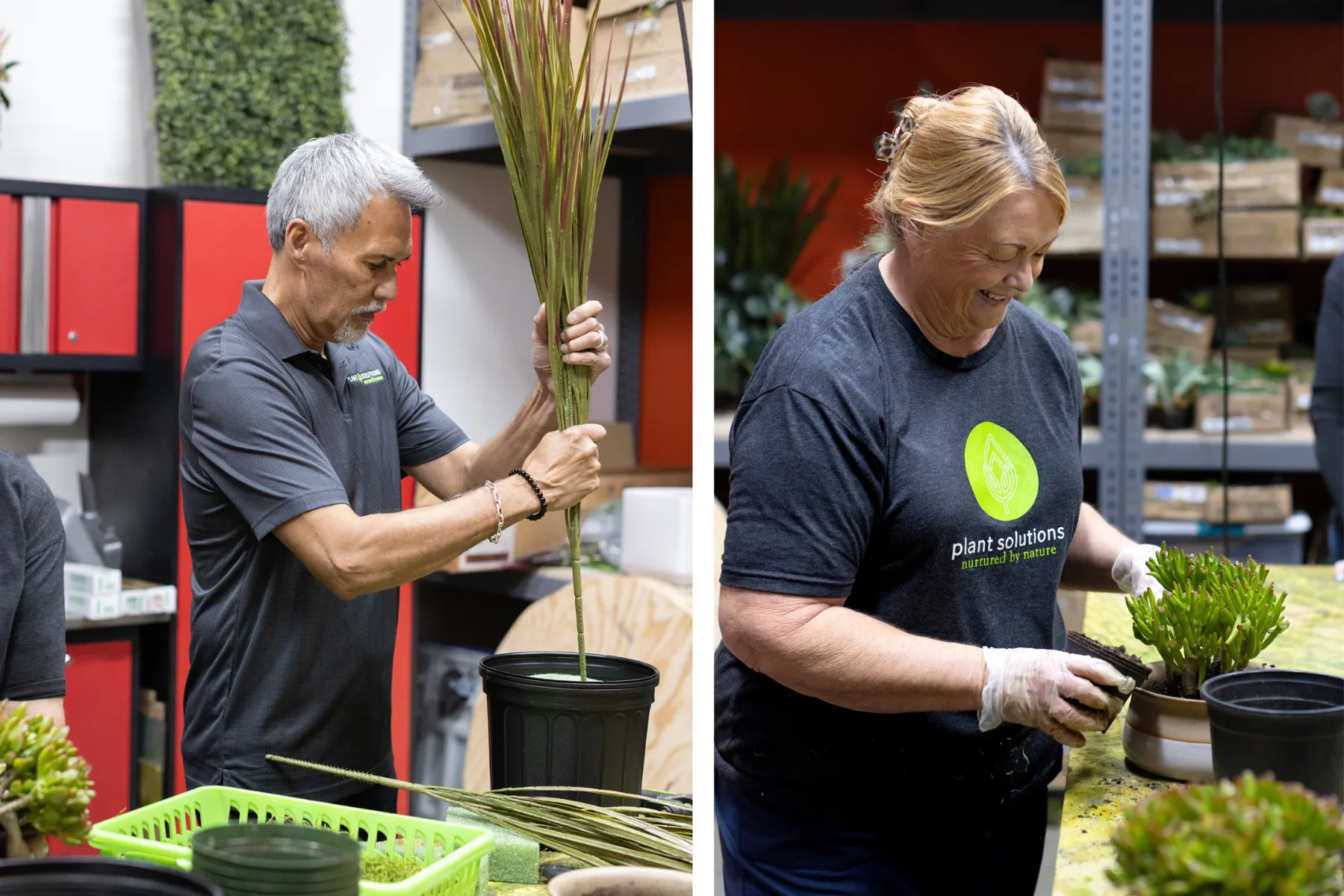
At Plant Solutions, our custom-built artificial installations are designed with all of these factors in mind. The result is greenery that consistently fools even experienced eyes.
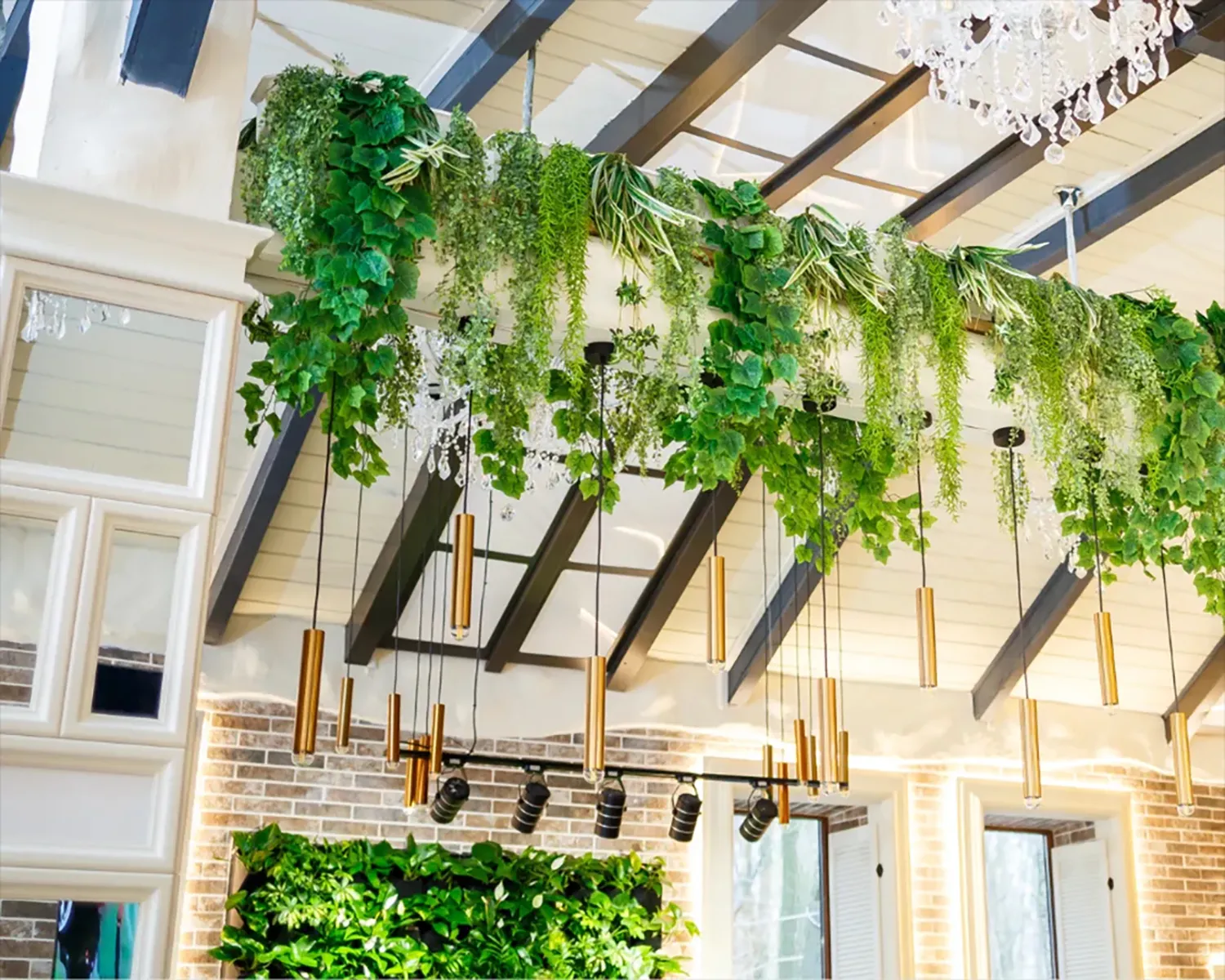
Do realistic artificial plants actually provide any benefits beyond aesthetics?
This is a fair question, and the research offers a nuanced answer. Live plants do provide benefits that artificial ones cannot replicate — air purification, humidity regulation, and fragrance among them. Our article on real greenery vs. replicas covers this distinction in detail.
That said, the visual benefits of realistic artificial plants are more significant than most people expect. A 2023 study published in Scientific Reports found that even virtual representations of plants in a digital office environment led to measurably better short-term memory performance and creativity scores, along with higher psychological well-being, compared to plant-free spaces. The researchers attributed this to the brain’s stress-reduction response, which appears to activate in the presence of plant-like visual stimuli regardless of whether the plants are living.
For businesses where live plants aren’t practical, this matters. A well-placed, high-quality artificial plant installation still contributes to how people feel in your space. Of course, realistic artificial plants can’t replace all the benefits of live greenery, but they definitely have measurable positive effects on well-being.
When does it make sense to choose high-end artificial plants?
Artificial plants are a strong standalone choice in several specific situations, and a practical complement to live plants in many others.
Low or no natural light. Some commercial spaces — interior hallways, windowless conference rooms, basement-level retail — simply can’t support live plants without expensive supplemental lighting. Realistic artificial plants thrive in any light condition, including none at all.
High-traffic or high-risk areas. Entryways, event spaces, and areas near HVAC systems can be hard on live plants. Artificial installations hold up without the fragility.
Allergy-sensitive environments. Medical offices, clinics, and wellness centers sometimes need to avoid live plants due to pollen or mold concerns. Realistic artificial plants deliver the visual calm of greenery without the allergen risk.
Outdoor spaces in Arizona. This is where artificial plants offer something live plants genuinely can’t match in our climate: consistency. UV-resistant outdoor artificial plants are engineered specifically to withstand sun exposure without fading or cracking. In Arizona’s desert climate, where UV intensity is among the highest in the country, placement matters significantly. Artificial plants installed in covered or shaded outdoor areas — patios, covered entryways, shaded courtyards — can maintain their appearance for up to five years. Indoors, away from direct sunlight, that lifespan extends considerably longer.

A note on longevity claims: you may see some vendors advertising 10-year lifespans for outdoor UV-resistant artificial plants. In Arizona’s climate specifically, we consider that figure overly optimistic. UV exposure here is genuinely intense and year-round, and realistic expectations serve our clients better than inflated promises.
What to watch out for when evaluating realistic faux plants
If you’re sourcing artificial plants on your own, here are the most common quality red flags:
- Leaves that are uniformly the same color with no gradation
- Hard or plastic-feeling foliage with no flexibility
- Perfectly symmetrical branching with no variation
- Visible seams or molding marks on leaves or stems
- Stems that can’t be repositioned or shaped
The difference between a budget faux plant and a professionally sourced botanical replica is significant — and in a commercial setting, that difference is immediately visible to anyone who walks through the door.

Realistic artificial plants as part of a broader design strategy
For many businesses, the best approach combines live and artificial elements strategically. Live plant rental works beautifully in well-lit, accessible areas where ongoing maintenance is manageable. Realistic artificial plants fill the gaps — the dark corners, the outdoor patios, the high-traffic zones, the spaces where live plants simply wouldn’t survive. You can read more about how these two approaches work together in our guide to plant design basics.
This hybrid approach is something Plant Solutions designs regularly for commercial clients across the Phoenix metro area. Our team assesses each space individually and recommends the combination that delivers the best visual result with the most practical long-term maintenance profile.
If you’re ready to explore what realistic artificial plants could do for your space, contact Plant Solutions to schedule a consultation. We’ll show you the difference quality makes in person.
Ready to See the Difference Quality Makes?
From medical offices to high-traffic commercial lobbies, we provide the visual calm of greenery without the maintenance hassle.