
Soaring specimen indoor trees, live greenery cascading from the ceiling, and plant walls that transform lobbies: these are examples of biophilic design elements that create interiorscapes. The expertise behind them is more specialized than you may imagine.
The term interiorscape refers to the professional design, installation, and maintenance of plant environments inside built spaces. It’s a bit different from placing a few plants on office desks and tables. A true interior landscape is planned with the same rigor applied to any architectural element — with attention to light, airflow, spatial proportion, species selection, and the human experience of the space.

Interiorscaping as a professional field
Interior landscaping has grown significantly as a recognized design discipline. According to Technavio’s 2026 interior design services market analysis, the commercial interior design segment — which increasingly integrates biophilic elements like living plant installations — is outpacing residential growth with a projected 12.26% Compound Annual Growth Rate through 2031. Businesses are investing in space quality at a level not seen before, and interior landscapes are central to that shift.
The interiorscape industry has its own professional standards, award programs, and specialized expertise. The Tropical Plant International Expo (TPIE) annually recognizes outstanding commercial interior landscape installations. Plant Solutions has earned multiple awards in the interiorscape industry, including Platinum recognition for projects across the Phoenix metro area.
What an interior landscape includes and entails
A fully realized interior landscape can include many elements working together: living container plants and specimen trees, plant walls and vertical green installations, preserved MossWallArt™, custom-built planters, artificial botanical installations, and seasonal plantings that shift throughout the year. Large-scale interiorscapes require a coordinated process that begins weeks or months before installation day. It involves environmental assessment, species selection, contractor coordination, logistical planning, and hands-on horticultural expertise. Check out one of our recent articles to learn what that process actually looks like.
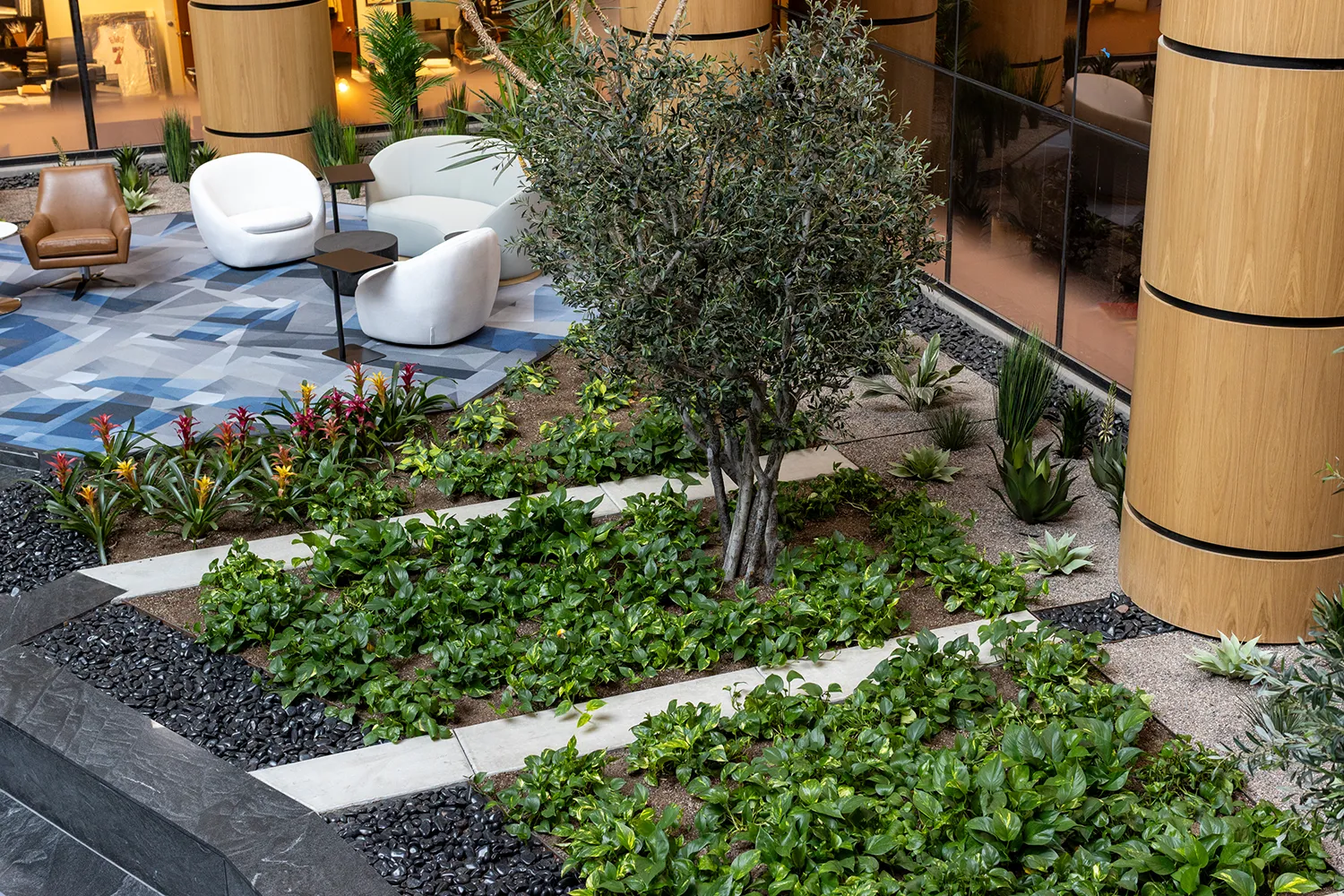

The Atria project illustrates the importance of both atmospheric intention (great design) and quality execution (great installation). Plant Solutions transformed an indoor atrium at the former Paradise Village Office Park. The design team created an interior landscape of over 2,000 botanical elements — 40 percent of which were custom, handcrafted faux plants, including six custom-fabricated 12-foot artificial olive trees that each required 80 hours of artisanal construction. Living bromeliads, aglaonemas, and yucca trees filled the areas where conditions supported them. The result was a lush, biophilic environment that worked within the building’s irrigation constraints without sacrificing experiential impact.
How are professional interiorscapes different from having office plants?
The distinction between an interiorscape and a collection of office plants comes down to intent and expertise. The goal of high-end interiorscaping is to create an experience, an ambiance, an awe-striking vibe. Basic plant placement fills empty corners. A professional interior landscape shapes how people move through a space, how they feel in it, and what they remember about it afterward.
The Blanco Cocina + Cantina project is a strong example of interiorscaping in a hospitality context. Working with Fox Restaurant Concepts and designer Brianna Raya, Plant Solutions created an interior landscape that blended living tropical plants with custom-built artificial trees — each constructed with real wood trunks and precise height, spread, and canopy balance. Inside, booth-separating planters shaped the flow of the dining room and included dramatic uplighting providing warmth and depth.
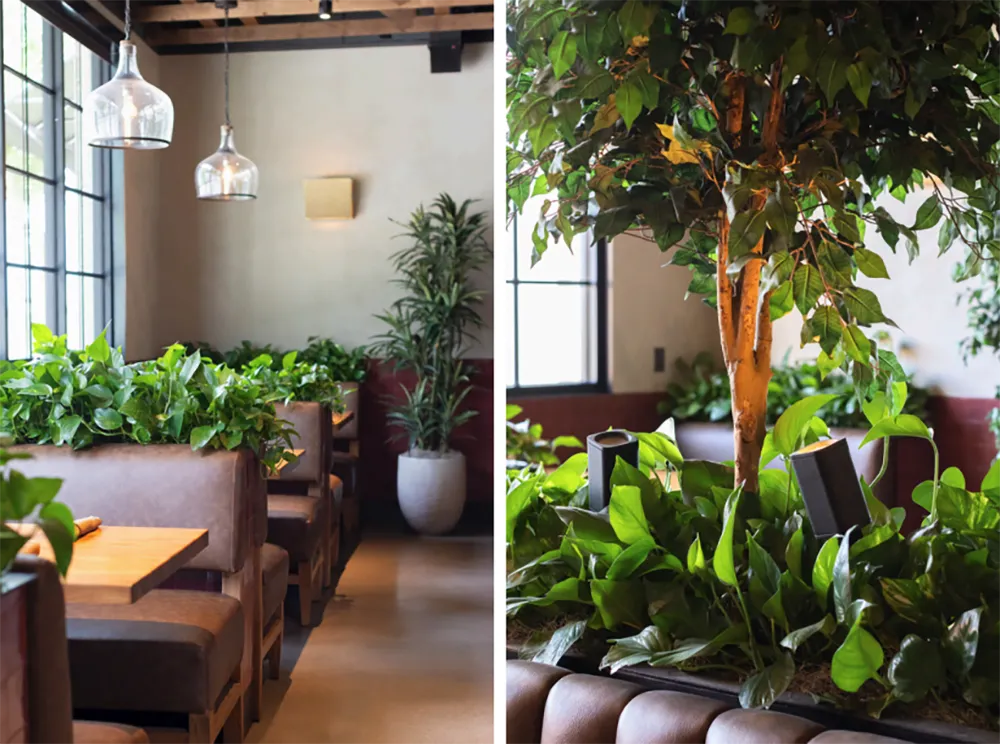
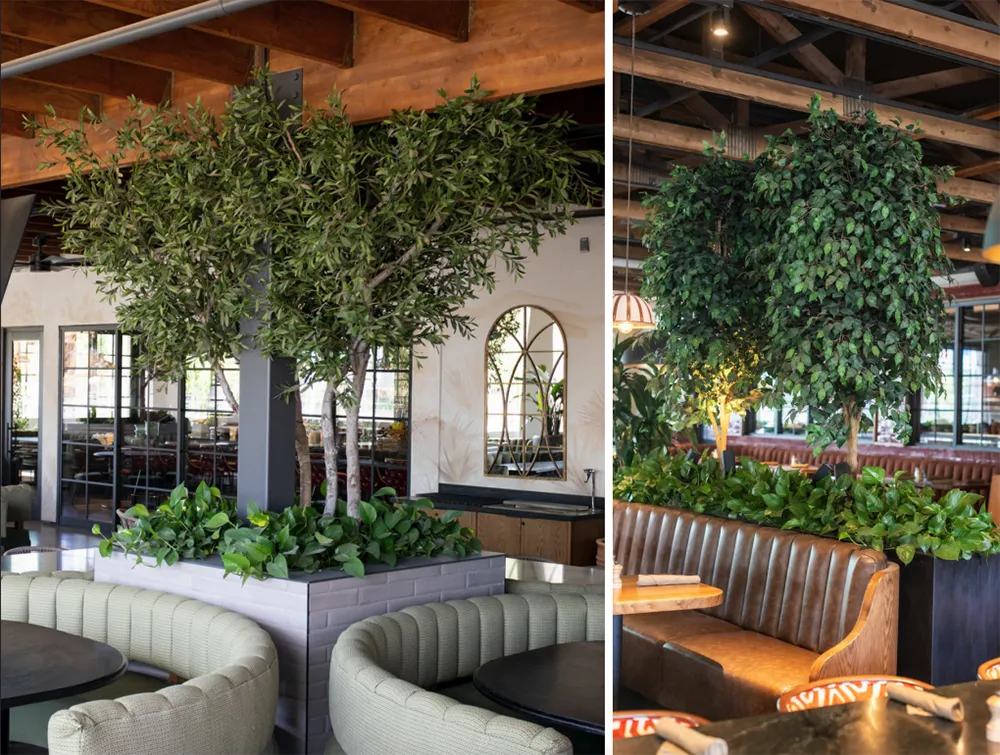
As Plant Solutions Lead Biophilic Designer and Co-owner Joe Zazzera noted of the project: “The best part of this project was the client’s ability to trust our design vision and our ability to pivot quickly when changes arose. This level of authentic, human-centered collaboration led to the best outcome imaginable.”

Interior landscaping in Arizona
In Arizona’s desert climate, the case for interior landscaping is especially compelling. The outdoor environment offers limited natural greenery for much of the year, and the combination of intense sun, low humidity, and constant air conditioning creates indoor conditions that can feel disconnected from the natural world. As we explore in our article on biophilia and healing, research consistently shows that exposure to natural elements — even indoors — reduces stress, improves cognitive performance, and elevates mood.
Arizona’s climate also introduces practical design challenges that a professional interiorscape team is equipped to solve. Irrigation constraints, intense UV exposure near windows, dim lighting, and high HVAC loads all affect which plants will thrive in a given space.
Getting started with an interiorscape
Interior landscaping scales to fit nearly any space or budget. Just one well-chosen installation — a statement planter, a curated grouping of floor plants, a piece of MossWallArt™ — can shift the feel of a space in a meaningful way. Larger projects can anchor an entire building’s identity.
For businesses that want the benefits of a professionally maintained interior landscape without the cost of ownership, plant rental bundles design, installation, and ongoing indoor maintenance into a single monthly arrangement. For businesses that already own plants, Plant Solutions offers recurring horticultural service to keep every installation performing at its best.
Discover what Plant Solutions can do for your space.