
Many artificial plant quotes look cheaper on day one. That price only holds if you ignore what a living plant actually returns: measurable gains in productivity, morale, and how a space makes people feel. Independent research backs each of those outcomes. Here’s what it shows, and what it means for your bottom line.
- 15% productivity increase from adding plants to a bare office: University of Exeter field study.
- 15% higher employee wellbeing and 15% greater creativity in workplaces with natural elements: Human Spaces Report, Interface.
- 58% less depression and dejection reported by staff after plants were added to their offices: University of Technology Sydney.

The performance gap
Researchers from the University of Exeter, University of Groningen, and University of Queensland tested this directly, not in a lab, but in real offices in the UK and the Netherlands. They compared bare, “lean” spaces to the same spaces after adding plants and found a 15% rise in productivity, along with real gains in concentration and satisfaction.
Interface’s Human Spaces study of 7,600 workers across 16 countries backs this up. Natural elements like live plants drove 6% higher productivity, 15% higher wellbeing, and 15% greater creativity. Live plants ranked as the second most-wanted office feature worldwide, behind only natural light.
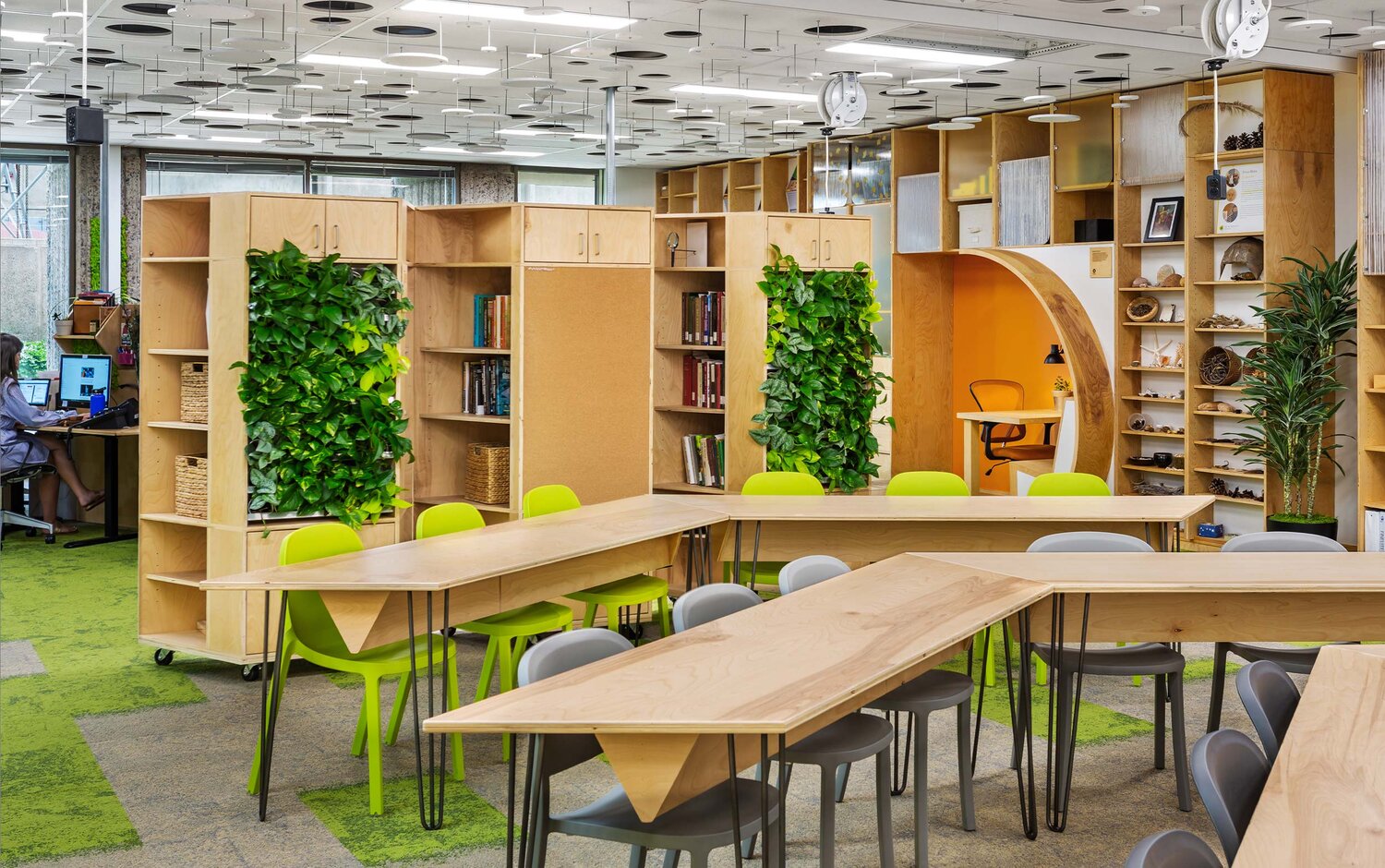
Here’s what that gap is worth: A 20-person office earning the Phoenix-area average wage of $69,600 a year, per the U.S. Bureau of Labor Statistics (Phoenix-Mesa-Chandler, May 2025), represents roughly $1.39 million in annual payroll. A 15% productivity lift on that team pencils out to an estimated $208,800 a year in recovered output, against a service contract that runs a few hundred dollars a month.
Seriously, $200,000? Yes, we’re serious. Of course, we can’t promise every office will see exactly this return. The 15% productivity figure comes from controlled research on task performance, not exact payroll dollars recovered. But this illustration shows the value of live plants, and how greener offices mean greener bank accounts.

The wellbeing dividend
Plants do more than increase productivity. They make people feel measurably better at work. The University of Technology Sydney found that employees in planted offices reported 58% less depression and dejection, 44% less hostility, 38% less fatigue, and 37% less tension and anxiety than those in plant-free spaces.
A separate study of 51 office workers by Norway’s Agricultural University found a 23% drop in reported health complaints, including fatigue, headaches, and sore throat, when plants were present. That effect comes from a living, changing element in the room, not something a static arrangement can replicate.
Where artificial plants still make sense
Artificial plants have a place. In low-light interior corridors, spaces with no water access, or a buildout that needs a polished look with zero maintenance, a well-made artificial arrangement solves a real problem living plants can’t. What the research above doesn’t show is a productivity or wellbeing return for synthetic greenery. If your goal is a specific, measurable ROI in employee performance and morale, living plants are the option with data behind them.
What a plant care investment buys you
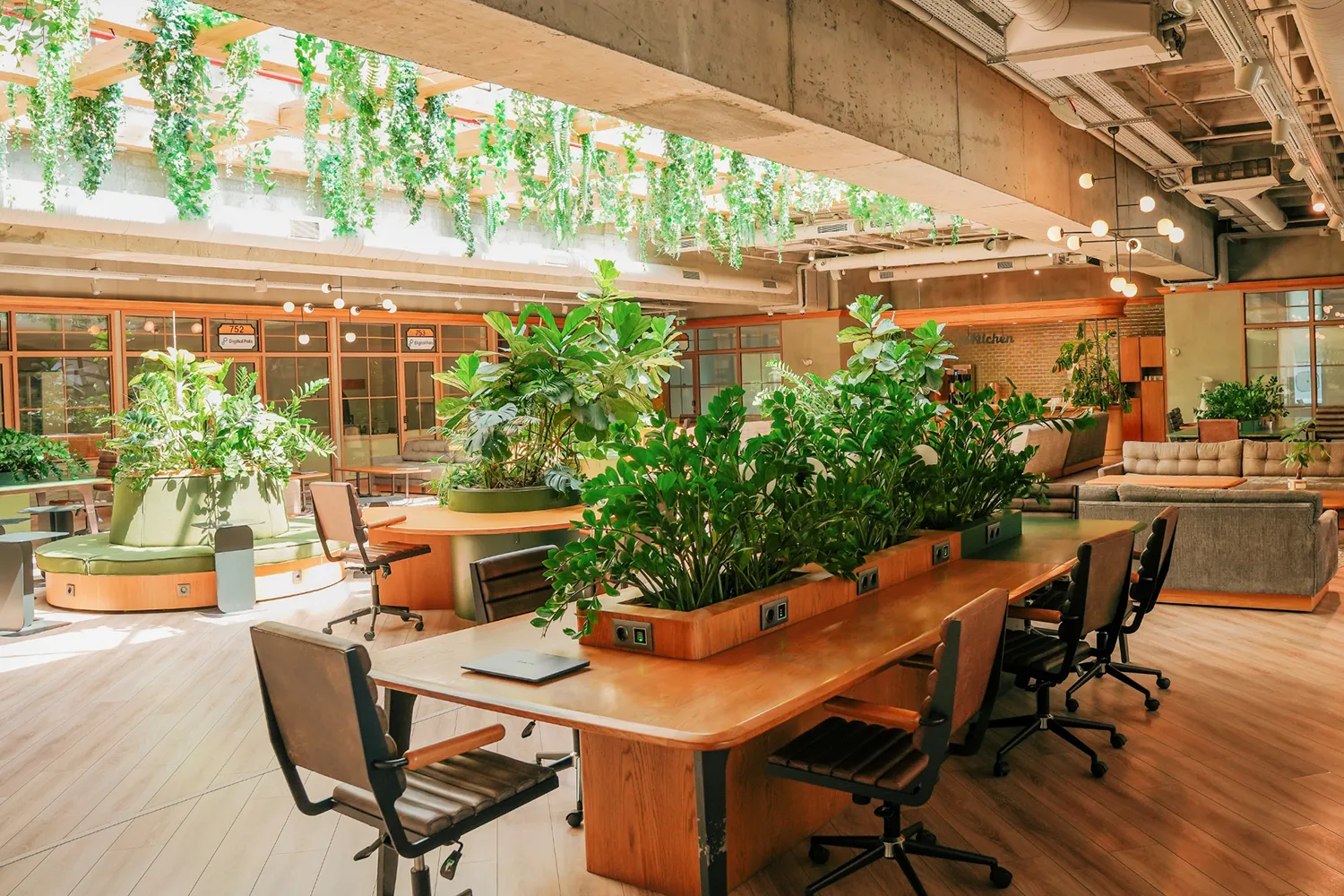
A monthly plant care budget is about more than branding, decoration, or staying competitive; it’s about employee wellness, smart spending, and investing in people. Plant Solutions provides professionally designed greenery matched to your space and light conditions, expert rotation and pest management, zero maintenance burden on your staff, and plants that consistently look their best in front of clients, job candidates, and your team.
Let’s assess your space and show you exactly what living plants can do for your team.
We offer complimentary space assessments across the Phoenix metro area.