
In recent years, biophilic design has become a common visual language in restaurants, offices, and hospitality interiors. Green walls, hanging foliage, and plant-filled spaces are often used to signal wellness, calm, and connection to nature. As this approach has expanded, so has the use of artificial plants marketed as biophilic alternatives.
A 2024 peer-reviewed study published in Civil Engineering and Architecture examines whether artificial plants deliver the same psychological benefits as living ones when used in interior environments. The research focuses specifically on food and beverage interiors, where customer comfort and emotional response play a central role in spatial experience.
Before diving into this article summary, it’s important to note that the study evaluated spaces using standard artificial plant installations, not custom, hyper-realistic botanical replicas. The research does not specify the material quality, movement, tactile realism, or craftsmanship of the artificial plants used. As a result, the findings should be interpreted within that context.
120 people, 6 different restaurants, 2 types of plants
The researchers asked a clear question: Does the use of natural interior plants lead to higher psychological comfort and well-being than artificial plants in restaurants? To explore this, the study compared customer responses in six restaurants and cafés in Duhok City, Iraq. Three locations used natural interior plants, while the other three used artificial interior plants (the study did not specify the quality of natural or artificial plants used).

A total of 120 regular customers participated, evenly split between the two conditions. Surveys were conducted during normal weekday evenings to reflect everyday use rather than special events or peak conditions.
How the survey measured comfort and well-being
The study measured people’s responses using established WELL guidelines for health and well-being, specifically the MIND category, rather than relying solely on subjective judgments. Survey responses were measured using a five-point Likert scale and analyzed using the Mann–Whitney U test, a statistical method for comparing two independent groups.
Below are the four WELL features used to develop the survey tool:
- Beauty and Design I & II (Features 87 and 99). These features focus on how aesthetics, spatial harmony, and design quality contribute to comfort, familiarity, and positive emotional response. They address whether a space feels thoughtfully designed and emotionally supportive.
- Biophilia I & II (Features 88 and 100). These features focus on human connection to nature, including the presence of natural elements, patterns, light, and materials that support mood, reduce stress, and strengthen psychological well-being.
Participants rated statements related to:
- Aesthetic comfort
- Mood enhancement
- Sense of connection to nature
- Overall psychological comfort and well-being

Psychologically, live plants win
The findings are significant. Participants seated in environments with natural interior plants reported higher overall psychological comfort, stronger positive mood responses, and a greater sense of connection to nature. Those in spaces with artificial plants consistently scored lower across the same measures.
The likelihood that this difference occurred by chance was extremely low, less than one-tenth of one percent. In short, customers exposed to real plants experienced measurably better psychological outcomes than those surrounded by artificial replicas.
Why did standard artificial plants fall short?
The research does not suggest that artificial plants are visually ineffective or disliked. In fact, artificial greenery often contributed to aesthetic appeal. However, the researchers found that visual similarity alone did not translate into the same psychological response.
The discussion highlights several reasons for this gap:
- Humans are neurologically wired to respond to living systems
- Sensory cues associated with real plants extend beyond appearance
- Artificial representations lack the subtle biological signals that reinforce human-nature connection
Go beyond the “green look.” Elevate your interior with living, breathing design.
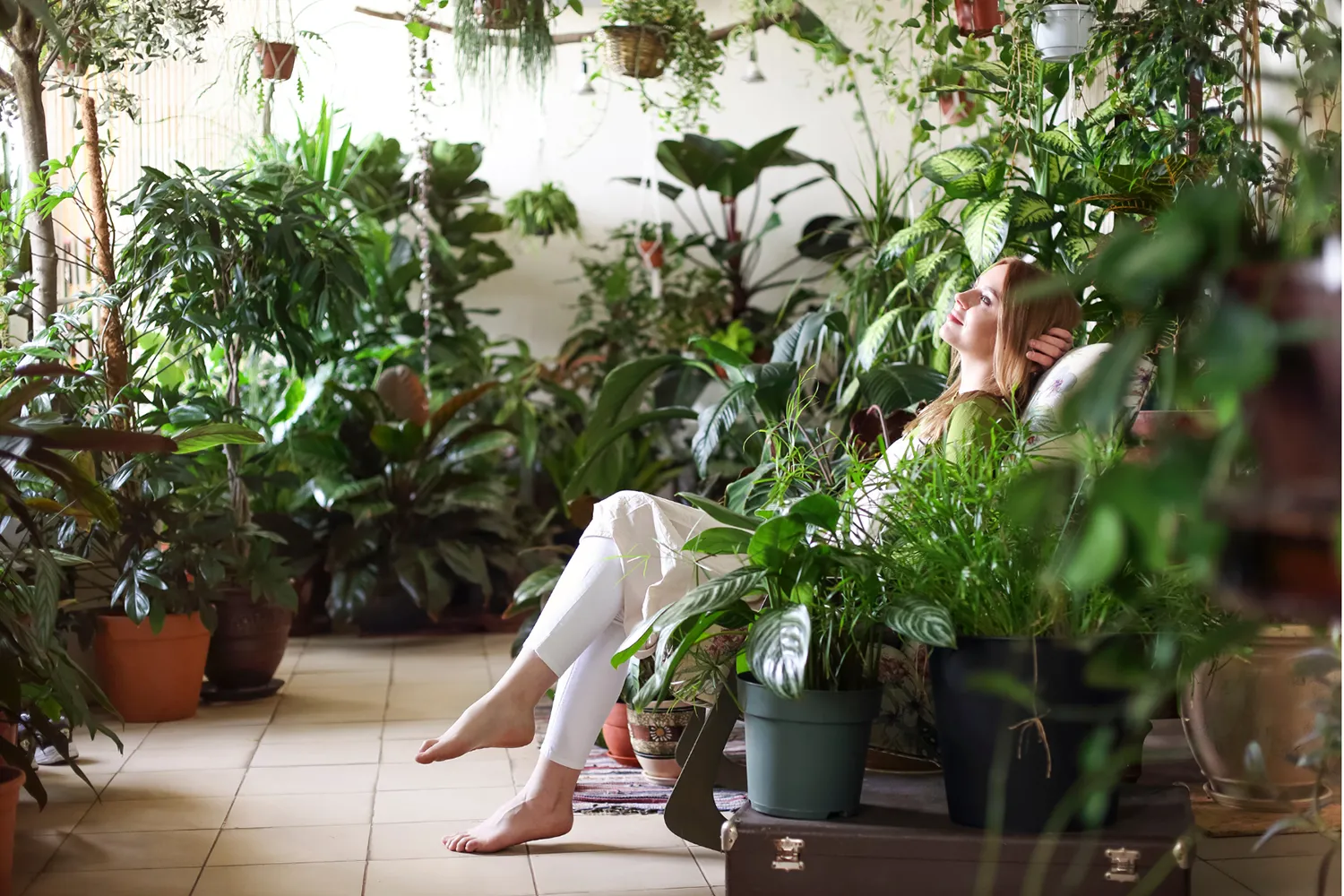
This distinction aligns with broader environmental psychology research showing that representations of nature can support atmosphere, but direct interaction with living elements produces stronger and more consistent well-being effects.
Would hyper-realistic fake plants change the results?
It remains an open question whether high-end, meticulously crafted artificial plants would influence psychological comfort differently. For example, Plant Solutions sources premium materials for their custom designed faux botanicals. These new technologies mirror the visual and tactile qualities of living plants (and often fool horticulturalists themselves!). The authors of this study did not describe the level of realism, material quality, or sensory characteristics of the artificial plants used.
Would faux plants that flow freely in the wind and feel real to touch provide different results? In spaces where live plants are not feasible due to maintenance, budget, or environmental constraints, artificial greenery certainly outperforms the absence of greenery altogether.
Here’s another limitation to keep in mind: aside from the types and amounts of plants used, the study does not specify other room characteristics that may have influenced the results. For example, it is unclear whether any of the restaurants included additional natural elements such as exposed wood, water features, or large open windows.

The authors note a few additional factors for readers to consider: the sample size was limited to one city, and cultural context may influence perceptions. These limitations certainly don’t invalidate the findings, but they highlight the need for additional studies across regions, building types, and demographic groups.
What does this mean for the design industry?
One of the most important contributions of this study is its challenge to the assumption that all “green-looking” interiors are equally biophilic. The authors concluded three important ideas:
- Biophilic intent matters, but material authenticity matters more
- Artificial plants may support decoration, but they do not fully activate biophilic mechanisms
- Psychological comfort is influenced by both perception and biological response
For designers, this reinforces the idea that biophilic design is not simply a visual strategy. It is a health-oriented design approach that relies on genuine interaction with natural systems.
The science is in: connection to nature is experiential
As artificial greenery becomes more common, this research offers useful guidance for designers weighing aesthetics, maintenance, and well-being. The research reinforces a central principle of biophilic design: connection to nature is not symbolic alone. It is truly experiential.
Connection to nature is an experience, not a decoration. Create it with us.