
If you’ve ever walked into a hotel lobby filled with towering palms, a corporate office lined with lush plant walls, or a restaurant where greenery seems to grow from every corner, you’ve experienced interior landscaping in action. But what exactly is interior landscaping, and how do you know if it’s right for your business?
This guide breaks it down — plainly and practically.
What is interior landscaping?
Interior landscaping is the professional design, installation, and maintenance of plants and greenery inside a building. It goes well beyond placing a potted fern in a corner. A well-executed interior landscaping plan treats your indoor space the way a landscape architect treats an outdoor one — with intention, expertise, and a clear understanding of how plants interact with light, space, and the people who use it.
Interior landscaping can include container and potted plants, living plant walls, preserved moss wall art, artificial botanical installations, custom-built planters, and even seasonal holiday plant displays. The goal is to integrate nature into your space in a way that is both functional and visually cohesive.
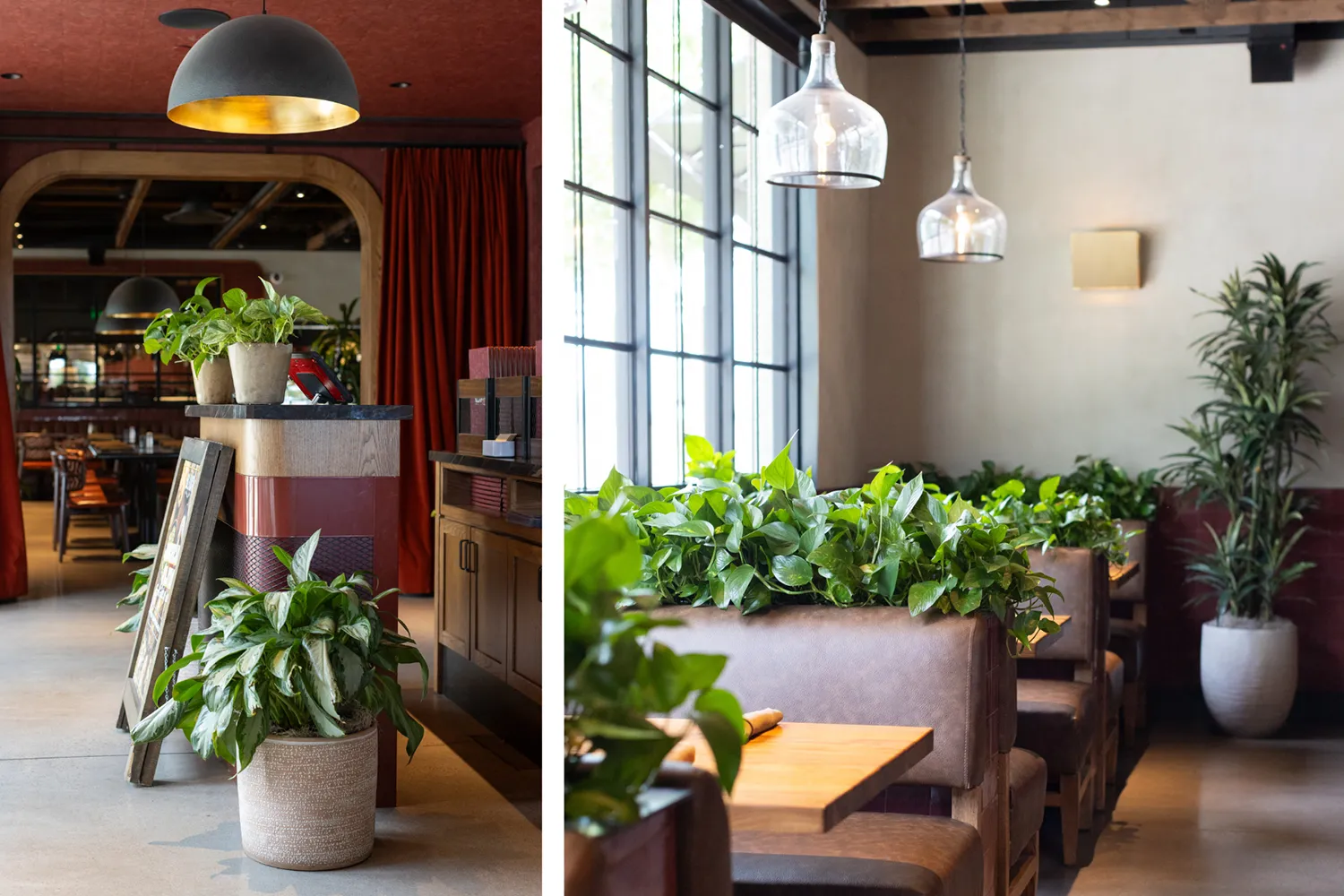
Interior landscaping is also a core component of biophilic design — the practice of connecting built environments to the natural world to support human well-being. As the University of Washington’s Green Cities research program notes, having high-quality greenery in and around workplaces helps restore the mind’s ability to focus, improves job performance, and alleviates mental stress. That research base is one reason interior landscaping has moved from a design luxury to a recognized workplace investment.
What does interior landscaping look like in a business setting?
Interior landscaping takes many forms depending on the size, function, and aesthetic of your space. Here are some of the most common applications:
Office lobbies and reception areas — A statement planter, a piece of MossWallArt™, or a curated grouping of floor plants creates a strong first impression. It signals a thoughtful, people-centered workplace.
Conference rooms and collaborative spaces — Interior landscaping in meeting spaces can reduce acoustic noise, soften hard surfaces, and create an environment that feels less institutional and more human. Moss wall installations are particularly effective here, as certain moss types carry a Noise Reduction Coefficient (NRC) rating that measurably absorbs ambient sound.
Retail and hospitality environments — Restaurants, hotels, and retail spaces use interior landscaping to shape the mood of the customer experience. Greenery slows people down, encourages them to linger, and creates emotional associations with comfort and quality.

Healthcare and wellness facilities — Interior landscaping in medical offices, therapy practices, and wellness centers has been shown to reduce perceived wait times and lower patient anxiety. Nature, even indoors, has measurable calming effects on the nervous system.
Open-plan and coworking offices — Plants are one of the most flexible tools for defining zones, softening acoustics, and creating visual interest in large, open environments. A well-considered plant design can transform a sterile open floor plan into a space that feels intentional and human-scaled.
Why interior plant design is more than decoration
A 2023 field study published in Frontiers in Psychology followed employees across nine Dutch organizations before and after plants were added to their workspaces. Researchers found that workers consistently rated their spaces as more appealing, and reported that the plants contributed positively to their health and well-being — even when the plants were chosen primarily for air quality benefits rather than aesthetics. The study noted that selecting plants based on attractiveness, as a professional interior landscaping company would, is likely to increase that impact further.
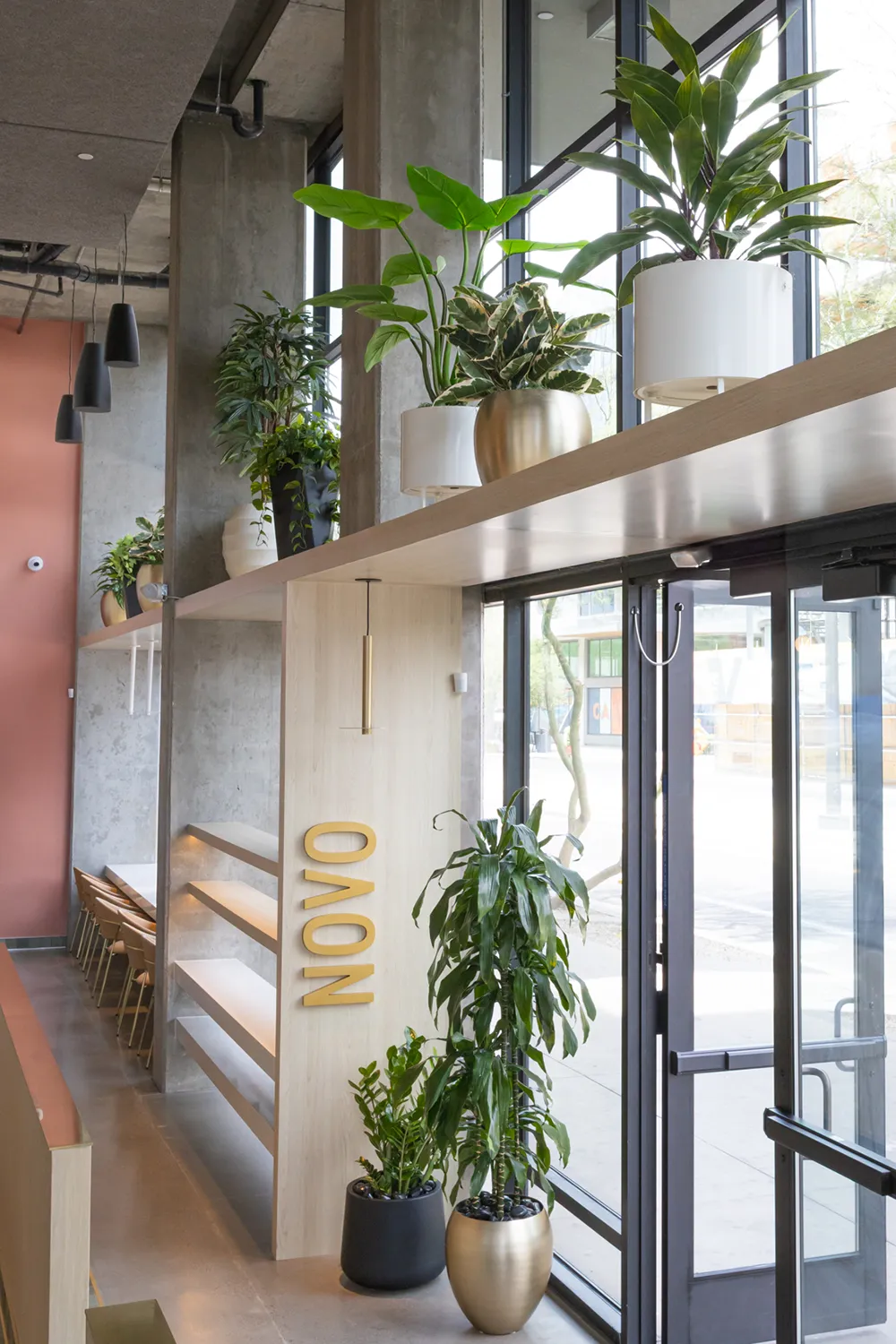
Interior landscaping also plays a measurable role in acoustic comfort. Dense plantings and moss walls absorb and diffract sound waves, reducing echo in hard-surfaced commercial spaces. For businesses with open layouts, this is a practical benefit that goes well beyond aesthetics.
Perhaps most importantly, interior landscaping shapes how clients and visitors perceive your brand. Spaces with well-maintained greenery read as more professional, more inviting, and more trustworthy — a first impression that’s difficult to achieve through other means.
Does your business need interior landscaping?
Not every business needs a floor-to-ceiling living wall. But almost any commercial space can benefit from some form of interior landscaping. A few questions to help you assess:
- Do clients, patients, or customers spend time in your space? If so, interior landscaping directly shapes their experience and perception of your brand.
- Do employees work in your space full-time? Interior landscaping contributes to retention, morale, and day-to-day well-being.
- Is your space visually plain, acoustically harsh, or lacking character? Interior landscaping is one of the most cost-effective ways to address all three at once.
- Are you in a desert climate where outdoor greenery is limited? In Arizona, interior landscaping brings a sense of natural connection into spaces that might otherwise feel entirely disconnected from the natural world.
If you answered yes to any of these, interior landscaping is worth a conversation.
Interior landscaping options at every scale
One of the most common misconceptions about interior landscaping is that it requires a large space or a large budget. In reality, it scales to fit nearly any situation.
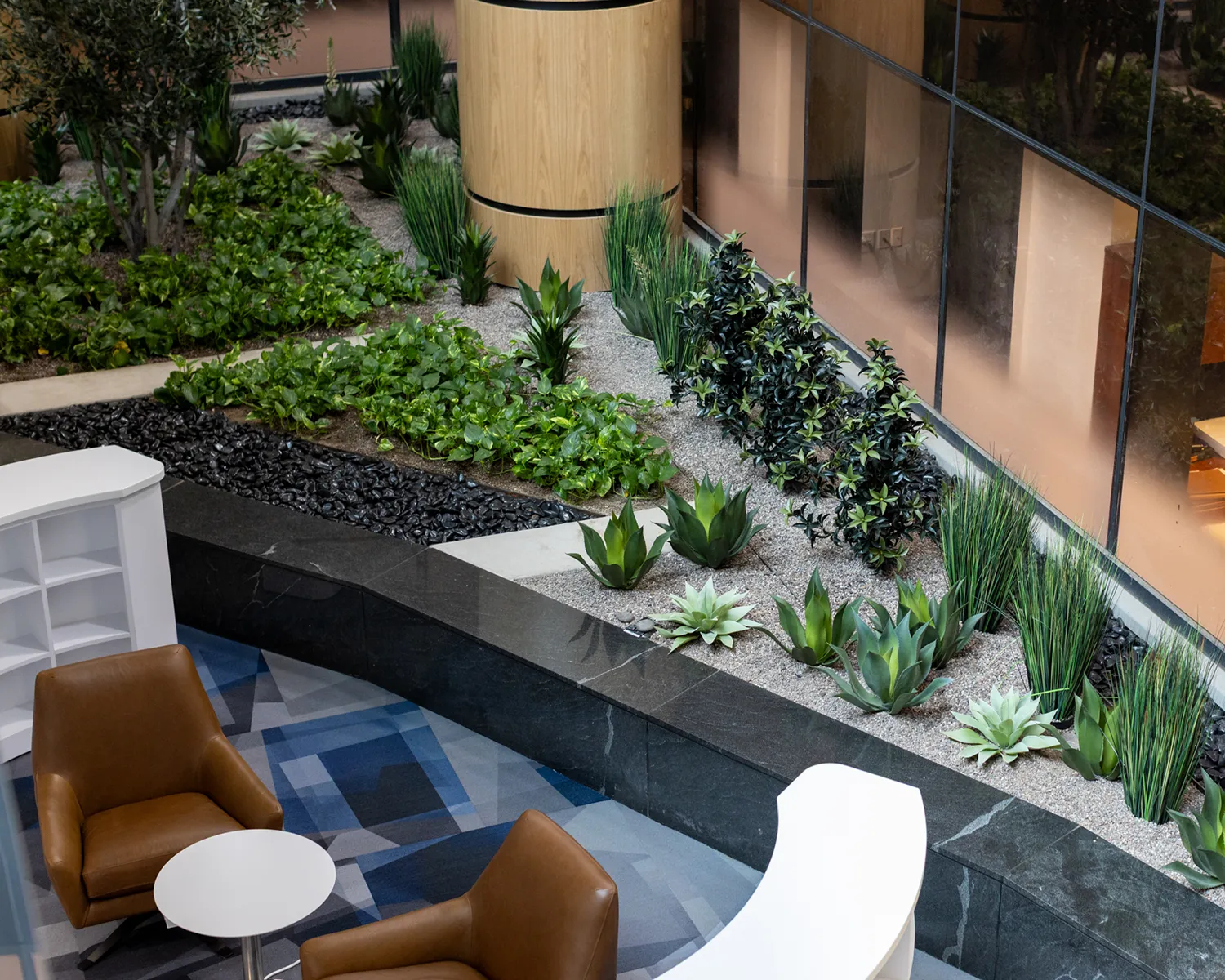
For smaller offices or single-room businesses, a few well-chosen rented container plants or a single MossWallArt™ piece can transform how a space feels. For larger commercial projects, such as corporate campuses, hotel lobbies, and healthcare facilities, interior landscaping can anchor the entire aesthetic of a space. Our article on interior landscapes in Arizona dives deeper into what works specifically in the desert Southwest.
Plant rental programs are a particularly flexible option for businesses that want professionally designed and maintained interior landscaping without the upfront cost of purchasing. As we outline in our guide to short-term plant rental vs. long-term plant leasing, there are options to fit nearly every timeline and budget.
For spaces where live plants aren’t practical — due to low light, high foot traffic, or maintenance constraints — high-quality artificial plant installations and preserved moss designs offer the same visual and brand impact with minimal upkeep.
What does professional plant design involve?
Successful interior landscaping requires an understanding of light conditions, airflow, humidity, plant compatibility, and spatial proportion. It also requires ongoing care — plants that aren’t maintained properly become a liability rather than an asset.
That’s why most businesses work with a professional interior landscaping company. A qualified team will assess your space, recommend species suited to your environment, design an installation that fits your aesthetic and budget, and provide regular horticultural maintenance to keep everything looking its best.
At Plant Solutions, interior landscaping is what we do. Our team of designers and horticultural technicians works with businesses across Phoenix, Tempe, Mesa, Chandler, and the greater Scottsdale area to create interior landscapes that are practical, beautiful, and built to last.
Ready to explore interior landscaping for your business?
Whether you’re starting from scratch or looking to refresh an existing space, contact Plant Solutions to schedule a consultation. We’ll help you find the right interior landscaping solution — from a single statement plant to a full commercial installation.