
Most of us think of plants as calming, life-giving, and benign, but the plant kingdom has a genuine dark side — one that smells like rotting flesh, blooms only in darkness, lures insects to their deaths, and has fueled centuries of folklore about poison and witchcraft! Happy Halloween. Here are five plants that earned their dark reputation.
Wears carcass perfume: the Corpse Flower
The Corpse Flower (Amorphophallus titanum) is the largest unbranched inflorescence in the plant kingdom, growing up to 12 feet tall. It blooms for only 24 to 48 hours — sometimes once a decade. When it finally opens, it releases a smell accurately described as rotting meat mixed with dirty socks. The plant generates its own heat to diffuse the stench, mimicking the warmth of a decomposing animal to attract carrion beetles. When one blooms at a botanical garden, thousands of people line up just to experience it, despite the horrid stench.

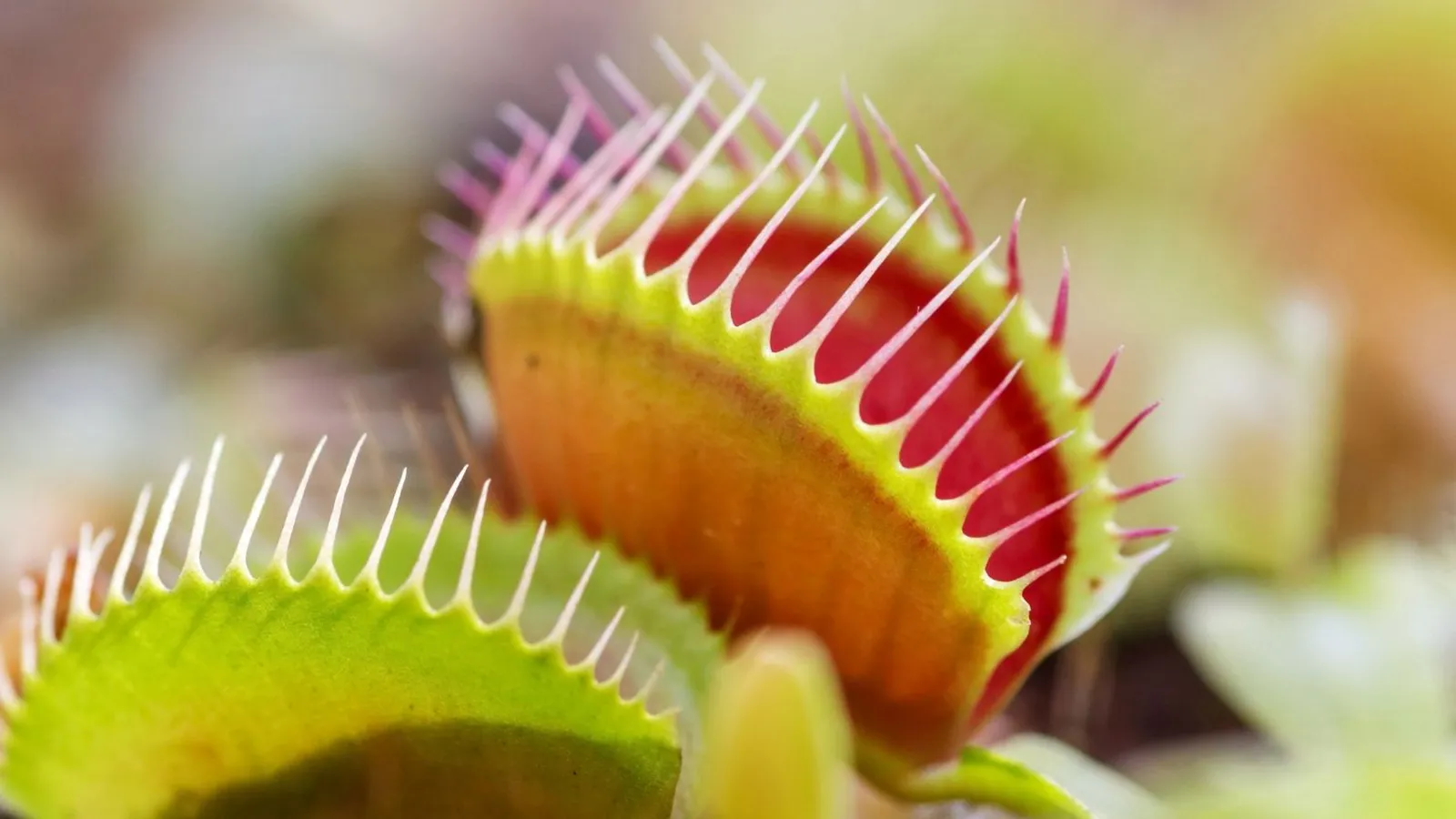
A serial murderer: the Venus Flytrap
Before Charles Darwin studied the Venus flytrap in the 1870s, plants were considered passive. The Venus flytrap changed that idea entirely. Its trap closes in one-tenth of a second — but only after two trigger hairs are touched in sequence. It counts. It waits. Then it acts. The prey is slowly digested over one to two weeks. Over 600 plant species have independently evolved the ability to trap and digest living creatures, each solving the same problem — nitrogen-poor soil — in its own way. Evolution is more creative (and scary) than any murder mystery!
A midnight philanderer: the Moonflower
Moonflower (Ipomoea alba) stays tightly closed all day and opens only after dark, releasing a heavy fragrance to attract nocturnal pollinators. Its white blooms are designed to reflect moonlight. Across cultures, night-blooming plants have been associated with the spirit world — believed to be open to forces that daylight keeps at bay. That’s superstition, of course. People and plants that operate by entirely different rules make us wary.

Screams to death: the Mandrake
Few plants carry more folklore than mandrake (Mandragora officinarum). Its forked root resembles a human figure, and medieval legend held that pulling it from the ground produced a shriek that could kill. Elaborate rituals were developed for harvesting it safely. The chemistry behind the legend is real: mandrake contains tropane alkaloids that cause hallucinations, delirium, and — in sufficient doses — death. Ancient physicians used it as an anesthetic. Shakespeare referenced it in both Romeo and Juliet and Othello. Its dark reputation was earned honestly.

Has deadly doll eyes: the White Baneberry
hite baneberry (Actaea pachypoda) produces pure white berries with a dark dot at the tip, growing on thick red stems. The common name “doll’s eyes” is not an exaggeration. The berries are highly toxic to humans — causing burning, vomiting, and cardiac arrest — but birds are completely immune, which is how the plant spreads its seeds. It’s a recurring pattern in the plant world: the most dangerous species are often the most visually arresting, designed to appeal to the creatures that can safely carry them forward. Humans rarely qualify.

What this has to do with biophilic design
The crowds lining up to smell a Corpse Flower, the centuries of mandrake mythology, the enduring appeal of carnivorous plants in pop culture — all of it reflects the same idea: our connection to the natural world is deep, vast, and innate. Plants that break the rules demand our attention and hold our gaze in a way scary movies never could.
Happy Halloween from Plant Solutions. May your spaces be filled with living things — the happy kind, of course.
Fascinated by the unusual side of botany?
Share this exploration of nature’s dark anomalies with your socials, and tag Plant Solutions to let us know which plant you found most intriguing.
or copy the link below to share on other social media channels:
plantsolutions.com/spooky-plants-explore-the-dark-side-of-nature-this-halloween