
Commercial plant rental is one of the most flexible investments a business can make in its physical environment. Rather than purchasing plants outright and managing care independently, plant rental bundles professional design, installation, and ongoing horticultural maintenance into a single monthly arrangement. When your lease term ends, typically after two to three years, you can refresh the entire installation with new plants, new containers, and a new design that reflects current trends and your evolving aesthetic.
Obviously, corporate lobbies, restaurant dining rooms, coworking spaces, and hospitals have wildly different design objectives. Here’s how business plant rental works across five of the most common workspace industries — and what to consider for each.
1. Corporate offices and open-plan floors
Large corporate offices are where commercial plant rental programs tend to be most visible — and most impactful. Open-plan floors present specific design challenges: they’re often acoustically harsh, visually monotonous, and lacking in the spatial definition that helps people feel oriented and comfortable. Plant rental addresses all three simultaneously.
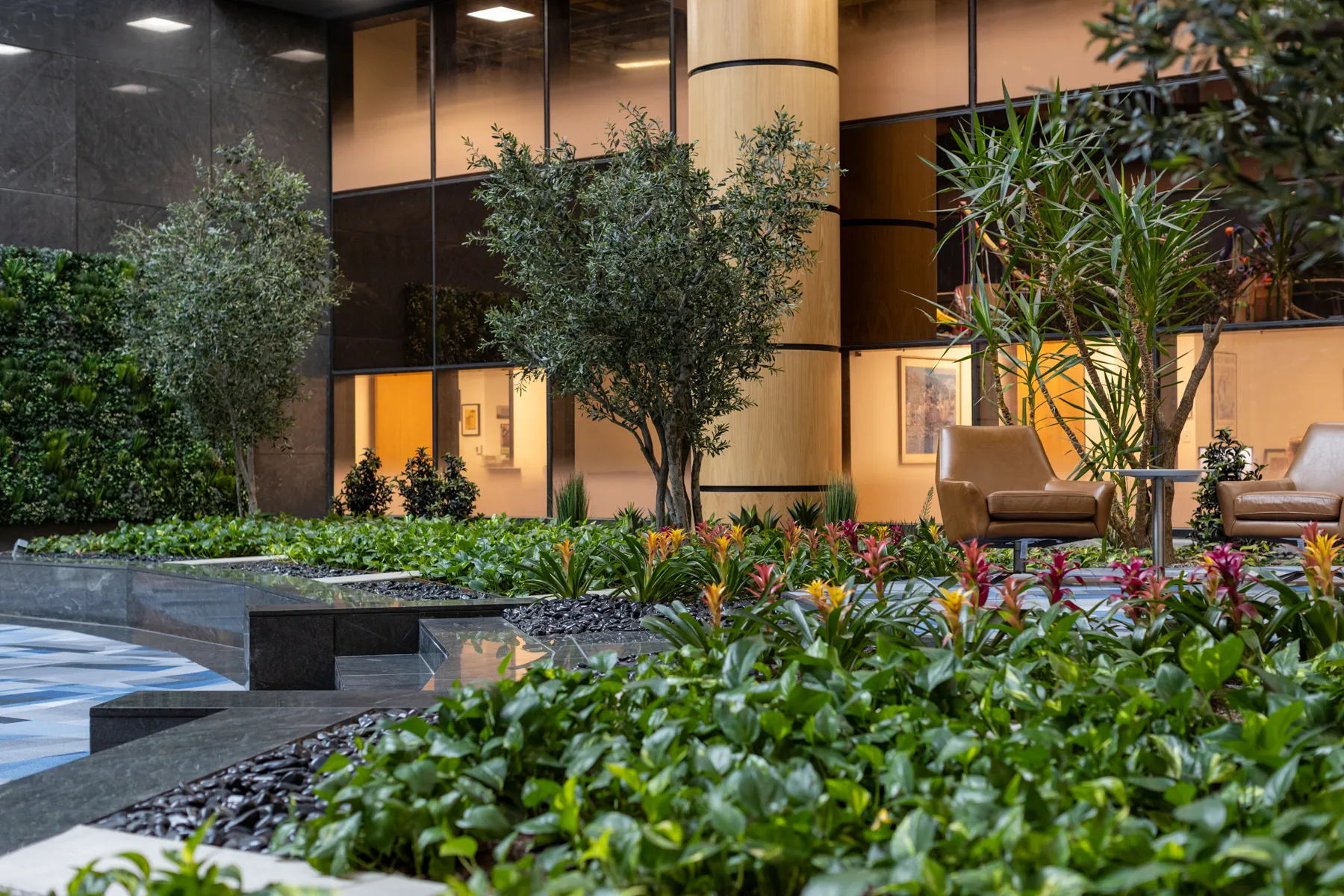
For corporate environments, plant rental programs typically include a combination of floor-standing specimen plants, container groupings that define zones and pathways, and statement installations in lobbies and reception areas. Larger programs may incorporate living plant walls that serve as both acoustic panels and visual focal points. The scale of commercial plant rental for corporate clients ranges considerably. Small business office suites may need a curated selection of a dozen container plants, while corporate campuses and high-rise office towers choose to invest in elaborate multi-floor installations. The Atria at Paradise Valley Office Park, for example, boasts over 2,000 botanical elements, custom-built planters, and integrated irrigation systems spread across a full commercial atrium.
2. Healthcare and wellness facilities
Plant rental for healthcare environments — clinics, therapy practices, rehabilitation centers, medical offices — requires a different approach than commercial plant rental for corporate spaces. Species selection matters enormously in clinical settings. Plants that shed debris, produce strong fragrance, or require frequent repotting are poor choices for waiting rooms and treatment areas
The most effective plant rental programs for healthcare facilities favor low-maintenance tropical species — aglaonemas, ZZ plants, and certain dracaena varieties — that hold their appearance between service visits, don’t trigger allergies, and contribute to the calm, welcoming atmosphere that clinical spaces need.
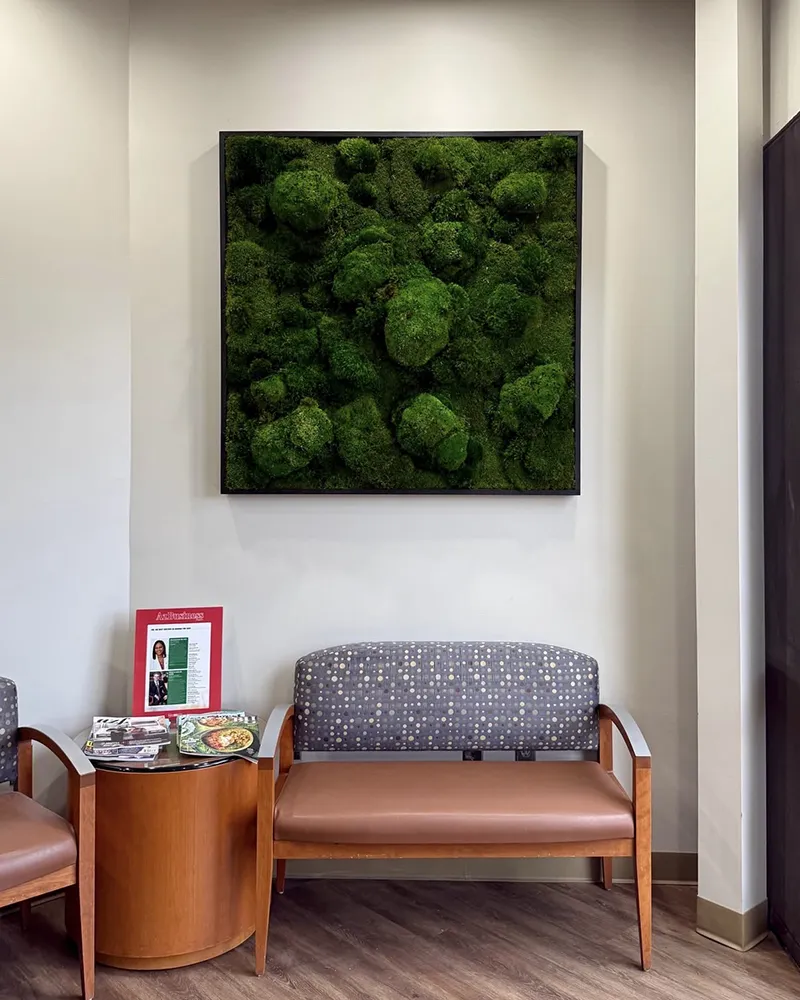
Preserved MossWallArt™ is an increasingly popular option in healthcare settings, and Plant Solutions is currently experimenting with renting moss wall installations. Preserved moss requires no watering, produces no pollen, and delivers acoustic absorption alongside the visual calm of natural greenery — making it well-suited to treatment rooms, counseling offices, and patient waiting areas where live plants may not be appropriate. Our article on biophilia and healing covers the research on nature’s role in clinical environments in depth.
3. Restaurants and hospitality spaces
High foot traffic, fluctuating humidity from kitchen operations, variable lighting between lunch and dinner service, and the constant movement of staff and guests all create conditions that require robust, well-chosen species and reliable professional maintenance. Plants in a restaurant aren’t just there to improve air quality — they’re shaping the mood, the noise level, and the visual identity of a dining experience. Commercial plant rental for restaurants often emphasizes lush, tropical species that photograph well and hold up under warm ambient lighting: pothos, philodendrons, birds of paradise, and fiddle-leaf figs are common choices. Booth-separating planters, ceiling-hung trailing plants, and bar-adjacent greenery can define zones, soften acoustics, and give a space its own distinct character.
Plant Solutions has designed and installed plant rental programs for hospitality clients across the Phoenix metro area, including the award-winning Blanco Cocina + Cantina installation recognized by the Tropical Plant International Expo. For hospitality operators, the end-of-term refresh option is particularly valuable — allowing the visual identity of a space to evolve with changing trends without a full redesign.

4. Small businesses and boutique retail
Plant rental for small businesses is where the scalability of the model really shows. Plant rental for small businesses can start with a modest selection of well-chosen container plants — as few as a dozen — professionally installed and maintained for a predictable monthly cost.
For boutique retail environments, plant rental serves a dual purpose: it makes the space more inviting and shoppable, and it reinforces brand identity. A curated plant selection that reflects the aesthetic of the store — minimal and architectural for a contemporary fashion boutique, lush and layered for a wellness brand, structured and graphic for a design studio — communicates intentionality to customers in a way that generic decor cannot. The plant rental accessible design guide covers how to achieve strong results at any budget level.

5. Creative studios and coworking spaces
These environments often have strong visual identities and design-conscious occupants who are more likely to notice intentional plant design. At the same time, the spatial complexity of coworking environments requires careful planning: open networking tables, shared desks, private suites, and rentable conference rooms each have different light conditions, foot traffic levels, and functional requirements.
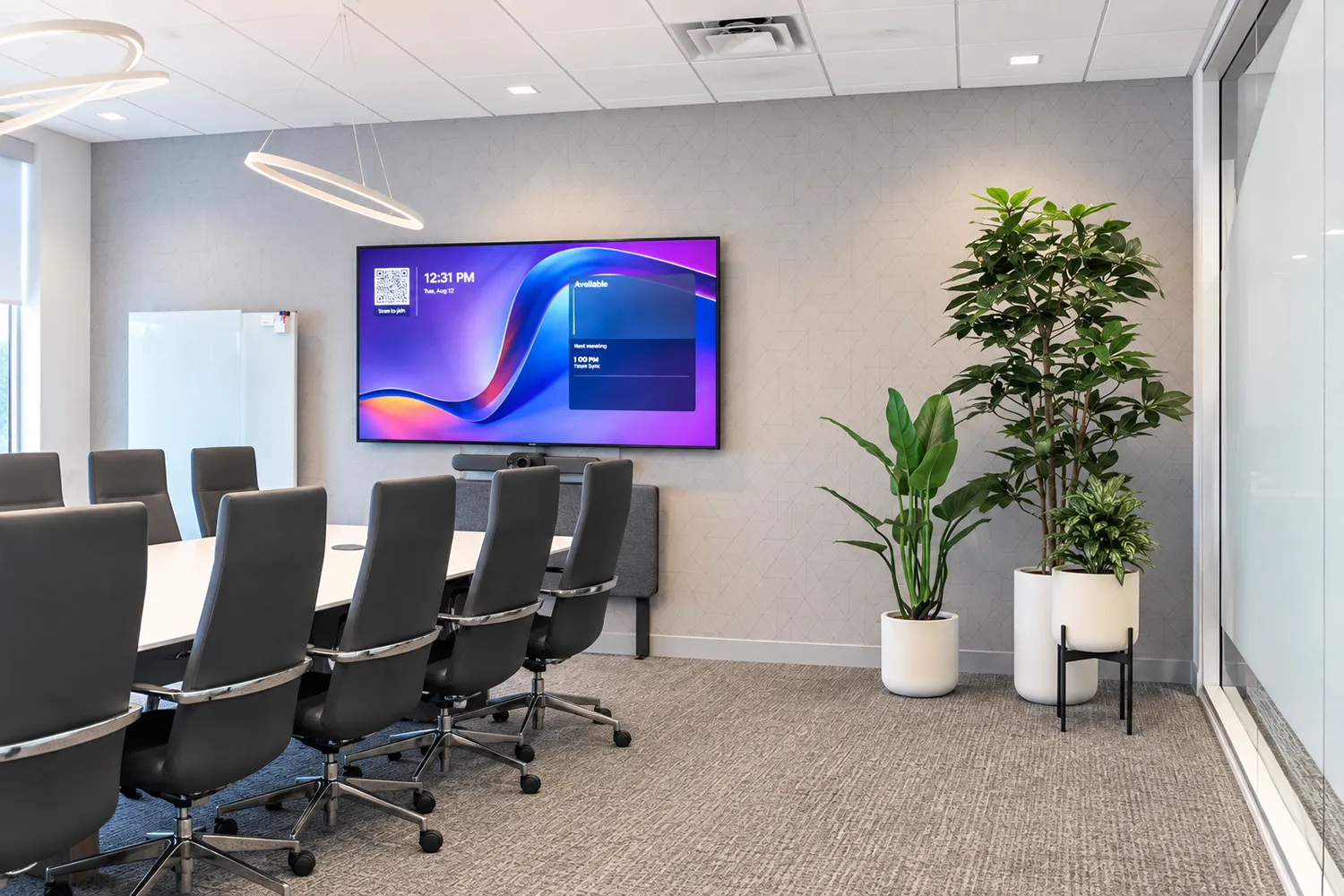
Plant rental for creative and coworking environments works best when the plant selection is tailored to each area of the space. Think of these distinct areas as zones. High-traffic networking zones benefit from durable, low-maintenance species that can withstand proximity to people and movement. Private suites and conference rooms are good candidates for smaller installations. For example, tiered corner container plants and moss wall features add acoustic softening and visual interest without stealing limited floor space. Collaborative areas often carry bolder, more expressive plant designs that reinforce the client’s overall culture and brand.
The same principles apply to college campus environments, where shared study spaces, faculty offices, and common areas each carry specific needs. Plant Solutions’ work at ASU’s Biomimicry Center demonstrates this.
Plant rental is built to evolve and allows for continuous redesign
The most underappreciated benefit of commercial plant rental is the end-of-lease refresh — new plants, new containers, new design. Your space should never look dated. Plant Solutions offers programs for businesses of every size across Phoenix, Tempe, Mesa, Chandler, Scottsdale, and Gilbert. Contact us to get started.
Contact our design team to explore customized plant rental options for your space.