
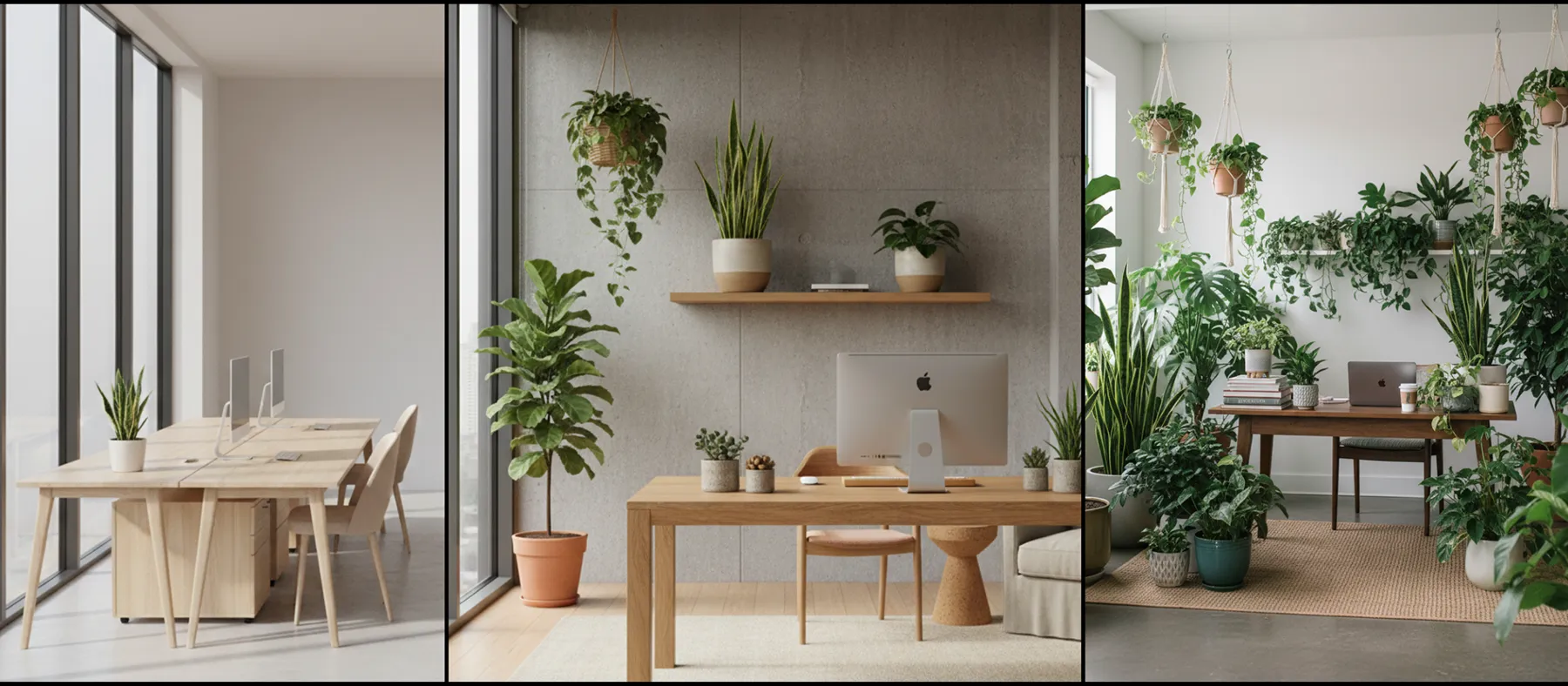
Biophilic design is often discussed in terms of whether plants are present in a space, but less attention is paid to how many plants are used. A growing body of research suggests that plant presence alone is not enough to influence comfort or well-being.
In this blog post, we’ll examine the findings of a 2023 research article titled Effects of Volume Ratio, Layout and Leave Size of Indoor Plants on Workers’ Attention Recovery in Factory Staff Break Area. Researchers investigated how much indoor greenery is enough to make a measurable difference in how people feel. More specifically, they studied how different volume ratios of indoor plants affect emotional state, comfort, and visual preference (in this case, volume ratio describes how much of a room’s visual space is taken up by indoor plants).
Toward the end of this article, we’ll explore how their specific focus on plant density makes an enticing case for professionally designed plant rental.
What the study examined
The study analyzed how 18 factory workers responded to indoor spaces with different amounts of plant density. Participants viewed images of rooms with very few indoor plants, a moderate number of indoor plants, and extensive amounts of greenery, and then shared how each space made them feel.

The goal was to identify whether there is a threshold at which plants begin to meaningfully influence:
- Emotional state (how participants felt internally)
- Visual preference (how visually appealing the space was)
- Psychological comfort (how mentally comfortable the space appeared to feel)
Because participants evaluated images rather than occupying the spaces themselves, the above categories were assessed based on perception rather than lived experience.
How their response to indoor plants was measured
Participants rated the spaces using self-reported questionnaires. Self-reported ratings are commonly used in environmental psychology because they address how people perceive and interpret a space. Asking participants to describe their impressions is the most practical and direct approach.
However, when ratings reflect perception rather than physical response, answers can be influenced by mood, expectations, or how questions are understood, and they capture reactions at a single moment rather than long-term experience. For this reason, self-reported ratings are best understood as indicators of how a space is interpreted, not as objective measures of physiological or behavioral change.
Balance matters when it comes to indoor plants
Unsurprisingly, the relationship between plants and psychological response was not linear. The results indicate that plant quantity matters, not just plant presence; there is an optimal range where greenery enhanced comfort without overwhelming the space.

Effective biophilic design depends on proportion and placement, not abundance alone. In short, more plants were not always better. Indoor plants improve how a space feels, but there is a point when adding more greenery does not continue to increase psychological comfort.
Here are the key takeaways:
- Spaces with moderate indoor plant volume consistently received the highest psychological preference ratings
- Very low plant volume produced limited psychological benefit
- Extremely high plant volume did not continue to increase comfort and, in some cases, reduced visual preference
What this means for designers: plant rental should be a priority
The results of the researcher’s study reinforces the importance of design-led plant integration, rather than treating plants as decorative afterthoughts. This has practical implications for those designing shared commercial spaces, healthcare environments, hospitality interiors, and luxury homes.
Plant Solutions believes that achieving the right plant volume requires flexibility, adjustment, and long-term observation of how people use a space. This is why leasing plants is an ideal way to fine-tune the psychological impact of indoor plant design. Rather than committing to a fixed quantity of container plants or permanent layout, plant rental allows designers to test different plant volumes over time, adjust density as spaces evolve (that is, add more plants with increased square footage), and maintain plant health without increasing internal workload.
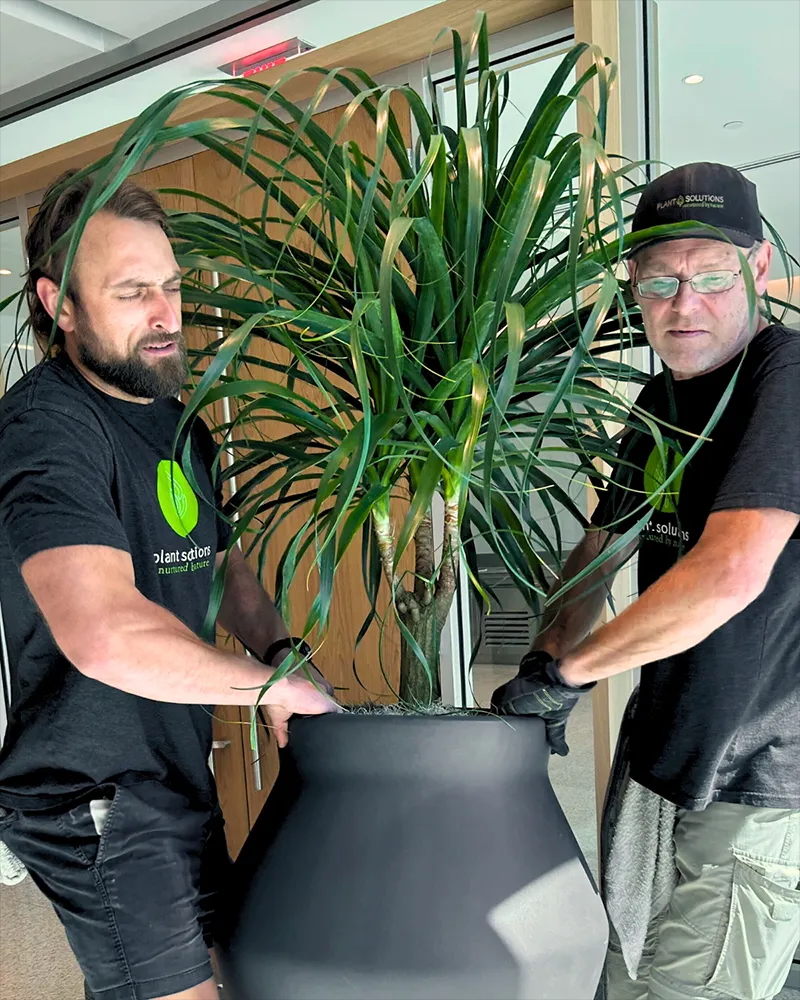
Long-term plant rental supports the study’s core insight that indoor plant design must complement the size and function of the space. Because the layouts and functions of spaces change as the years go by, biophilic design should be dynamic and adaptable, not static and rigid.
The limitations of this indoor plant experiment
As mentioned earlier, the research relies on image-based evaluation rather than real-world, multi-sensory interaction. These boundaries are important when applying the findings beyond controlled study conditions. Here are a few other limitations that readers should be aware of:
- Short-term impressions: The research captures immediate psychological responses and does not assess how perceptions might change over time with repeated exposure.
- Controlled viewing conditions: Responses were gathered under controlled conditions, which differ from real-world environments where factors like sound, movement, and daily activity influence experience.
- Focused scope: The analysis isolates plant volume as the primary variable and does not examine how other design elements, such as materials, lighting, or layout, may interact with greenery.
Despite its constraints, this study contributes to a growing body of evidence showing that how plants are used matters as much as whether they are used at all. Psychological benefit depends on balance, proportion, and integration within the broader interior environment.
For designers and decision-makers, the takeaway is clear: successful biophilic design requires intention. Tools like Plant Solutions’ plant rental can help translate research insights into living spaces that remain beautiful, well-maintained, and human-centered.
Experience the power of professional biophilic design.
Discover how our plant rental and maintenance programs can transform your environment.