
Patioscaping is one of the most effective ways to add greenery to outdoor commercial spaces across Arizona. Businesses use patioscaping to create shade, improve customer comfort, and reduce the harshness of paved or reflective surfaces.
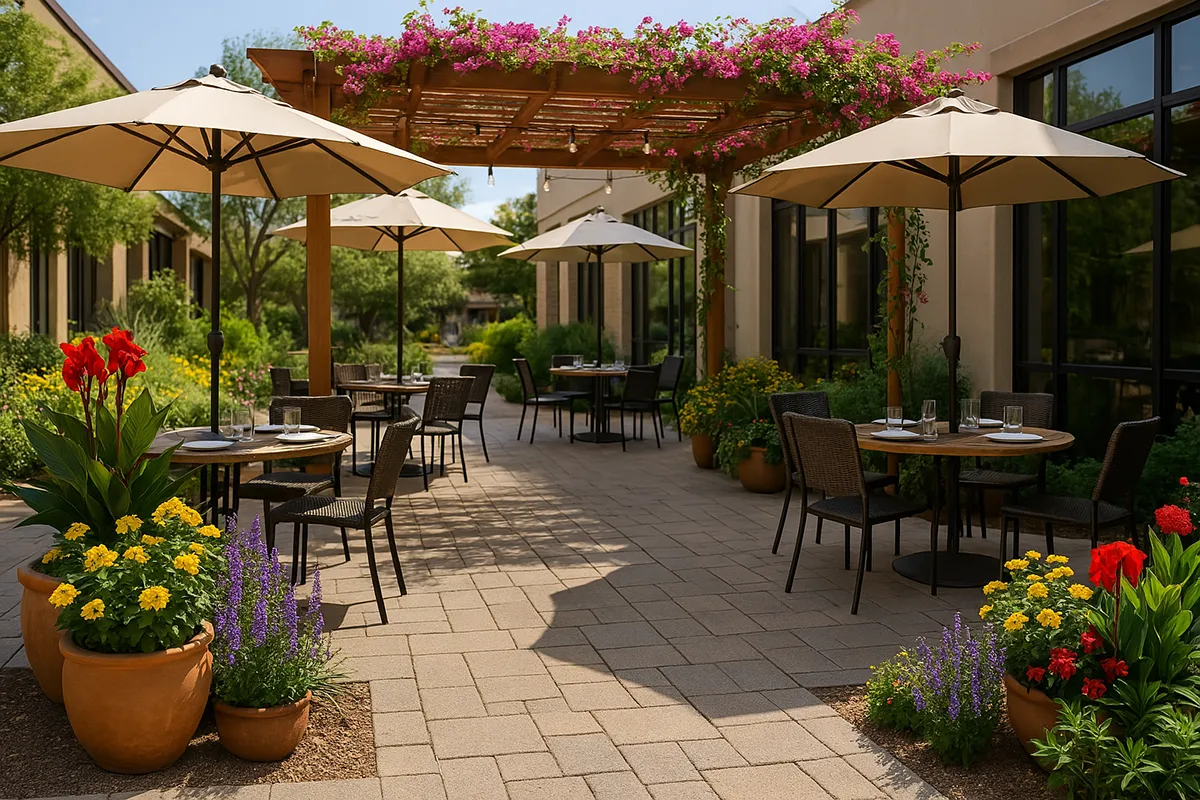
What’s the difference between landscaping and patioscaping?
The core difference between patioscaping and landscaping is installation timing and method. Landscaping relies on in-ground planting, which must be integrated during construction because irrigation and drainage must be built beneath man-made surfaces. Patioscaping uses patio plants in above-ground planters, allowing these systems to be added after the patio is complete. This flexibility makes patioscaping practical for retrofits, remodels, restaurants with existing hardscape, and properties that need design updates without demolition.
Plant Solutions outlines the fundamentals of this approach in our overview of Arizona patioscaping. The article includes details about species selection, irrigation, planter sizing, and maintenance cycles that support patio plants in Phoenix’s climate.
| Patioscaping | Landscaping |
|---|---|
| Uses freestanding or built-in planters | Requires root-containment strategies |
| Can be installed after construction | Built-in drainage during patio construction |
| More freedom for property managers | Irrigation access and repair difficulty |
| Accommodate rearrangements and remodels | Limited plant placement locations |
| Easier plant replacement when necessary | Plant changes require excavation |
The challenges of landscaping
Large-scale landscaping on or near patios can require civil engineering, in-slab drainage, and root barrier placement (the process of installing a protective material underground to prevent roots from spreading into unwanted areas). These components must be designed before concrete is poured, pavers are installed, or gravel is compacted.
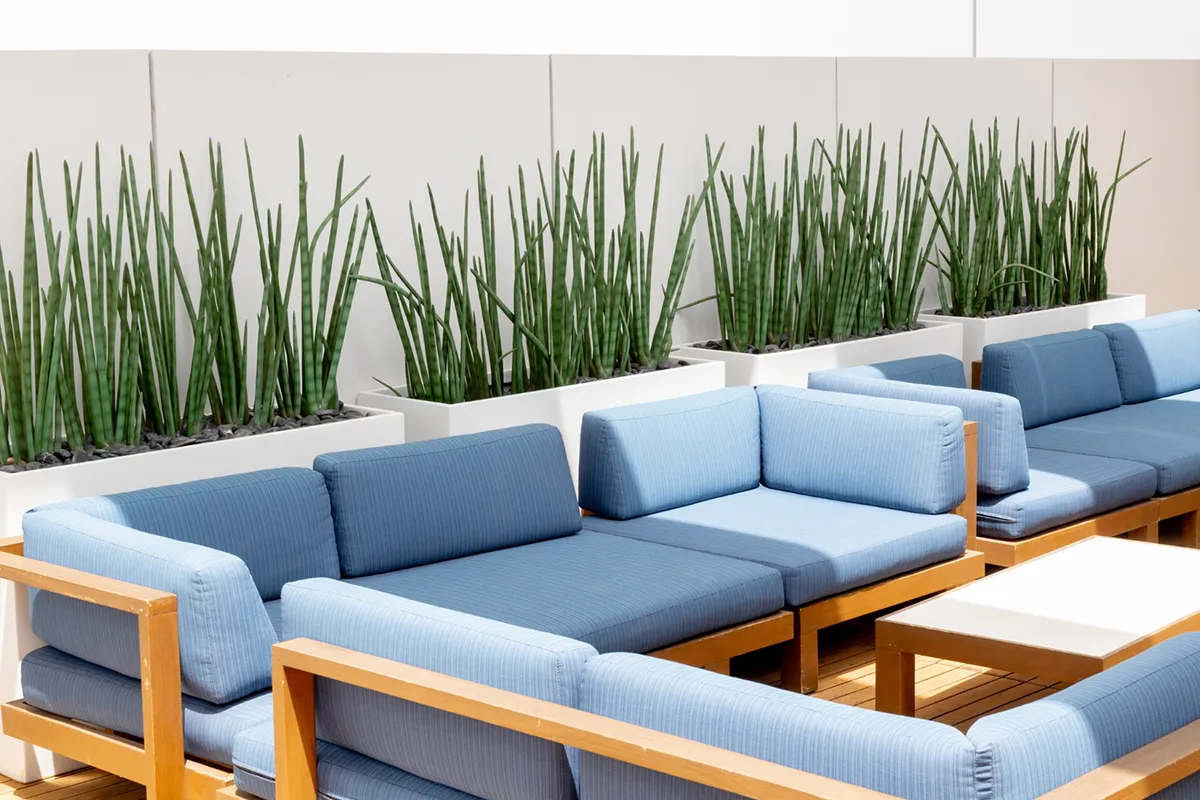
When it comes to aesthetics and design functionality, know that landscaping cannot always be installed exactly where greenery is desired. This is because root growth, utilities, and structural conditions limit where in-ground planting can occur. Once in-ground landscaping is established, relocating or adding new plants requires laborious excavation and redesign. Businesses cannot easily rearrange the space without another construction phase.
Patioscaping avoids these restrictions and allows for ongoing adjustments that do not interrupt business operations. This distinction is especially important for restaurants, hotels, and retail centers where closures reduce revenue. Patioscaping also supports scalable design. Businesses often begin with a small group of patio plants and add more as budgets allow. This approach keeps outdoor spaces flexible and prevents long construction delays.
Upgrade your property’s aesthetic instantly without tearing up your existing hardscape.
Durable patio plants for plantscaping in the Arizona heat
Research from the University of Arizona Cooperative Extension documents the strong performance of heat-adapted container plantings when proper irrigation and plant volume are used. However, not all species perform well in containers exposed to reflective heat. Patioscaping relies on patio plants that can handle full sun, high temperatures, and low humidity. Consistent performers include:
- Mediterranean fan palm for height and shade creation
- Robellini palm for architectural framing
- Bougainvillea for sun-tolerant seasonal color
- Aloe and agave varieties for drought-resilient structure
- Dwarf olive for evergreen form and low water needs
- Bottlebrush and yellow bells for flowering shrubs trained for container life
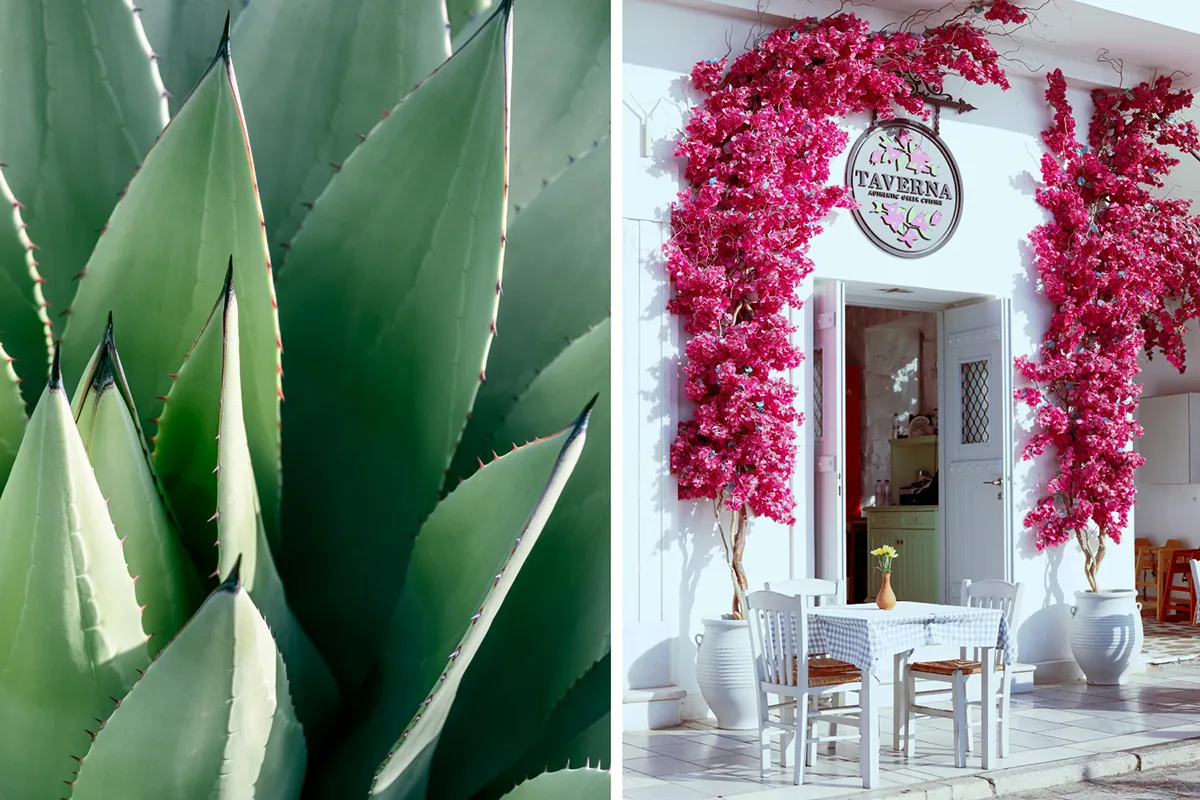
These plants excel in patioscaping because they tolerate heat and maintain consistent growth in above-ground containers. They also appear frequently in data from the Arizona Municipal Water Users Association (AMWUA), which keeps a verified list of low-water and desert-adapted species appropriate for commercial installations. Many succulents also excel in the Arizona heat. Check out our Ultimate Guide to Succulents to learn more about keeping them healthy throughout the year.
Planter sizing and materials in patioscaping
Planter size directly affects longevity. Larger planters improve soil volume, reduce temperature swings, and allow patio plants to establish deeper roots. According to research from the University of Florida IFAS Extension, containers with greater soil mass retain moisture more effectively and buffer heat more consistently than small vessels. This applies across climates, including Arizona.
Common planters used in patioscaping include:
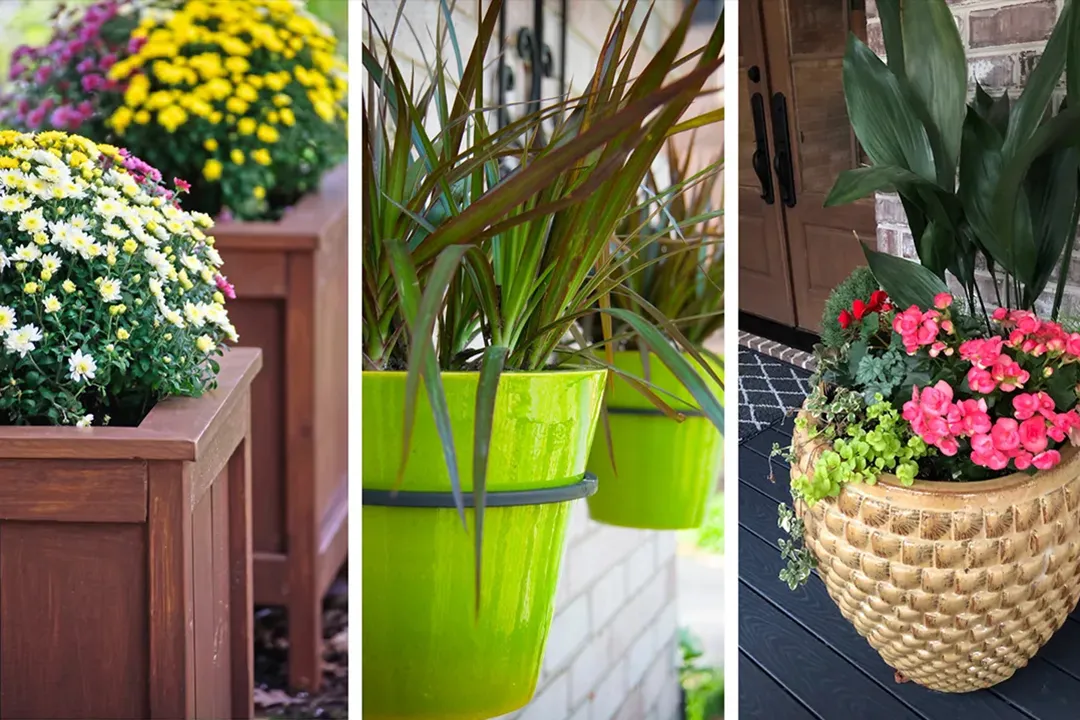
- Fiberglass or composite (lightweight and durable)
- Concrete or GFRC (high stability and structure)
- Powder-coated steel (modern profile, strong in high-traffic areas)
- Oversized resin (lightweight for rooftops and multi-story patios)
- Wooden boxes and barrels (when sealed and lined to slow deterioration)
Because patioscaping uses above-ground systems, irrigation is typically done manually or installed using low-flow drip lines routed through drainage holes. Unlike landscaping irrigation, these lines do not require underground trenching, though it’s often achieved when the ground is accessible.
Microclimate planning and shade from patio plants
Shade planning is one of the primary reasons commercial properties invest in patioscaping. Patio plants positioned at the correct height reduce radiant heat, soften wind exposure, and make seating areas more comfortable. Data from the EPA Heat Island Reduction Program shows that vegetation placed near paved surfaces decreases surface temperature and lowers perceived heat levels in outdoor environments.
Using patio plants to block afternoon sun also reduces glare, improves customer occupancy time, and supports usable outdoor space for more months of the year.
Seasonal refresh cycles for patioscaping
Many businesses refresh patio plants during spring and fall to adjust for sun orientation, update color themes, and replace plants that have outgrown their containers. This process is significantly easier than modifying landscaping because patio plants do not root into the ground or under patio floors.
Typical service routines for patioscaping include:
- Fertilization to support container growth
- Pest management based on exposure and plant type
- Soil replenishment after the monsoon season
- Removal of heat-stressed patio plants before replanting fall blooms
- Pruning to preserve form and maintain walkway clearances
Seasonal patio refresher services offered by Plant Solutions support patioscaping systems across restaurants, resorts, hotels, and mixed-use developments. They also help properties maintain curb appeal without changing hardscape.

Patioscaping is the ideal choice for retrofits and existing buildings
Many Arizona patios were constructed without underground irrigation, limiting landscaping options. Patioscaping offers a way to add patio plants without altering the structural surface. This makes patioscaping practical for older buildings, enclosed courtyards, rooftop areas, and patios built directly over parking structures or underground utilities. If you’re ready to design a memorable patioscape with lush patio plants, reach out — we’re eager to connect you with an artist who fits your personal style and achieves your aesthetic vision.
Ready to transform your commercial outdoor space without the hassle of major construction?