
When we step into a lush, green space, we instinctively feel a sense of calm. Our shoulders drop, our breathing slows, and our minds begin to clear. But have you ever wondered why this happens? The answer lies deep within our evolutionary history and forms the foundation of biophilic design.
If you are curious about nature-inspired architecture, whether indoor plants truly make a tangible difference in mental health, or how to transform your own environment, you are in the right place. In this comprehensive guide, we will explore the roots of this movement, celebrate the legacy of the man who brought these concepts to the mainstream, and reveal how integrating nature into our built environments can radically improve our lives.
To learn more about how you can incorporate these restorative elements into your daily life, we invite you to contact our team for more information as you read through this guide.
The Father of Biodiversity on Biophilic Architecture
Edward O. Wilson was an American biologist, naturalist, and writer whose groundbreaking work brought biodiversity to the mainstream. Throughout his long and prestigious career, he became a world-renowned expert on insects (particularly ants) and devoted his time to studying how elements of the natural world influenced animal behavior. Wilson passed away in December 2021, and we at Plant Solutions honor his work each and every day.
“Wilson’s work is at the heart of everything we do, and I cannot explain the impact that he has had on my life,” says Plant Solutions Owner and Biophilic Designer Joe Zazzera.
In his landmark 1984 book, “Biophilia,” Wilson turned his research to humans when he introduced the hypothesis that humans possess an innate tendency to seek connections with nature and other forms of life. Because we spent hundreds of thousands of years evolving in natural landscapes, our brains and bodies are hardwired to respond positively to natural stimuli.
When Wilson first proposed this, the initial thought on the human-nature connection was more anecdotal than based in scientific fact. However, other studies conducted in the nearly four decades since the book’s release have given a greater, undeniable scientific insight into how incorporating ecological elements is profoundly beneficial, particularly in the modern workplace.

Validating the Biophilia Hypothesis
As the years progressed, researchers began to rigorously test Wilson’s theories. What they found changed the landscape of interior design and architecture forever.
The 2009 research paper “Biophilia, health, and well-being” from research psychologist Judith Heerwagen showed that exposure to nature was as equally effective as physical exercise in regulating diurnal body rhythms to ensure physical vitality. When our bodies are in sync with natural circadian rhythms, we sleep better, digest food more efficiently, and experience more balanced energy levels throughout the day. Additional studies have shown that the presence of green spaces promotes social cohesion and group-based activities, which maintains social relationships, helps foster a sense of community, and dramatically increases individual well-being.
Furthermore, a 2014 study published by the University of Technology, Sydney provided even more concrete proof for Wilson’s original hypothesis. The research showed that offices that used plants throughout the space had vastly better air quality, and workers experienced a measurable decrease in illness along with a significant reduction in workplace stress. These physical and mental advantages led to an increase in productivity, performance, and creativity. Moreover, it created a trustworthy and welcoming perception of the company for both employees and visiting clients.
In recent years, the concept of biophilia and the inclusion of indoor plants has become much more prevalent in office design—a concept Wilson himself commented on in a 2008 interview for PBS NOVA:
“A lot of architects are saying this is the next big thing…Maybe we’ve had enough around the world of Le Corbusier and buildings and monuments to ourselves… These are things in which we’re celebrating our strength, our power, our conquest of the world, right? … But maybe what we really need down deep is to get closer to where we came from.”
To discover how you can bring this profound connection to your own space, explore Plant Solutions services today to purchase customized indoor landscaping.
Why Biodiversity Matters in Biophilic Design
When people think of nature-inspired design, they often picture a single, lonely potted pothos sitting on a filing cabinet. While adding any greenery is a positive step, true biophilic architecture requires much more. Specifically, it requires biodiversity.
Biodiversity—the variety of life in the world or in a particular habitat—is the engine of a healthy ecosystem. But why does biodiversity matter when designing indoor spaces?
1. Visual Complexity and Cognitive Engagement
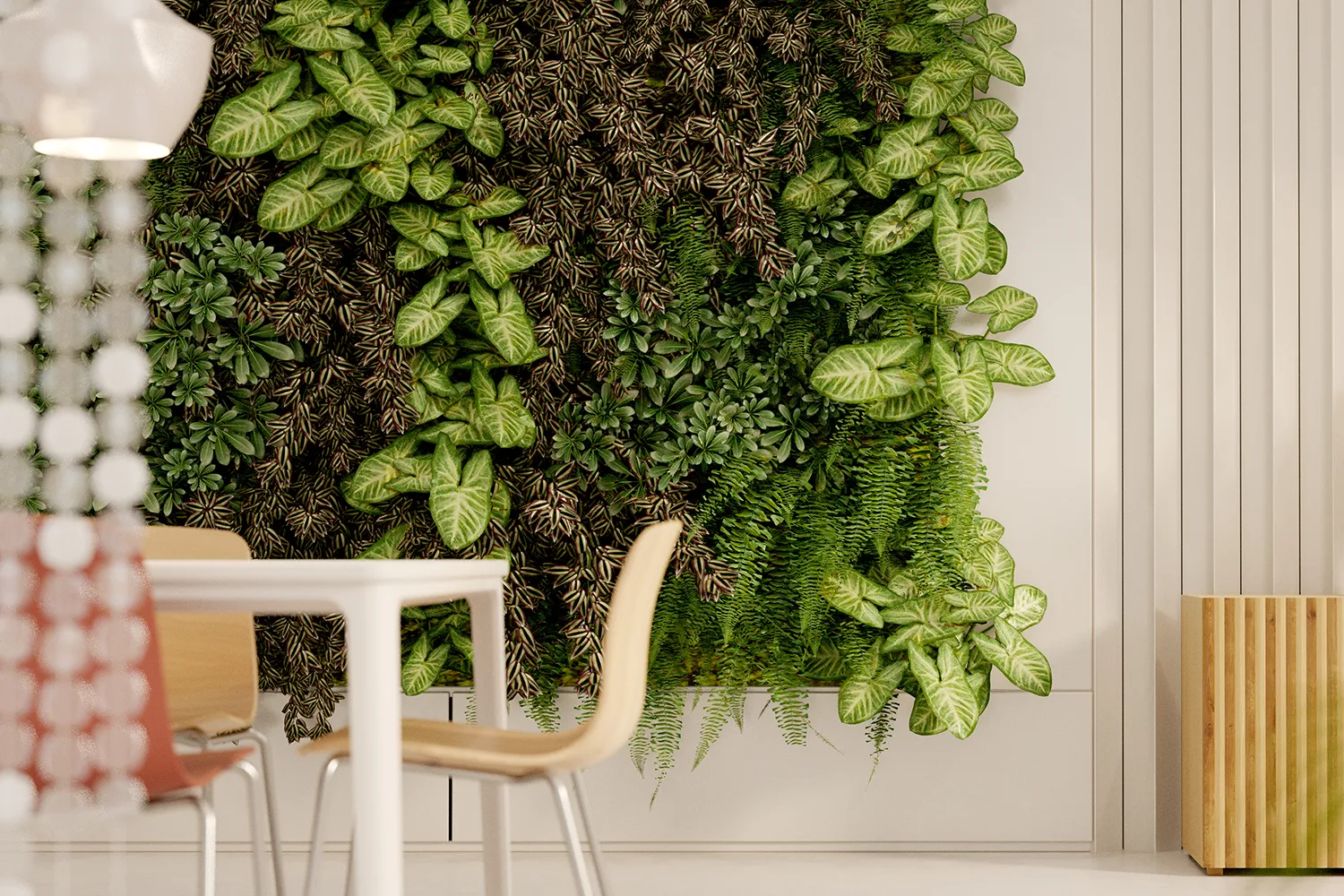
In nature, you rarely see an endless expanse of a single plant species. Forests, meadows, and jungles are chaotic yet perfectly balanced tapestries of varying heights, textures, colors, and leaf shapes. Human eyes and brains evolved to process this specific type of natural complexity, known as fractal patterns. When a space utilizes a rich biological diversity of plants—mixing broad-leafed tropicals with delicate ferns and vibrant mosses—it provides the exact level of visual stimulation our brains crave. This rich ecological variety prevents visual fatigue and keeps the mind gently engaged, which aids in focus and concentration.
2. Enhanced Indoor Air Quality
Different plant species process air differently. Some are incredibly efficient at filtering out volatile organic compounds (VOCs) like formaldehyde, which off-gasses from office furniture and carpets. Others are exceptional at absorbing benzene or carbon monoxide. By incorporating a diverse array of flora into your environment, you are essentially creating a multi-layered, biological air filtration system. This diverse ecosystem works collaboratively to purify the air far more effectively than a monoculture ever could.
3. Resilience and Micro-Ecosystems
From a practical standpoint, embracing a wide array of species in your indoor landscaping creates a more resilient environment. Just as natural ecosystems rely on biodiversity to survive pests or climate changes, a diverse indoor plant wall or interior garden is stronger and healthier. Furthermore, combining different types of soil, foliage, and natural elements creates a self-sustaining micro-environment that thrives with proper, professional care.
The Mental Health Impact: Do Plants Really Make a Difference?
For those curious about the true psychological impact of greenery, the answer is a resounding yes. The integration of the natural world into our built environments is not just an aesthetic luxury; it is a mental health necessity.
Modern humans spend approximately 90% of their time indoors. This disconnect from the natural world has led to what author Richard Louv famously coined as “Nature Deficit Disorder.” The sterile, gray, artificially lit environments we often work and live in can trigger our body’s stress responses, leading to elevated cortisol levels, chronic fatigue, anxiety, and depression.
Implementing biological design principles directly combats these modern ailments through several mechanisms:
- Stress Reduction: Viewing nature—even just a well-designed MossWallArt™ installation—shifts our nervous system from a sympathetic state (fight or flight) to a parasympathetic state (rest and digest). Heart rates lower, blood pressure stabilizes, and muscle tension dissipates.
- Attention Restoration Theory (ART): Developed by psychologists Rachel and Stephen Kaplan, this theory suggests that urban environments require “directed attention,” which quickly drains our mental energy. Conversely, nature provides “soft fascination,” which captures our attention effortlessly, allowing the brain’s cognitive fatigue to restore itself. This is why looking at a diverse array of office plants can cure an afternoon brain fog.
- Emotional Regulation: Studies show that hospital patients with views of trees recover faster and require less pain medication than those staring at brick walls. In the workplace, this translates to improved mood, higher job satisfaction, and a significant decrease in anxiety and depressive symptoms.
If you are looking to boost the emotional and social wellness of your home or office, learn more about our scientifically backed design strategies here.
Core Elements of Nature-Inspired Architecture
To properly honor E.O. Wilson’s legacy, modern architects and interior landscapers must look beyond simply placing a plant on a desk. Authentic, highly effective design relies on a multi-sensory approach. Here are the core pillars used to successfully merge the built environment with the natural one:
Direct Experience of Nature
This involves tangible, physical contact with natural elements. This is the most potent form of biological integration.
- Light: Maximizing natural daylight through windows, skylights, and dynamic lighting that mimics the shifting color temperature of the sun throughout the day.
- Air: Natural ventilation, operable windows, and varied airflow that mimics a gentle outdoor breeze.
- Water: Incorporating water features, such as indoor fountains or water walls, to provide soothing auditory and visual stimulation.
- Plants and Ecosystems: The cornerstone of this practice. Using living walls, potted plants, indoor trees, and utilizing deep biodiversity to recreate a thriving habitat indoors.
Indirect Experience of Nature
When direct access to nature is limited by structural constraints, we can use indirect methods to trigger the same psychological benefits.
- Images of Nature: Artwork, photography, and murals depicting natural landscapes.
- Natural Materials: Utilizing wood, stone, bamboo, and natural fabrics rather than synthetic plastics and metals.
- Biomimicry: Designing architectural features, furniture, and textiles that mimic the fractal patterns, shapes, and textures found in the wild—like a staircase shaped like a nautilus shell, or structural columns resembling trees.
Experience of Space and Place
This refers to how a space is laid out to mimic natural terrain.
- Prospect and Refuge: Humans evolved to desire spaces where they have an unimpeded view of their surroundings (prospect) while having their backs protected (refuge). Office designs that offer cozy, high-backed seating areas looking out over an open floor plan satisfy this deeply ingrained evolutionary need.

Embracing E.O. Wilson’s Vision in the Modern Workplace
Today, everyone from small local businesses to national brands like Google, Apple, and Amazon are starting to see the importance of bringing the outside in. They recognize that boosting emotional, physical, and social wellness in the workplace is not just an employee perk—it is a driver of innovation, retention, and bottom-line success. Amazon’s “Spheres” in Seattle, for instance, are essentially massive indoor rainforests that serve as employee lounges and workspaces, featuring incredible biodiversity and prioritizing human-nature connections.
“E.O. Wilson’s trailblazing concept of Biophilic design allows companies an opportunity to incorporate sustainability into the existing environment,” said Zazzera. “Through indoor landscaping options from Plant Solutions, such as plant walls and MossWallArt™, companies can employ artistic designs and soothing colors that play off the existing space and compliment the architecture of the building while remaining eco-friendly.”
By looking to the natural world as a mentor rather than a resource to be conquered, modern businesses are creating sanctuaries of productivity. They are proving that industrial progress and ecological harmony do not have to be mutually exclusive.
Image Insert 4:
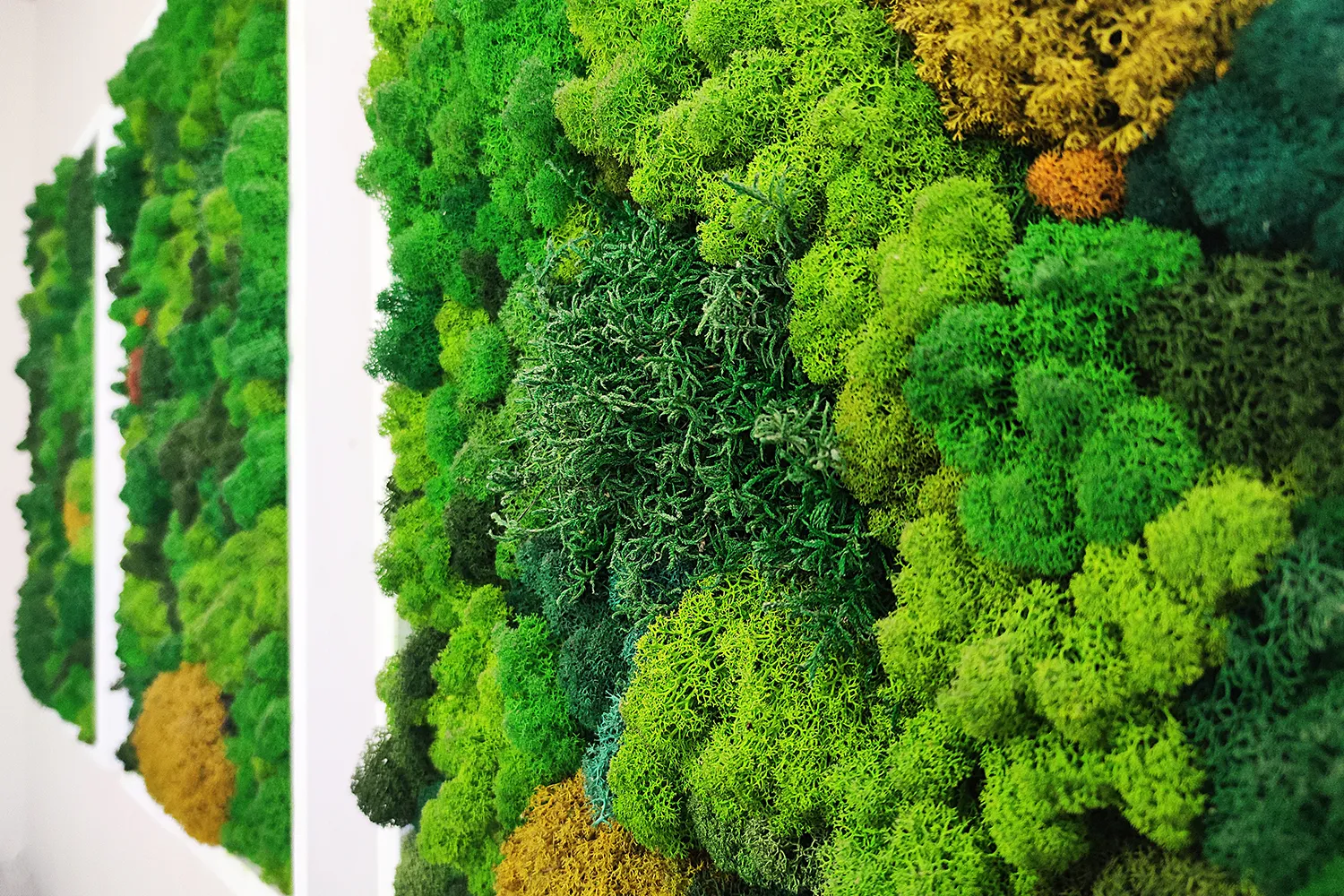
Image Description: A close-up of beautifully preserved green moss forming an intricate, textured piece of wall art.
Filename: mosswallart-biophilic-architecture.jpg
Alt Text: MossWallArt showcases beautiful biophilic architecture and ecological variety.
Caption:
How Plant Solutions Can Transform Your Space
Transforming a sterile room into a thriving, restorative ecosystem requires expertise, passion, and a deep understanding of horticulture and design principles. You don’t have to tackle this alone.
The horticulturist experts at Plant Solutions have helped hundreds of businesses and offices throughout Arizona bring world-class indoor landscaping to their spaces. Our prestigious portfolio includes the Galleria Corporate Center, Renaissance Square, Renaissance Hotel, Kaleidoscope Juice, and The Biomimicry Center at ASU.
We have worked for more than 40 years to foster the connection between nature and humans through the creation of stunning MossWallArt™, expansive living walls, custom atrium designs, and comprehensive plant maintenance programs.
Purchase Plant Solutions Services Today
Whether you are an architect looking to integrate living systems into a new build, an office manager wanting to reduce employee stress, or a homeowner craving a personal sanctuary, we have the tools and expertise to make it happen.
- Custom Living Walls: We design, install, and maintain vertical gardens that maximize biodiversity without taking up valuable floor space.
- MossWallArt™: For spaces with low light or where maintenance is a concern, our preserved moss art provides the psychological benefits of nature with zero upkeep.
- Indoor Landscaping & Maintenance: From sourcing the healthiest tropical plants to providing ongoing, guaranteed maintenance, we ensure your investment thrives year after year.
We are fully committed to bringing quality work into every job while promoting creativity, sustainability, and human well-being.
The Future is Green
Edward O. Wilson left us with a profound realization: we are not separate from nature; we are a part of it. The more we try to distance ourselves behind concrete and glass, the more our mental and physical health suffers. By embracing his theories and prioritizing a wide range of ecological diversity in our buildings, we can create spaces that do more than just shelter us—we can create spaces that heal us.
Are you ready to experience the incredible benefits of nature in your own environment?
Take the first step toward a healthier, more vibrant space. Purchase Plant Solutions services today and let our experts bring your vision to life.