
Indoor plants are a proven strategy to make commercial buildings more enticing. From high-rise corporate offices to retail centers and hospitality spaces, incorporating greenery and vibrant colors is not only eye-catching, but it instantly elevates the professional atmosphere. In existing buildings, indoor plants can soften the harsh lines of the built environment, making stark corporate spaces feel much more organic, welcoming, and inviting.
Most facility managers know the immediate benefits of indoor greenery: a more relaxing environment that combats workplace stress, and a measurable boost in overall mood among employees. But did you know that the use of biophilic design, both indoors and outdoors, can also have a direct, positive impact on your property’s asset value? The strategic implementation of interior landscape design is no longer just an aesthetic choice; it is a fundamental, high-yield business strategy utilized by forward-thinking property owners to maximize their real estate investments. By turning barren corridors into lush environments, building owners can drastically change the perception of their real estate.

Plants: A Key Driver in Commercial Asset Value
In the modern commercial real estate market, the desire for wellness-focused workspaces is trending sharply upward. Corporate tenants are actively seeking out properties that have been updated or built with biophilic design in mind to help them attract and retain top talent. Commercial spaces prioritizing natural light, greenery, and outdoor access command higher lease rates and spend significantly less time vacant than their standard counterparts.
The financial impact of indoor commercial landscaping is multi-faceted and undeniable. When a prospective tenant or buyer tours a commercial facility, their very first impression dictates their perceived value of the entire space. Sterile, empty corridors suggest a lack of investment and care from the property managers. Conversely, a building rich in interior landscape design signals premium quality, active property management, and a deep commitment to tenant wellness. This positive perception directly translates to the bottom line. Property owners can leverage high-quality interior planting designs to justify premium leasing tiers and demand higher square-footage rates.
Furthermore, interior landscape design helps to future-proof commercial properties against shifting market trends. As the modern workforce becomes increasingly discerning about where they spend their working hours, buildings that completely lack natural elements are rapidly becoming obsolete. By investing heavily in indoor commercial landscaping now, property owners ensure their assets remain competitive, desirable, and lucrative for decades to come.
If you want to ensure your building remains competitive in a tough market, contact Plant Solutions today to begin conceptualizing your high-ROI green spaces.
Boosting Curb Appeal and Tenant Satisfaction
For commercial property owners, outdoor plant features like well-maintained landscape architecture do more than just generate curb appeal—they project a premium corporate image and draw significantly higher foot traffic in retail environments. Strategic use of outdoor plants creates a visual handshake with visitors, setting a standard of excellence before they even step through the front doors.
Indoors, professional plantscaping conveys a sense of scale and luxury to prospective tenants. More importantly, it creates a vital human connection to nature that fosters employee well-being and makes a lobby, atrium, or workspace appear immediately welcoming. This becomes especially critical for urban commercial properties that suffer from limited access to outside spaces. An office building that successfully fosters a connection to nature internally will hold significantly more value to a prospective corporate tenant than a sterile, purely functional space.
Whether you plan to sell your commercial asset in the near future or simply want to attract long-term, premium tenants today, incorporating biophilic design into your property is an investment in human well-being and your bottom line.
Defining the Ultimate Commercial Patioscape
The transition from the exterior of your commercial building to the interior should be as seamless as possible. This is exactly where the concept of a well-designed patioscape comes into play. A modern patioscape blends the hard architectural elements of outdoor terraces, corporate courtyards, and entryways with lush, carefully curated outdoor plants, creating a cohesive, flowing transition into the building’s interior lobby.
When a commercial building features an inviting, highly designed patioscape, it essentially extends the usable square footage of the property without requiring a costly structural expansion. Employees gain a natural, beautiful retreat for their breaks, which actively boosts morale. Simultaneously, on-site cafes or retail spaces can utilize the area for extended, premium seating. A thoughtfully planned patioscape often includes shaded seating areas, strategically placed wind-mitigating shrubs, and drought-resistant flora that provides year-round visual interest.
Seamlessly integrating the exterior patioscape with your interior landscape design creates a unified, organic theme that echoes throughout the entire property. This continuity of design from the outside in makes the entire footprint of the property feel expansive and luxurious, significantly boosting its market appeal and daily utility for high-end corporate clients.

Navigating Urban Environments with Biophilic Design
One of the greatest challenges for commercial properties in densely populated urban centers is the overwhelming presence of concrete, steel, and glass. These hardscapes can induce fatigue and stress. Interior landscape design acts as a crucial counterbalance to the harshness of the urban grid. By strategically bringing nature indoors, property owners create an urban oasis that commands a premium price.
When prospective tenants tour a building in the heart of a bustling city, stepping into a lobby filled with lush indoor commercial landscaping immediately lowers their stress levels. This physiological response is powerful. It creates a memorable, positive association with your building that sterile competing properties simply cannot match. Investing in high-quality greenery allows your property to stand out as a sanctuary, making it a highly coveted asset in any major metropolitan market.
The Science Behind Biophilia and Property Value
To truly understand exactly why interior landscape design boosts commercial property value, we have to look closely at the science of biophilia. Biophilia is defined as the innate human instinct to connect with nature and other living systems. When commercial developers and property managers tap into this instinct through intentional design, the results are highly measurable, profound, and financially rewarding.
Air Quality and Sick Building Syndrome
Sick Building Syndrome (SBS) is a well-documented condition where building occupants experience acute health and comfort effects linked directly to the amount of time spent in a specific building. Poor indoor air quality, often lacking adequate natural ventilation, is a primary culprit of SBS. Plants act as highly efficient, natural air purifiers. Through the processes of photosynthesis and phytoremediation, carefully selected indoor commercial landscaping actively absorbs harmful volatile organic compounds (VOCs) that are commonly emitted by modern carpets, paints, cleaning supplies, and standard office equipment.
Extensive peer-reviewed research, including breakthrough studies conducted by the University of Technology Sydney (UTS), has demonstrated the exceptional efficacy of indoor plants in removing volatile organic compounds and toxins from enclosed environments. The UTS researchers found that specific plant varieties can efficiently remove harmful indoor air pollutants like benzene and formaldehyde, vastly improving the ambient environment for everyone inside.
A commercial property that actively promotes superior air quality through professional interior landscape design is intrinsically more valuable and appealing than a building heavily reliant on stale, artificially recycled air. When property managers can present data showing superior air quality due to botanical installations, it becomes a major unique selling proposition (USP) during lease negotiations.
Ready to breathe pure life into your workspace? Contact us for more information on how our specialized botanical installations purify the air and boost your property’s overall appeal.
Flexible Solutions: The Power of Plant Rental
Not every commercial property owner is ready or willing to commit to permanent, structurally integrated horticultural installations. In the modern market, that is perfectly fine. The interior landscaping industry has rapidly adapted to offer incredibly flexible, budget-friendly solutions, most notably through comprehensive plant rental programs.
What Exactly is Plant Rental?
Plant rental—frequently referred to within the industry as interior plant leasing—allows property managers to enjoy all the incredible aesthetic and atmospheric benefits of high-end interior landscape design without the hefty upfront capital expenditure of purchasing the decorative containers, premium soil, and exotic flora outright. Instead, property owners pay a highly manageable, predictable monthly fee that typically includes the entire design process, the initial installation, and, most importantly, the ongoing expert maintenance of the greenery.
The Financial and Operational Benefits of Plant Leasing
- Cost-Effective Aesthetic Upgrades: Plant rental allows commercial buildings to upgrade their visual aesthetic immediately while keeping capital liquid and free for other necessary structural renovations. Transitioning the cost of greenery from a Capital Expenditure (CAPEX) to an Operating Expenditure (OPEX) is highly attractive for properties that are actively managing cash flow while prepping for an imminent sale or a major leasing push.
- Seasonal and Trend Flexibility: Comprehensive leasing arrangements often allow for routine seasonal rotations. You can feature vibrant, blooming displays in the spring, lush tropicals in the summer, and switch to rich, evergreen textures in the winter. This dynamic approach keeps the building feeling continually fresh, which is a key metric in maintaining high tenant satisfaction and keeping the property visually engaging year-round.
- Guaranteed Pristine Aesthetics: The absolute most significant advantage of opting for a plant rental program is the built-in maintenance guarantee. If a leased plant begins to look tired, drops its leaves, or fails entirely, the professional landscaping provider replaces it promptly at no additional cost to the building owner. This robust guarantee ensures your interior landscape design always looks absolutely pristine, fiercely protecting your property’s high-end, luxury image without putting any burden on your internal facility management team.
Maximize your operational budget while simultaneously elevating your building’s aesthetic. Contact Plant Solutions and explore our highly flexible plant rental options today.
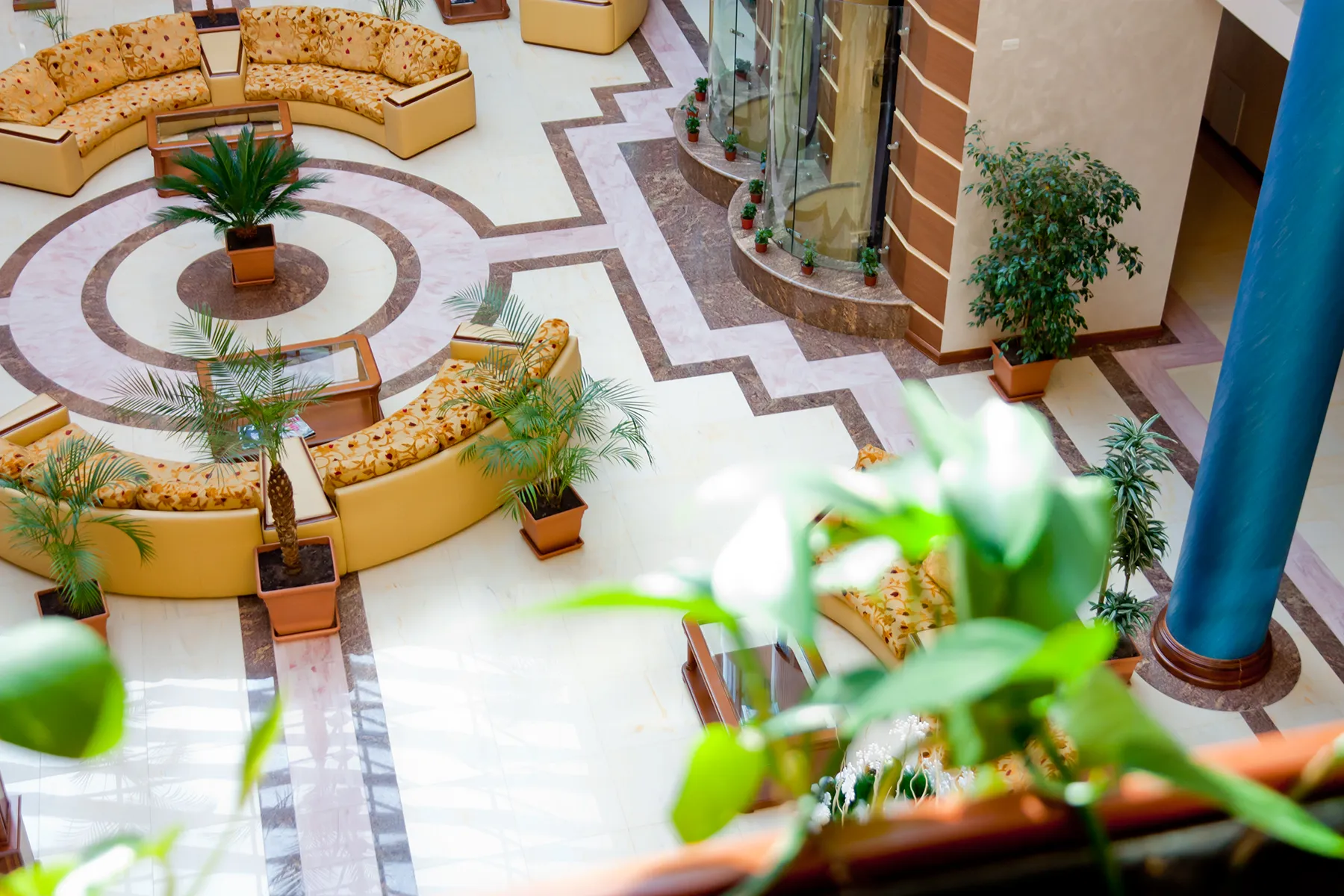
Strategic Implementation of Indoor Commercial Landscaping
To guarantee the absolute highest return on your investment, your interior landscape design needs to be planned and implemented highly strategically. Simply throwing a few random potted ferns in a dark corner will not move the needle on your property’s financial value. You need a cohesive, architectural, and well-thought-out approach to see real results.
The Lobby and Reception: Forging the First Impression
The main lobby is the undeniable handshake of your entire building. It instantly sets the visual and emotional tone for everything that follows. Large-scale, dramatic installations work best in these areas. Consider installing massive living green walls (vertical gardens) directly behind the main reception desk. These serve as breathtaking, living pieces of art that instantly convey a sense of modern luxury and deep environmental consciousness. Tall, architectural specimen trees like the Ficus Lyrata, Black Olive trees, or elegant indoor Kentia palms can draw the eye upward, beautifully emphasizing high ceilings and impressive spatial volume.
Open Office Layouts: Creating Natural Zoning
In modern open-plan corporate offices, ambient noise and a severe lack of privacy are consistently cited as major tenant complaints. Indoor commercial landscaping provides a highly elegant, non-intrusive solution to these modern problems. Rows of mid-height, contemporary planters filled with dense, sound-absorbing foliage (like Sansevieria or ZZ plants) can act as natural, beautiful partitions. They successfully break up massive, echoing rooms into more intimate, manageable workspaces while simultaneously absorbing disruptive ambient noise. Acoustic control is a highly sought-after, premium feature in commercial real estate, and using plants to achieve it adds incredible dual value to the leasing agreement.
Breakrooms and Collaborative Spaces: Designing the Recharge Zones
Areas specifically designed for employee breaks, lunches, or casual creative collaboration should ideally feature softer, more diverse plant life to separate them mentally from the main work floor. Hanging trailing plants like Pothos, Philodendrons, or Hoyas, mixed with colorful blooming botanical varieties, create a relaxed, highly inviting café-like atmosphere. When prospective tenants tour the building and see these thoughtfully designed retreat areas, they easily envision a happier, more relaxed, and more loyal workforce—a powerful vision they are more than willing to pay a premium for.
Enhancing Retail and Hospitality Environments
While much of the commercial real estate focus is traditionally on corporate office spaces, world-class interior landscape design is equally transformative and lucrative for retail centers, luxury hotels, and high-end restaurants.
In the competitive retail sector, the primary operational goal is to increase “dwell time”—the total amount of time a shopper spends lingering in a store or walking through a mall. Comprehensive consumer studies have repeatedly shown that shoppers perceive businesses with robust, well-maintained interior landscaping to be of significantly higher quality. Consequently, they are willing to pay up to 12% more for identical goods and services in heavily planted retail environments. Shopping centers that prominently feature lush indoor gardens, integrated water features, and expansive, sunlit skylights consistently outperform sterile, concrete-heavy malls in both foot traffic and gross sales.
For the hospitality sector, the financial ROI of greenery is even clearer and more immediate. Hotels that successfully integrate significant interior landscape design into their main lobbies, atriums, and guest lounges can reliably command much higher nightly room rates. The prominent presence of lush, tropical greenery inherently implies luxury, deep relaxation, and a vital escape from the harsh urban grind. A beautiful, well-lit indoor patioscape connecting the main hotel lobby to the primary dining area creates an unforgettable, highly photogenic guest experience, actively driving positive online reviews and securing lucrative repeat bookings.
Sustainability, LEED, and WELL Certifications
Today’s savvy commercial real estate investors, portfolio managers, and top-tier corporate tenants are heavily focused on Environmental, Social, and Governance (ESG) criteria. Buildings that successfully achieve recognized, prestigious green certifications are currently the most valuable and highly sought-after assets on the open market.
Interior landscape design plays a fundamentally crucial role in acquiring and maintaining these vital certifications.
- LEED (Leadership in Energy and Environmental Design): Developed and managed by the U.S. Green Building Council (USGBC), LEED certification heavily weighs a building’s overall environmental quality and efficiency. Integrating robust indoor greenery, utilizing smart, water-efficient sub-irrigation planters, and managing outdoor plants sustainably can directly contribute to earning valuable LEED points.
- WELL Building Standard: Administered by the International WELL Building Institute (IWBI), the WELL standard focuses almost exclusively on human health, comfort, and wellness within the built environment. Biophilia is a central, non-negotiable core concept of the WELL standard. A comprehensive, professionally executed interior landscape design that provides building occupants with direct, daily access to nature is absolutely essential for achieving high WELL certification ratings.
Buildings boasting official LEED or WELL certifications effortlessly attract Fortune 500 tenants, secure much longer lease terms, and ultimately sell for significantly higher overall valuations. By strategically investing in professional indoor commercial landscaping today, you are taking a definitive, measurable step toward securing these incredibly lucrative building accreditations.
Learn more about how our custom botanical designs can help your commercial building achieve its wellness and sustainability certifications. Contact us for more information.
The Psychological Impact of Color and Texture in Design
Beyond simply adding green to a space, the specific choices made in your interior landscape design profoundly affect the psychology of the building’s occupants. Expert horticultural designers do not just pick plants at random; they carefully select flora based on color theory and textural contrast to evoke specific emotional responses.
For fast-paced, high-energy environments like tech startups or creative marketing agencies, designers might incorporate plants with vibrant, energetic colors. Splashes of red, orange, and bright yellow found in Bromeliads or Crotons can stimulate creativity and keep energy levels high throughout the day.
Conversely, for environments requiring deep focus, calm, and discretion—such as law firms, financial institutions, or wellness clinics—designers rely heavily on deep greens, smooth textures, and elegant, minimalist forms. The broad, dark green leaves of a Rubber Tree (Ficus elastica) or the elegant, sweeping fronds of a mature palm evoke feelings of stability, trust, and profound calm. By carefully tailoring the color palette and physical texture of your indoor commercial landscaping, you are subtly but powerfully influencing the mood and behavior of everyone who walks through your doors, adding an invisible but highly effective layer of value to your property.
Choosing the Right Horticultural Partner
The myriad financial and aesthetic benefits of interior landscape design are abundantly clear, but actually executing a successful, long-lasting strategy requires deep technical expertise. Commercial environments present highly unique, often harsh challenges for plant life. These include wildly fluctuating HVAC temperatures, varying and often inadequate levels of artificial and natural light, and the strict physical constraints of the building’s architecture.
This is exactly why hiring professional, experienced horticultural specialists is absolutely non-negotiable. True experts will conduct a highly thorough environmental assessment of your commercial property before a single plant is recommended. They will meticulously map the lighting conditions, assess the daily foot traffic patterns, and painstakingly select plant species that will not just merely survive, but actively thrive in your specific building’s unique microclimate.
Furthermore, a professional design installation ensures that the decorative pots and structural containers perfectly match your building’s overarching interior design language. Whether your property is an ultra-modern, industrial tech hub requiring sleek, matte metallic planters, or a historic, beautifully restored building better suited for classic terracotta and reclaimed wood, experts perfectly tailor the aesthetic to elevate the existing architecture.
Finally, expert maintenance is the crucial piece of the puzzle that protects your investment. An overgrown, dusty, or slowly dying plant has the exact opposite effect of what you originally intended—it loudly signals neglect to your tenants and drives property value down. Professional horticultural maintenance teams seamlessly handle the complicated watering schedules, precision pruning, exact fertilizing, proactive pest management, and regular cleaning of the plants. This meticulous care ensures your green investment remains a stunning asset rather than eventually becoming an expensive eyesore.
Invest in Your Property’s Future
Can indoor plants truly boost your commercial property’s overall value? The answer is an undeniable, scientifically backed yes. Far beyond serving as simple, superficial decoration, strategic interior landscape design is a highly powerful architectural and financial tool. It successfully transforms sterile, uninspired buildings into vibrant, breathable, and highly sought-after ecosystems. It actively reduces tenant turnover, easily justifies higher lease rates, dramatically improves occupant health and comfort, and creates a commanding, unforgettable first impression that clearly differentiates your property in an increasingly crowded real estate market.
From the seamless, inviting integration of outdoor plants in a welcoming patioscape to the strategic, awe-inspiring placement of living green walls in your main lobby, every single element of indoor commercial landscaping works together harmoniously. This synergy actively elevates your asset’s perceived and actual financial value. Whether you choose to invest in permanent, structural botanical installations or opt for the incredible flexibility and ease of plant rental, the return on your investment is both immediate and incredibly lasting.
If you’re looking for premium commercial Phoenix Plant Design Services, or are ready to learn more about seamlessly incorporating professional plantscaping or living wall art into your office, retail space, or commercial property, the dedicated horticultural specialists at Plant Solutions are ready to help you transform your space. Learn more about our commercial indoor plant design services and discover exactly how easy it is to breathe incredibly lucrative new life into your real estate portfolio.
Ready to absolutely maximize your commercial asset’s value and tenant retention? Contact Plant Solutions today and let our expert team design, install, and maintain the perfect interior landscape design for your business.