

Educational institutions across the globe are facing a growing mandate: not only to provide world-class academic instruction but also to cultivate environments that actively support the mental health and well-being of their students and faculty. As stress levels in academic settings reach unprecedented highs, forward-thinking university administrations are turning toward nature-inspired architectural solutions. At the forefront of this movement is the realization of incredible biophilic design benefits.
Bringing nature indoors is no longer just an aesthetic choice; it is a scientifically backed strategy for improving cognitive function, reducing anxiety, and creating spaces where people naturally want to gather, learn, and thrive. Integrating natural elements into the built environment addresses the innate human desire to connect with the natural world. For school administrators seeking sustainable, impactful ways to keep stress levels low among students and staff, the strategic use of natural light, organic textures, and lush greenery offers a proven pathway forward.
Transform Your Campus Today: Are you an educational leader looking to revitalize your institution’s environment? Contact Plant Solutions to discover how our expert indoor landscaping and living walls can bring essential biophilic design benefits to your school.
In this comprehensive guide, we will explore the immense advantages of natural design in educational facilities, delve into the specific plants benefits in schools, and highlight a powerful case study: the successful integration of biophilic principles at Arizona State University (ASU).
Understanding the Core Biophilic Design Benefits
To fully appreciate how natural design can revolutionize a campus, we must first understand what biophilia is. Coined by psychoanalyst Erich Fromm and popularized by biologist E.O. Wilson, “biophilia” translates to the “love of life or living systems.” It suggests that humans possess an innate, evolutionary connection to nature. When we are deprived of this connection—often trapped in sterile, fluorescent-lit, concrete classrooms—our mental and physical health can suffer.
The biophilic design benefits are vast and measurable. According to extensive research published by institutions like the National Institutes of Health (NIH), integrating natural elements into indoor environments has a profound impact on human physiology and psychology.
1. Significant Stress Reduction
One of the most critical biophilic design benefits for school administrations is stress reduction. Academic environments are inherently high-pressure. Midterms, finals, peer dynamics, and administrative burdens create a cocktail of anxiety for both students and staff. Studies have consistently shown that exposure to nature—whether through direct contact with indoor plants, views of nature through large windows, or even the incorporation of natural materials like wood and stone—lowers cortisol levels and reduces blood pressure. When students walk into a student union or lecture hall filled with vibrant living walls, their autonomic nervous system shifts from a state of “fight or flight” to “rest and digest.”
2. Enhanced Cognitive Function and Focus
Attention Restoration Theory (ART) posits that urban environments require directed attention, which quickly leads to cognitive fatigue. Conversely, natural environments engage our “soft fascination,” allowing our directed attention to rest and replenish. The biophilic design benefits related to cognition are undeniable. Students studying in environments that feature natural elements demonstrate better memory retention, faster problem-solving skills, and longer attention spans. For a university, investing in natural design is an indirect investment in higher academic performance.
3. Improved Emotional Well-being
Beyond raw academic performance, the emotional resonance of a campus dictates student retention and overall satisfaction. Spaces that feel cold and institutional breed feelings of isolation. Alternatively, spaces that harness biophilic design benefits feel welcoming, nurturing, and vibrant. Incorporating flowing water features, dynamic lighting that mimics the circadian rhythm, and abundant greenery can drastically elevate the collective mood of a building’s occupants.
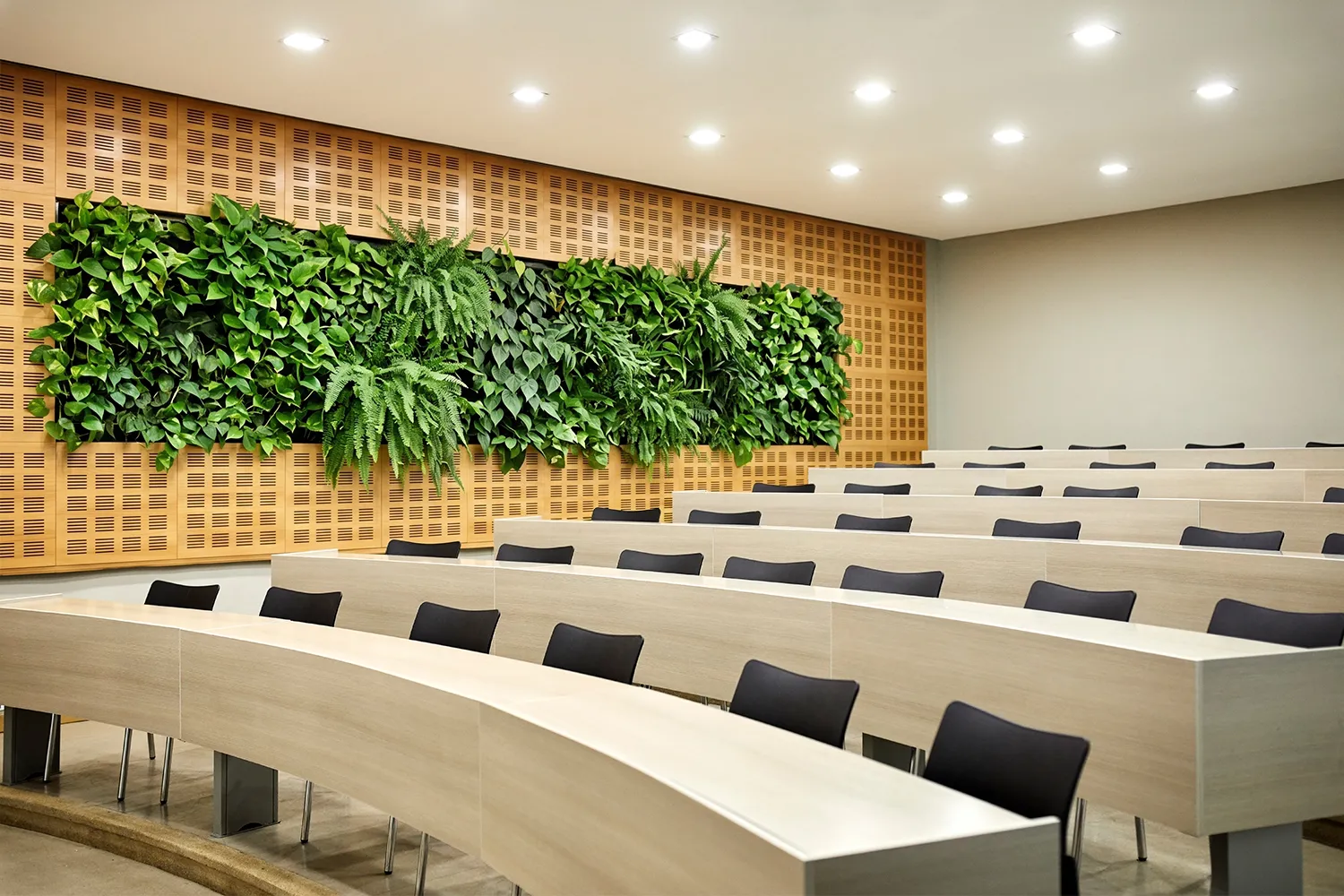
Bringing Biophilic Design to a University Setting at ASU
Arizona State University, named the most innovative university by U.S. News & World Report for seven years running, actively supports sustainability education and research on local and global levels. This dedication to advancement extends to emulating nature’s answer to everyday challenges. By looking to the natural world for architectural and structural inspiration, ASU has positioned itself as a pioneer in campus wellness.
It is that exact dedication that keeps Joe Zazzera, ASU alumni and co-owner of Plant Solutions, coming back to work with the university. Most recently, he provided vital thought leadership to incorporate the principles of biophilic design into the redesign of ASU’s Biomimicry Center on the university’s Tempe campus. The Biomimicry Center is a renowned partnership with Biomimicry 3.8 that works tirelessly to address a variety of sustainability challenges using methodologies inspired by natural systems.
“Remaining connected to ASU has given me many opportunities to do my part in sharing how important biomimicry and biophilic design can be to everyday function for humans,” said Zazzera, who has also served as an adjunct faculty member at ASU. “It was thrilling to be part of the center remodel and work directly with an organization focused on bringing nature indoors to further the innate connection with nature that we all need.”
During the remodel, Zazzera and Plant Solutions aided in the design and installation of visually stunning, lichen-infused concrete walls. This process was a masterclass in sustainability, utilizing salvaged materials and lichen scrap from various past projects, which was then painstakingly worked into existing cracks in the concrete. The result is a breathtaking visual representation of nature reclaiming the built environment, offering undeniable biophilic design benefits to everyone who walks through the doors.
The Power of Living Walls at the Biomimicry Center
Plant Solutions also created a series of living walls using indoor plants specifically chosen to thrive in the space. These walls are ingeniously moveable and can be displayed in various configurations to promote both a healthy physical and mental space for staff, students, and visitors. Studies show that the addition of living features to workspaces can promote cleaner air, while bright colors and vibrant smells from plants can boost productivity, increase creativity, and lead to better recall and memory retention.
Zazzera continues to spread the word about the positive effects of biophilic design through various high-profile events at the university, including providing an insightful lecture on biophilia and biomimicry sponsored by the Julie Ann Wrigley Global Institute of Sustainability. Speakers in the ongoing series discussed a wide range of environmental, social, and economic topics, further cementing ASU’s role as a leader in ecological integration.
Need a Custom Living Wall? The moveable living walls at ASU offer flexibility and beauty. If you want to experience these specific plants benefits in schools or corporate offices, contact Plant Solutions to schedule a design consultation today!
Exploring the Unmatched Plants Benefits in Schools
When discussing biophilic architecture, we must place a special emphasis on the plants benefits in schools. While natural lighting, earthy color palettes, and organic shapes are important, the literal inclusion of living botanical life is the heartbeat of this design philosophy.
School administrators carry the heavy burden of ensuring their facilities are safe, healthy, and conducive to learning. By integrating indoor greenery, administrations can proactively tackle several operational and student-wellness goals simultaneously.
Air Quality and Physical Health
Modern university buildings are often tightly sealed for energy efficiency, leading to a phenomenon known as “Sick Building Syndrome” (SBS). Poor ventilation can cause a buildup of volatile organic compounds (VOCs) emitted by carpets, paints, and modern furniture. This leads to headaches, fatigue, and respiratory irritation among students and staff.
One of the most pragmatic plants benefits in schools is the natural purification of indoor air. As famously detailed in landmark NASA clean air studies, certain indoor plants act as highly efficient air filters, absorbing toxins like formaldehyde, benzene, and trichloroethylene. By improving indoor air quality, schools can actively reduce sick days, lower absentee rates, and ensure that faculty and students are breathing clean, oxygen-rich air.
Psychological Safety and Reduced Anxiety
As previously mentioned, stress levels in modern academia are a pressing concern. The plants benefits in schools extend deeply into psychological safety. Greenery inherently signals a safe, life-sustaining environment to the human brain. When a student enters a library or a counselor’s waiting room decorated with thriving indoor plants, their baseline anxiety is naturally tempered. This subtle, subconscious cue allows students to lower their emotional guards, making them more receptive to learning and more open to communication. For school administrations aiming to foster a supportive, low-stress culture, botanical integration is one of the most cost-effective tools available.
Acoustics and Noise Reduction
University common areas, cafeterias, and expansive lecture halls can become incredibly loud, creating an overstimulating environment that contributes to sensory fatigue and stress. A lesser-known advantage of utilizing indoor plants in educational settings is their acoustic properties. Plant leaves, stems, and branches absorb, diffract, and reflect background noise. Strategic placement of large planters or dense living walls can significantly dampen the ambient hum of a busy campus, creating quieter, more serene zones for study and contemplation.

The Role of Indoor Plants in Modern Educational Architecture
Integrating indoor plants into a campus requires more than just placing a few potted ferns in a hallway. To truly reap the biophilic design benefits, the approach must be intentional, scalable, and professionally managed.
Strategic Placement for Maximum Impact
The placement of greenery dictates its effectiveness. Plant Solutions specializes in analyzing the traffic flow, lighting conditions, and spatial dynamics of educational facilities to determine optimal placement.
- Entryways and Atriums: First impressions matter. Large, striking botanical displays in university entrance halls set a calm, welcoming tone for the entire building.
- Study Lounges: Incorporating tabletop indoor plants and floor-standing greenery in study areas provides students with micro-restorative visual breaks. Looking away from a laptop screen to rest one’s eyes on a vibrant green leaf helps prevent eye strain and mental fatigue.
- Faculty Offices and Breakrooms: The well-being of the staff is just as important as the well-being of the students. Faculty members experiencing high levels of burnout benefit immensely from having nature integrated into their personal workspaces and communal break areas.
Selecting the Right Botanical Elements
Not all plants are suited for the rigorous environment of a bustling university. Successful biophilic integration relies on selecting the right species.
- Low-Light Tolerant Species: For interior classrooms without large windows, plants like the ZZ Plant (Zamioculcas zamiifolia) or Snake Plant (Sansevieria) are ideal because they require minimal light while still providing immense plants benefits in schools.
- High-Impact Air Purifiers: Spider plants (Chlorophytum comosum) and Peace Lilies (Spathiphyllum) are excellent choices for spaces where air quality is a primary concern.
- Living Walls: For spaces where floor square footage is at a premium, vertical gardens or living walls—like those installed at the ASU Biomimicry Center—offer a massive visual impact without taking up usable floor space.
Why School Administrations Must Act Now
The push toward greener campuses is not a passing trend; it is the future of educational architecture. As the competition for student enrollment grows, universities must differentiate themselves by providing superior campus experiences. A campus that feels like a sterile, concrete labyrinth is inherently less appealing than one that feels like a lush, vibrant oasis.
Furthermore, the emphasis on student mental health has never been higher. Administrations are constantly seeking programs and initiatives to support their student body. While counseling services and stress-management workshops are vital, the physical environment itself must be part of the solution. By investing in biophilic design benefits, administrators are making a passive, continuous investment in the daily well-being of every single person who steps foot on campus.
The initial investment in professional indoor landscaping yields a high return on investment (ROI) through improved academic performance, higher retention rates, reduced absenteeism among staff, and enhanced institutional prestige. The ASU Biomimicry Center stands as a shining example of what is possible when an institution commits to harmonizing human spaces with natural principles.
Plant Solutions: Your Partner in Biophilic Transformation
Transforming a traditional educational facility into a biophilic sanctuary requires deep expertise in horticulture, design, and structural integration. It requires a partner who understands both the aesthetic goals and the vital plants benefits in schools.
Plant Solutions has worked for more than 40 years to incorporate biophilic designs into offices, businesses, and homes around the Valley. We are committed to bringing quality work into every job while promoting creativity and well-being. Our work with Arizona State University is just one example of how we can scale our services to meet the complex needs of large educational institutions. We handle everything from the initial spatial analysis and design concepts to installation and ongoing, meticulous maintenance.
Whether your goal is to install a sweeping living wall in a new student union, integrate acoustic-dampening planters in a library, or completely overhaul the greenery of an administrative building, we have the experience and passion to bring your vision to life. Nature has already provided the blueprint for healthier, happier, and more productive spaces; it is simply up to us to bring that blueprint indoors.
Ready to reduce stress, boost focus, and beautify your campus? Do not leave the well-being of your students and staff to chance. Experience the profound and proven biophilic design benefits for yourself. Learn more about our approach to indoor landscaping and design, and schedule your professional consultation today.
Contact Us Today